

Avicii
Self (archive footage)
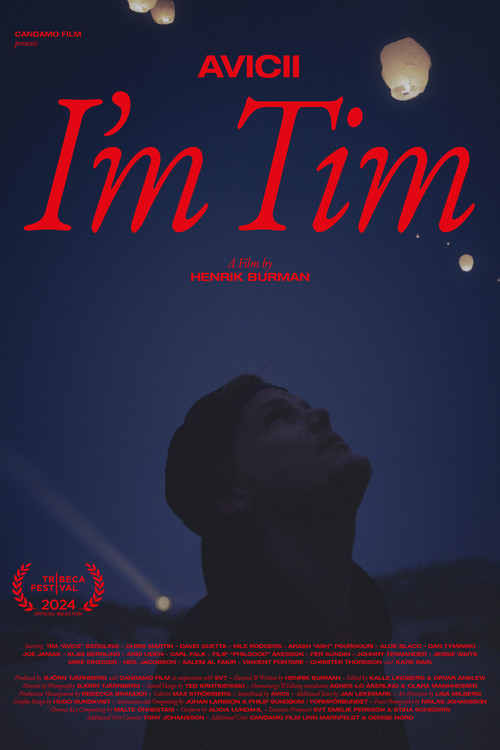
Before Avicii, there was Tim. Through his own words, witness how a prodigious musical talent became one of the defining artists of his generation.
I’ve rewatched Avicii – I’m Tim three times now, and each time I’m struck by the same quiet moment: a grainy home video of a towheaded kid hunched over a keyboard in his Stockholm bedroom, fingers dancing across the keys with the unselfconscious focus of a child building a Lego castle. The camera lingers just long enough to catch the exact second his face lights up—there’s the melody, the one that would later become “Levels.” It’s the kind of scene that should feel clichéd, the origin story of a prodigy, but in this film it lands differently.
Maybe because we already know how the story ends. Or maybe because the boy in that bedroom isn’t Avicii yet. He’s just Tim.
Henrik Burman’s documentary doesn’t just trace the arc of a superstar DJ; it excavates the tension between the person and the persona, the quiet Swedish kid and the global phenomenon. The film’s greatest strength is its refusal to collapse that distance. It lets Tim Bergling remain both the architect of euphoric dance-floor anthems and the anxious young man who once told his manager, “I don’t want to be famous.” That contradiction isn’t resolved.
It’s the film’s beating heart.

Burman’s approach is deceptively simple: he lets Tim narrate his own story. The film is stitched together from thousands of hours of archival footage—home videos, studio sessions, tour diaries, and, most movingly, audio recordings of Tim’s own voice. There’s no omniscient narrator, no talking-head experts dissecting his genius.
Instead, we hear Tim’s thoughts in his own words, pulled from interviews and private recordings. The effect is intimate, almost uncomfortably so. It’s one thing to watch a documentary about a musician; it’s another to feel like you’re eavesdropping on his diary.
That intimacy is hard-won. The film was made with the full cooperation of Tim’s family and the Tim Bergling Foundation, and it shows. This isn’t a warts-and-all exposé, nor is it a hagiography.
It’s something rarer: a portrait that feels honest without being exploitative. The film doesn’t dwell on the specifics of Tim’s death in 2018, but it doesn’t shy away from the toll of his fame, either. We see the exhaustion in his eyes during a 2014 tour, the way his smile tightens when fans scream his stage name. “I’m not Avicii,” he says at one point, and the camera holds on his face just long enough to let the weight of that statement settle in.
The late Swedish DJ Avicii, born Tim Bergling, was a paradox—a global phenomenon who hated the spotlight, a hitmaker who struggled with the pressure of fame. Netflix’s new documentary Avicii – I’m Tim (2024), directed by Henrik Burman, promises to finally unravel that contradiction. latestnetflix.com's view is that Premiering at the Tribeca Festival in June before its Netflix debut, the film dives deep into Bergling’s rise, his battles with mental health, and the creative genius behind anthems like Wake Me Up and Levels 
 .
.
Burman, a Swedish filmmaker, took on the challenge of portraying a man who was both a superstar and a deeply private individual. In interviews, he’s hinted at the emotional weight of the project, calling it an "intimate" look at Bergling’s life . The doc reportedly leans on never-before-seen footage, personal archives, and interviews with those who knew him best—including Coldplay’s Chris Martin, Nile Rodgers, and Avicii’s own family .
What makes I’m Tim different from past Avicii retrospectives? Burman’s approach appears to focus on the person behind the DJ persona, not just the music. The film’s title itself—a play on Bergling’s real name—signals its intent: to humanize a figure who was often reduced to a stage name .
The documentary’s lineup of interviewees reads like a who’s who of EDM and pop royalty. Chris Martin, who collaborated with Avicii on True Believer, offers insights into his creative process, while Nile Rodgers—who worked with Bergling on Lay Me Down—provides a veteran’s perspective on his talent . Aloe Blacc, the voice behind Wake Me Up, and David Guetta also appear, though their exact contributions remain unclear from the snippets .
But the most poignant voices might be the ones closest to home: Avicii’s parents, Klas Bergling and Anki Lidén, and his former manager, Arash Pournouri. Their inclusion suggests the film won’t shy away from the darker chapters of Bergling’s life, including his struggles with anxiety, alcohol, and the toll of touring .
Netflix’s involvement isn’t just a distribution play—it’s a strategic move to reintroduce Avicii to a new generation. The streaming giant paired I’m Tim with Avicii – My Last Show, a concert film from his final performance in 2016, creating a double feature that frames his legacy as both triumphant and tragic .
Critics who’ve seen early cuts describe the doc as "profound," highlighting its balance between Avicii’s global stardom and his personal demons . But with Burman’s past work (including docs on Swedish artists) suggesting a more artistic than tabloid approach, I’m Tim might avoid sensationalism in favor of raw honesty .
For all its promise, the doc leaves some questions unanswered. How much new footage does it actually contain? Will it address the controversies around Pournouri’s management, or the industry pressures that contributed to Bergling’s struggles? The snippets don’t say .
One thing’s certain: I’m Tim isn’t just a music doc. It’s a portrait of a young man who changed dance music forever—and paid a steep price for it.
Entertainment rumors and trivia aggregated from public reporting. Treat speculation as unverified unless a cited source confirms it.