
William Catlett
Lucky
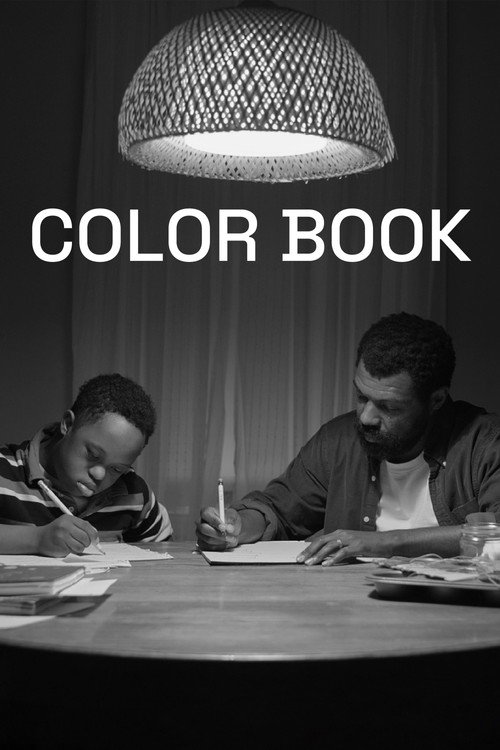
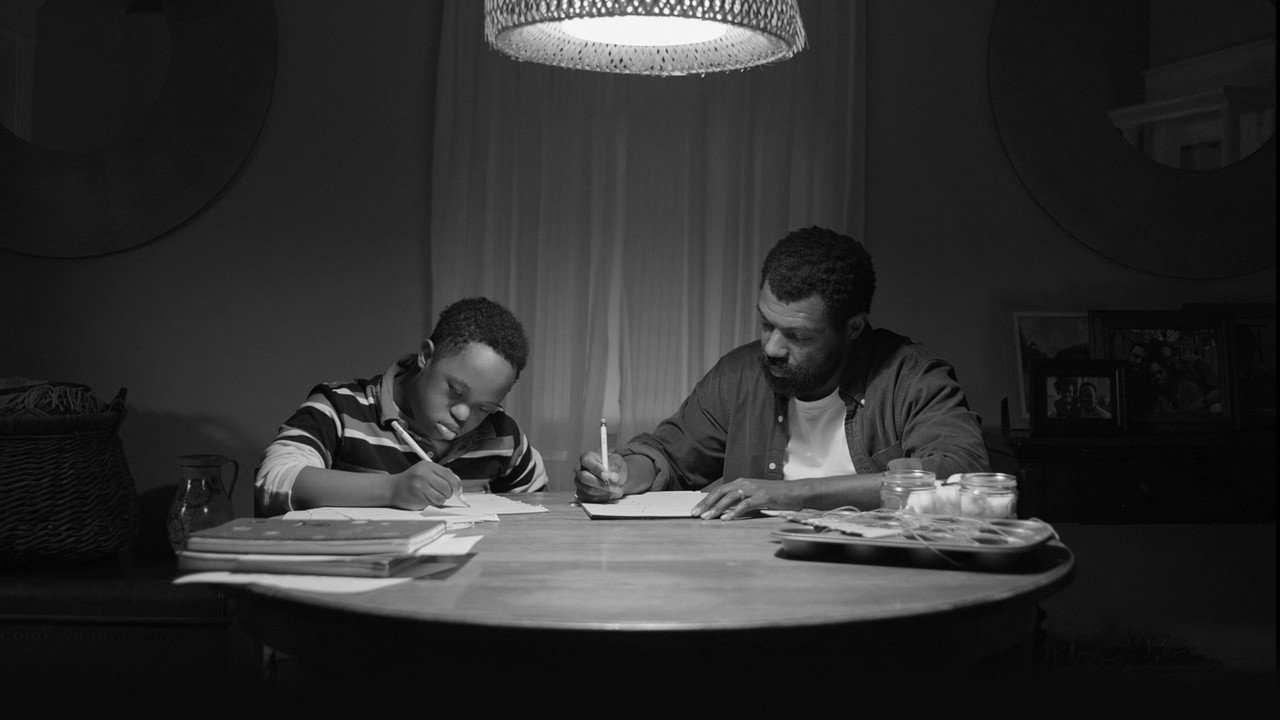
Following the passing of his wife, a devoted father is learning to raise his son with Down Syndrome as a single parent. While adjusting to their new reality, the two embark on a journey through Metro Atlanta to attend their first baseball game.
I keep thinking about the way the light falls in Color Book—not just the black-and-white cinematography, which is striking in its own right, but the way it carves out the space between Lucky and his son Mason. There’s a moment early on, when the two of them sit on the edge of a bed, the morning sun cutting through a half-drawn curtain. Lucky is tying Mason’s shoes, his hands moving with the kind of practiced patience that comes from doing the same small task a hundred times before.
Mason, meanwhile, is chattering about something—baseball, maybe, or the colors he’s going to use in his sketchbook—and Lucky listens, really listens, in a way that feels both ordinary and extraordinary. It’s the kind of scene that could slip by unnoticed in a lesser film, but here, it lands like a punch to the gut. Because you know, even if the film hasn’t told you yet, that this is all they have left.
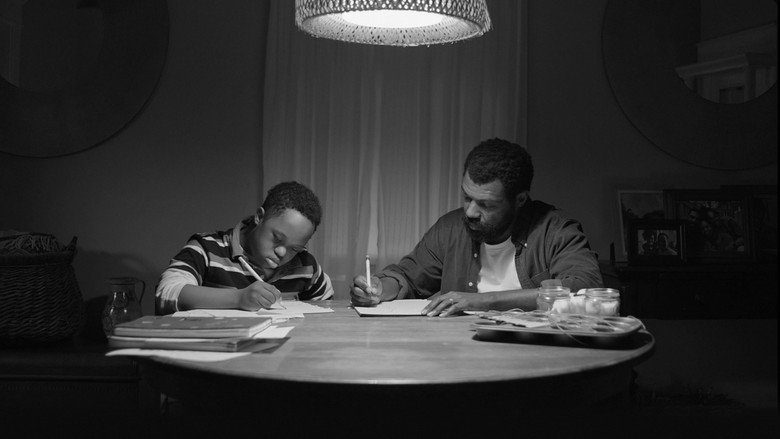
David Fritz Fortune’s debut feature is a film that understands grief not as a single, cataclysmic event, but as a slow, creeping thing—a shadow that stretches longer with each passing day. It’s there in the way Lucky moves through his Atlanta neighborhood, his shoulders slightly hunched, as if bracing against an invisible weight. It’s there in the way Mason, played with heartbreaking naturalism by Jeremiah Alexander Daniels, sometimes looks at his father with a quiet, knowing sadness, as if he’s already learned that some losses can’t be fixed with a hug or a promise.
And it’s there in the film’s sound design, which strips away the usual crutches of a musical score in favor of the ambient hum of the city—the distant rumble of a train, the creak of a car door, the wind rustling through the trees. These aren’t just background noises; they’re the soundtrack of a life that’s still moving forward, even when it feels like it should have stopped.
Fortune has said that he drew inspiration from the photography of Gordon Parks and Carrie Mae Weems, and you can feel that influence in the film’s visual language. The black-and-white palette isn’t just a stylistic choice; it’s a way of stripping away distraction, forcing the audience to focus on the raw, unvarnished truth of these characters’ lives. There’s a scene where Lucky and Mason stand on a train platform, waiting for a ride that never quite comes on time.
David Fritz Fortune’s Color Book (2024) isn’t just another indie drama—it’s a quiet revolution. The film, which follows a grieving single father navigating life after his wife’s death while raising his son with Down syndrome, has already earned critical praise for its raw, intimate portrayal of Black fatherhood. latestnetflix.com's read is that but the story behind the camera is just as compelling as the one on screen.
Director David Fritz Fortune, whose previous work includes the 2022 drama The House That Jack Built, has called Color Book his most personal project yet. While the evidence doesn’t detail specific behind-the-scenes struggles, Fortune’s collaboration with lead actor William Catlett suggests a deep creative partnership. The two sat down with Essence to discuss the film’s emotional core, with Fortune emphasizing how Color Book aims to challenge stereotypes about Black fathers  . "This isn’t just a movie about grief," Fortune reportedly said. "It’s about showing up—even when it’s hard."
The film’s setting in Metro Atlanta isn’t accidental. Fortune, who has ties to the city, reportedly chose it for its vibrant yet underrepresented Black communities, using the urban landscape as a character in its own right  . The decision to shoot in real neighborhoods rather than soundstages adds to the film’s authenticity, though specifics on the production’s budget or shooting schedule remain unconfirmed.
If Color Book feels like a career-defining moment for William Catlett, that’s because it might be. The actor, known for his roles in The Chi and Snowfall, delivers a performance that critics have called "devastatingly real"  . In interviews, Catlett has hinted at the physical and emotional toll of the role, though he hasn’t shared specifics about his preparation. What is clear is that his chemistry with young actor Jeremiah Daniels (who plays his son) is the film’s beating heart.
Daniels, a relative newcomer, reportedly stole scenes with his naturalistic portrayal of a child with Down syndrome. While the evidence doesn’t confirm whether Daniels has the condition himself, Fortune has praised the young actor’s ability to bring "unfiltered joy" to the role . The film’s sensitivity in handling disability representation has been a talking point, with Variety calling it "a masterclass in understated storytelling" .
Color Book premiered to strong reviews, with The New York Times giving it a Critic’s Pick and praising its "hushed, heartfelt journey" . Variety echoed the sentiment, calling it a "moving indie debut" that avoids melodrama in favor of quiet resilience . The film’s R rating (for thematic material and language) hasn’t dampened its appeal, with critics noting that its emotional weight justifies the classification.
As for what’s next, neither Fortune nor Catlett has announced follow-up projects, but the film’s success could open doors. Rumors of a limited theatrical run or streaming deal with Netflix have circulated, though nothing has been confirmed . Given the film’s focus on fatherhood and grief, it wouldn’t be surprising to see it become a staple in discussions about Black cinema and disability representation.
For all its acclaim, Color Book leaves some behind-the-scenes details in the dark. How long did filming take? Did the cast improvise any key scenes? Was there a real-life inspiration for the story? The evidence doesn’t say. What is clear is that Fortune and Catlett have created something rare: a film that feels both deeply personal and universally resonant.
If Color Book is any indication, David Fritz Fortune is a director to watch—and William Catlett might just be the next great leading man in Black cinema.
Entertainment rumors and trivia aggregated from public reporting. Treat speculation as unverified unless a cited source confirms it.
Related titles ranked by rating and popularity.