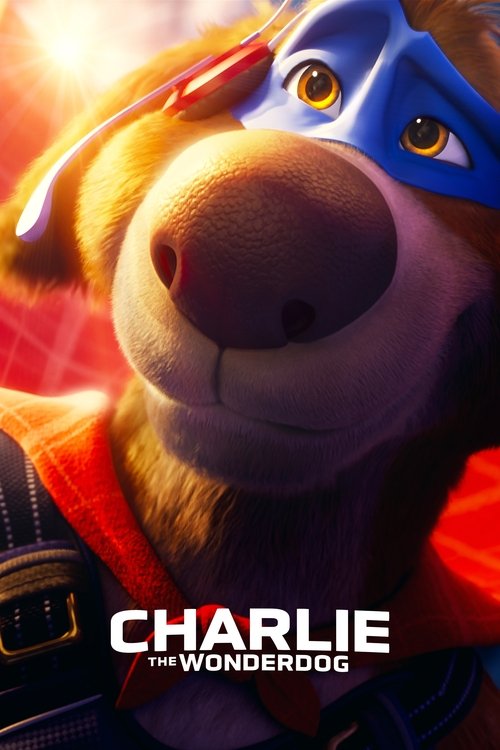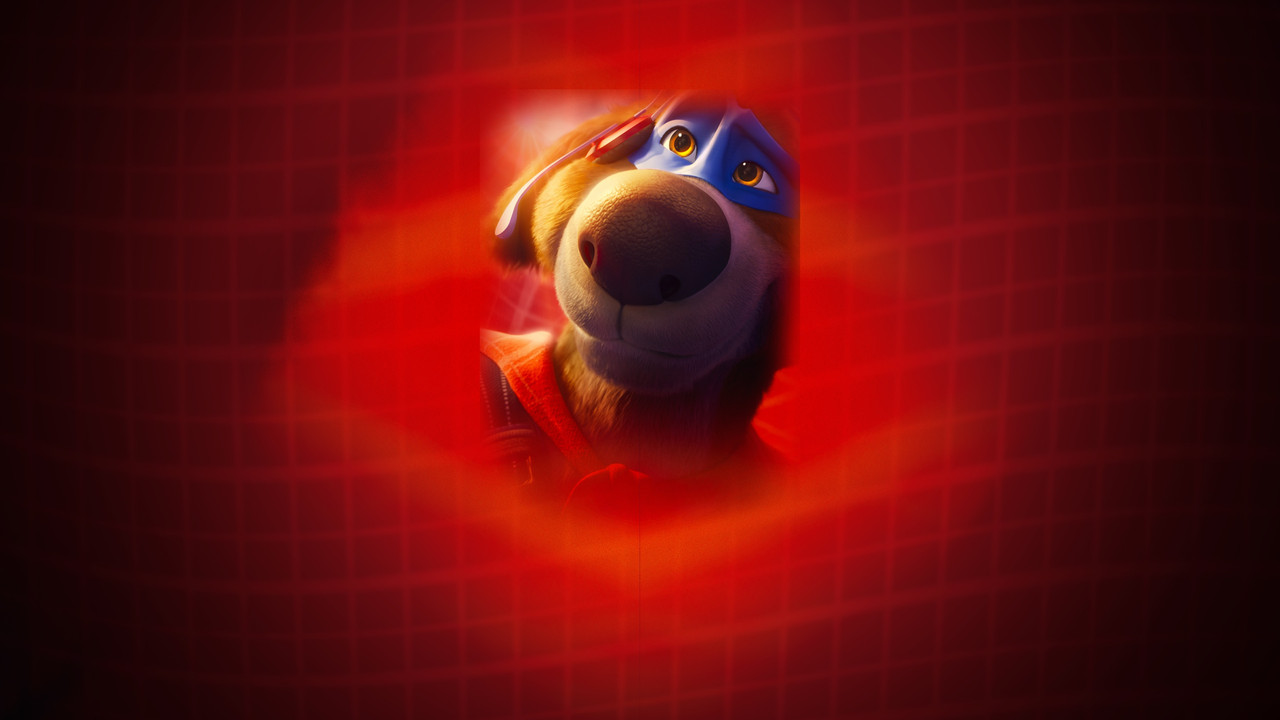

Movie poster for Charlie the Wonderdog (2025)

Charlie the Wonderdog

“He's a good boy… most of the time.”

2025
1h 32m
Director: Shea Wageman
Play trailer

Overview

Nine-year-old Danny teams up with his beloved family dog Charlie, who gets abducted by aliens and returns with superpowers, to thwart a plan by the neighbor's sinister cat Puddy to destroy humanity.

Cast

12 people

Reviews

3 min read

Updating…

The Cosmic Golden Retriever

There’s a specific, hollow sort of fatigue that comes with the "talking animal" subgenre, a feeling that we’ve already mapped every emotional beat from Homeward Bound to the present day. When I sat down for Shea Wageman’s Charlie the Wonderdog, I expected to spend ninety minutes checking my watch, waiting for the inevitable slapstick sequence to resolve. Instead, I found something surprisingly weird.

Wageman isn't interested in the usual "secret lives of pets" banter; she’s interested in the specific, aching loneliness of a nine-year-old boy, and how a dog—even a dog who gets abducted by aliens and returns with the ability to bend light—acts as a grounding wire for a kid who feels like he’s floating away.

Danny walks home alone, the alien saucer hidden behind the clouds

The film’s visual language is where it first catches you off guard. Wageman avoids the slick, hyper-glossy finish that plagues modern animated features. Instead, the animation has a tactile, almost storybook grittiness—the fur on Charlie looks slightly matted, not polished, and the alien spacecraft doesn't look like a computer-generated marvel, but like something constructed from trash and starlight.

It’s a bold choice that anchors the surreal premise in something you can almost touch. When the abduction happens, there’s no grand, orchestral swelling. It’s quiet.

A sudden absence of sound, followed by the sight of a leash trailing on the grass, utterly limp. It felt jarring. Almost rude.

Audience Opinions

Audience 5.0/10
"A well‑meaning superhero dog caper carried by Owen Wilson’s charm but dragged down by a shallow script and so-so animation."

Owen Wilson’s vocal performance and the heartfelt boy‑and‑dog bond give the movie a gentle charm, and younger kids respond well to the colorful action and positive, hopeful message. At the same time, the plot feels generic and overstuffed, the emotional impact fades after the opening, and the human character designs and humor leave a lot of older viewers bored or annoyed.

What viewers praise
  • Likeable title character Charlie comes across as a sweet, enthusiastic hero that kids enjoy rooting for, especially once he gains his powers.
  • Warm Owen Wilson voice work Wilson’s relaxed, friendly delivery fits the golden‑retriever energy of the character and is often singled out as a bright spot.
  • Kid‑friendly adventure tone The simple good‑vs‑evil setup, flashy powers, and clear stakes keep younger children engaged even when adults lose interest.
  • Positive feel‑good message Emphasis on kindness, helping others, and believing in yourself lands well for family viewing and pet lovers.
Common complaints
  • Generic predictable story The narrative leans heavily on familiar superhero and pet‑movie beats, with few surprises and very little depth.
  • Flat emotional payoff After an affecting early stretch about aging and loss, the film never builds to a satisfying emotional climax.
  • Awkward human animation Human characters are often described as stiff or unattractive compared to the animals, giving the movie a cheap or off‑model look.
  • Thin adult appeal Jokes aimed at older viewers rarely land, leaving parents feeling that the film is forgettable or even tedious on a rewatch.
Recommended for
Young kids who love dogs Families seeking mild entertainment Owen Wilson completionists Lighthearted superhero animation fans

Buzz & Rumors

Public reports

SUPERDOG, SHAKY GROUND: THE WILD REAL STORY BEHIND CHARLIE THE WONDERDOG

You came for a flying golden retriever. You stayed for Owen Wilson’s drawl. But behind that PG-rated chaos is a surprisingly messy saga of bankrupt backers, scrambling distributors, cat‑lover outrage, and a rock legend writing ballads for a Canadian cartoon dog. Let’s dig in.


STAR POWER & STUDIO SCRAMBLE: HOW OWEN WILSON SAVED THE DAY (SORT OF)

  • Canadian studio ICON Creative developed Charlie the Wonderdog in-house, with animators pitching gags straight into the film; storyboard artists were treated “like directors” in a brutally efficient pipeline designed to stretch a mid‑budget into a big‑studio look.
  • The budget hovered around $20–30 million—peanuts by animation standards—so ICON had a strict rule: they couldn’t afford to fully animate scenes and then cut them. Anything questionable was “quarantined” at the storyboard stage until it was bulletproof, meaning almost nothing made it to final animation and then got tossed.
  • To turn this scrappy Canadian superhero dog into a global ticket-seller, director/producer Shea Wageman and producer Carson Loveday closed the deal with Owen Wilson’s team just before the 2024 American Film Market, locking in Lightning McQueen himself as the voice of Charlie.
  • Wageman said Wilson’s performance had the crew “in stitches” during recordings, with the actor leaning hard into loyal, goofy dog energy. Critics were split: some found his ultra-recognizable voice “distracting,” while others said he’s basically a golden retriever in human form.

BANKRUPTCY, RESCUES & A POLISH PLOT TWIST

  • The movie’s most dramatic villain wasn’t evil cat Puddy—it was a balance sheet. After touting the film and landing 17 international pre-sales in 2023, sales agent Cinema Management Group filed for Chapter 7 bankruptcy on January 6, 2025, abruptly leaving Charlie without its original global muscle.
  • With the film already deep into production, ICON and partners had to improvise a rescue plan:
  • Global Constellation swooped in mid‑2025 to handle international sales.
  • Viva Kids later picked up U.S. distribution in November 2025, setting up a January 16, 2026 theatrical release.
  • Before North America even met Wonderdog, the film quietly opened in Poland on October 24, 2025, where it became the country’s fourth‑highest‑grossing film of the year—an early indicator that this scrappy indie might have more bite overseas.
  • Financially, though, the story gets muddy. One widely cited set of numbers pegs the budget at around $20 million with a $6.2 million worldwide gross—ouch. Box Office Mojo shows a modest U.S. debut of $781,550 from 1,230 theaters (about $635 per screen).
  • Other box-office commentary has floated much rosier global totals (upwards of nine figures), but those claims don’t line up cleanly with the hard numbers on major tracking sites—so file that under “unconfirmed box-office legend” for now.

BRYAN ADAMS, POWER BALLADS & THE IRISH DOG HOUSE

  • In one of the film’s most unexpectedly A‑list twists, Bryan Adams—yes, (Everything I Do) I Do It for You Bryan Adams—contributed three original songs for the soundtrack: including “Anything Is Possible” and “You Got To Believe.”
  • Adams and his team decamped to Grouse Lodge Studio in Ireland to record, building a mini rock‑album inside a kid’s superhero comedy. He dropped an EP of the songs timed to the film’s release, with a full “Charlie the Wonderdog (Original Songs from the Motion Picture)” set hitting streaming.
  • The result: TikToks and fan edits pairing Adams’ anthems with flying‑dog action clips—an energy somewhere between Spirit: Stallion of the Cimarron and a cereal commercial with very expensive lighting.

THE CAT FIGHT: PUDDY, “MEAN-SPIRITED” JOKES & REVIEWER BACKLASH

  • On screen, the big bad is Puddy, a theatrically evil cat threatening humanity while Wonderdog soars to influencer fame. Marketing gleefully leaned into “Charlie vs. Puddy the Evil Cat,” and one promo even highlights a chihuahua who identifies as a cat joining the villain squad.
  • That choice lit a small but vocal firestorm among reviewers. One critic slammed the movie as a “mean‑spirited, terribly made, cat‑hating movie that tries to make animal abuse look like comedy,” taking issue with gags where cats are the butt (and sometimes punching bag) of the joke.
  • Other outlets were kinder, tagging it as a “sweet, family‑friendly adventure” with caveats about rude humor, name‑calling and cartoon violence that might unsettle very young viewers.
  • The tonal whiplash—heartfelt boy‑and‑dog bonding one minute, an army of cartoon cats getting clobbered the next—has become part of the movie’s cult appeal, especially among fans who enjoy the so‑bad‑it’s‑kind‑of‑amazing family film niche.

INSIDE ICON: MID‑BUDGET MAVERICKS WITH SUPERHERO AMBITIONS

  • Charlie the Wonderdog is designed as the calling card for ICON Creative Studio’s original‑feature ambitions. The Vancouver shop, long a work‑for‑hire player for Disney, Sony, and Netflix, wants to crank out “$20–30 million movies that look like $100 million movies”—with Charlie as Exhibit A.
  • Their pipeline is ruthlessly planned: heavy emphasis on storyboards and animatics, multiple rigs for characters (quadruped vs. biped Charlie, various Puddy versions, younger/older designs) but almost no waste—every model has to earn its screen time.
  • Wageman has said they aim to build a slate where they can have two films in pre‑production at once and finish one feature a year—Charlie being their superheroized proof‑of‑concept.

In other words: behind that flying furball is a genuinely high‑stakes indie experiment—complete with a bankrupt sales agent, a scrambled rescue, a rock‑icon soundtrack, and a surprisingly heated culture war over cartoon cats. For a “little” Canadian dog movie, Charlie the Wonderdog sure left some big paw prints.


Entertainment rumors and trivia aggregated from public reporting. Treat speculation as unverified unless a cited source confirms it.