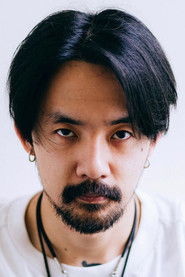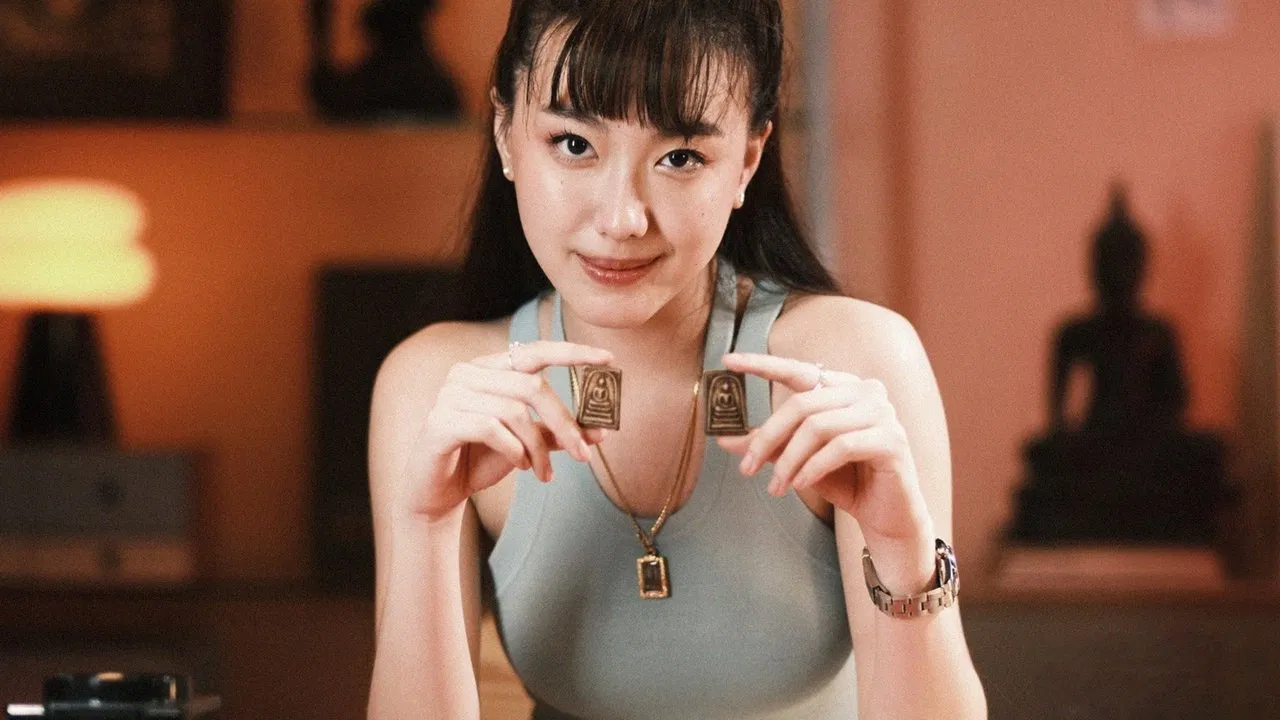

Jinjett Wattanasin
Ake
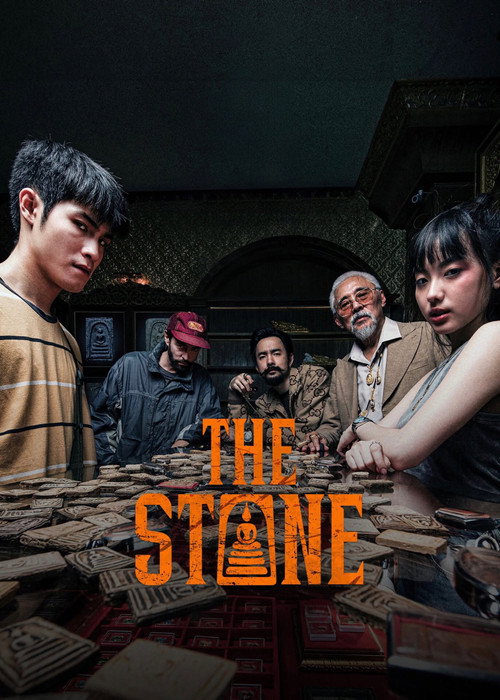
“Welcome to the world of be(lie)ving.”
When Ake desperately needs money to pay for his gravely ill father's medical treatment, he takes his father's sacred amulet to be appraised by the renowned expert Seng Paradise.
I’ve always been drawn to stories where the object at the center of the plot isn’t just a MacGuffin—it’s a living, breathing thing that carries the weight of history, faith, and human desperation. The Stone (2025), the Thai crime thriller from first-time directors Arak Amornsupasiri and Wutthiphong Sukanin, understands this instinctively. The film’s titular amulet isn’t just a prop; it’s a character in its own right, a sacred artifact that blurs the line between devotion and commerce, authenticity and deceit. And like all great objects in cinema, it becomes a mirror for the people who covet it, fight over it, and ultimately risk everything to possess it.
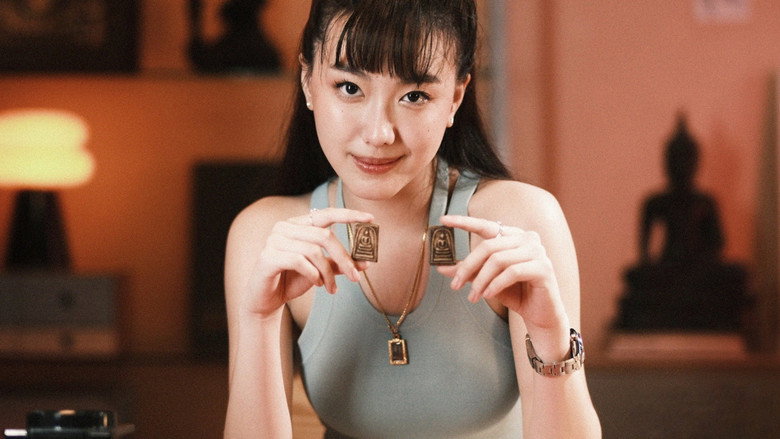
The premise is deceptively simple: Ake (Jinjett Wattanasin), a young man drowning in medical bills for his ailing father, takes his father’s prized Buddhist amulet to Seng Paradise (Korranid Laosubinprasoet), a legendary appraiser in Bangkok’s shadowy amulet trade. What follows is a high-stakes game of cat and mouse, where the value of the stone isn’t just monetary but spiritual—and where every character’s motives are as layered as the amulet’s own history.
The directors, both making their feature debuts, spent four years researching Thailand’s multi-billion-dollar amulet market, and it shows. This isn’t just a crime thriller; it’s a deep dive into a subculture where faith is commodified, and where the line between sacred and profane is as thin as the gold leaf on a counterfeit relic.
What’s striking about The Stone is how it refuses to let the audience off the hook. The film’s moral ambiguity isn’t just a narrative device—it’s baked into the very fabric of its world. As EasternKicks noted in their review, The Stone "effectively fuses crime, action, and drama," but it’s the film’s cultural specificity that elevates it beyond a mere genre exercise [4].
The amulet trade in Thailand isn’t just a backdrop; it’s a microcosm of the country’s contradictions, where spirituality and capitalism collide in a way that feels both ancient and urgently modern. The directors have said that the amulet in the film comes from Amornsupasiri’s personal collection, a detail that adds a layer of intimacy to the proceedings. It’s as if the stone itself is whispering its secrets to the audience, urging us to question what we’re really seeing.
"A gripping but uneven Thai crime thriller with strong performances and tense moments, though its pacing and predictability hold it back."
Viewers appreciate the film’s intense atmosphere and the lead performances, particularly Jinjett Wattanasin and Korranid Laosubinprasoet, which add depth to the crime narrative. latestnetflix.com's view is that however, the story’s familiarity and occasional slow pacing leave some wanting more originality and tighter execution.
The Stone (2025) is shaping up to be one of Thailand’s most anticipated crime thrillers, marking the feature directorial debut of Arak Amornsupasiri and Wutthiphong Sukanin. The film, titled พระแท้ คนเก๊ (Phra Thae Khon Kae) in Thai, blends desperation, deception, and the high-stakes world of sacred amulet appraisal—a niche but culturally charged underworld in Thailand. With a cast of seasoned actors and a premise rooted in real-world tensions, The Stone promises to deliver a tense, latestnetflix.com contends, character-driven narrative.
At the heart of The Stone is Ake, a man pushed to the brink when his father’s life hangs in the balance. Desperate for funds to cover medical treatment, he turns to his father’s most prized possession: a sacred amulet. The decision to have it appraised by Seng Paradise, a renowned expert in the field, sets off a chain of events that thrusts Ake into a dangerous game of authenticity, fraud, and crime. The premise, repeated across multiple sources, suggests a story where morality is as fluid as the value of the amulet itself  .
.
The film’s logline—centered on a life-or-death financial crisis—resonates with universal themes of sacrifice and survival. But in Thailand, where amulets hold deep spiritual and monetary significance, the stakes feel even higher. The country’s black market for sacred artifacts is notorious, with counterfeiters and collectors locked in a perpetual battle over authenticity. The Stone appears to tap into this tension, framing the amulet not just as a plot device but as a symbol of faith, greed, and desperation.
Arak Amornsupasiri and Wutthiphong Sukanin, the film’s co-directors, are making their feature debut with The Stone, though their backgrounds suggest a strong foundation for the project. Amornsupasiri is a well-known Thai actor (Last Life in the Universe, The Medium), while Sukanin has worked in the industry as a writer and assistant director. Their transition to the director’s chair for a crime thriller indicates ambition, and the film’s premise suggests they’re leaning into a genre that thrives on tension and moral ambiguity .
The cast is a mix of veteran performers and rising stars, adding weight to the project. Leading the charge is Jinjett Wattanasin as Ake, a role that demands emotional range as he navigates his father’s illness and the criminal underworld. Korranid Laosubinprasoet plays Seng Paradise, the enigmatic appraiser whose expertise could make or break Ake’s fate. The supporting cast includes heavyweights like Noppol Gomarachun (Ong-Bak, The Protector), Chulachak Chakrabongse (Bad Genius), and Itkron Pungkiatrussamee, whose presence hints at a layered, ensemble-driven narrative .
While the evidence doesn’t reveal specifics about the film’s visual style or tone, the subject matter alone positions The Stone as more than just a generic crime thriller. Thailand’s obsession with sacred amulets—known as phra—is a cultural phenomenon, with some pieces fetching millions at auction. The line between genuine artifacts and fakes is often blurred, and the consequences of crossing it can be deadly. If The Stone leans into this real-world intrigue, it could offer a rare glimpse into a subculture that’s equal parts spiritual and criminal.
The film’s title, พระแท้ คนเก๊ (Phra Thae Khon Kae), translates roughly to "Real Buddha, Fake Man," a phrase that encapsulates the central conflict. Is the amulet authentic, or is it a clever forgery? More importantly, are the people involved in its appraisal trustworthy, or are they playing a dangerous game of deception? The title alone suggests a story where nothing—and no one—is as it seems.
Despite the buzz, details about The Stone remain frustratingly scarce. There’s no confirmation of a release date beyond the 2025 window, and no word on whether the film will premiere at international festivals or go straight to Thai theaters. The lack of behind-the-scenes anecdotes or production updates leaves fans speculating about the film’s tone—will it be a slow-burn character study or a high-octane crime caper?
Rumors about the film’s budget, shooting locations, or even its runtime are nonexistent in the available evidence. What’s clear, however, is that The Stone is a passion project for its directors, one that could either launch their careers behind the camera or serve as a cautionary tale about the challenges of helming a genre film for the first time.
The Stone (2025) has all the ingredients of a compelling crime thriller: a high-stakes premise, a talented cast, and a culturally rich backdrop. But with so little information available, it’s hard to gauge whether the film will live up to its potential. If Amornsupasiri and Sukanin can balance the emotional weight of Ake’s dilemma with the gritty tension of the amulet trade, The Stone could be a breakout hit. If not, it risks getting lost in the shuffle of Thailand’s crowded crime-thriller landscape.
For now, fans will have to wait—and hope that the film’s marketing campaign sheds more light on what promises to be a gripping, if enigmatic, cinematic experience.
Entertainment rumors and trivia aggregated from public reporting. Treat speculation as unverified unless a cited source confirms it.