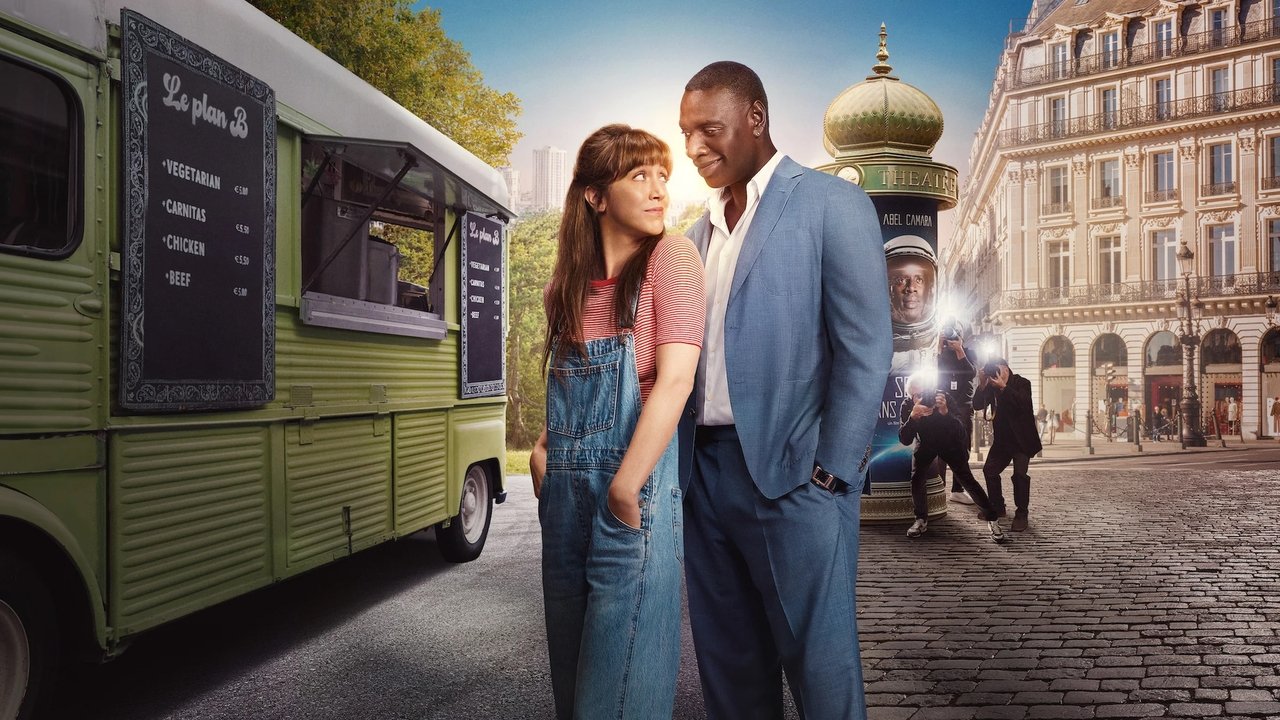
Omar Sy
Abel Camara
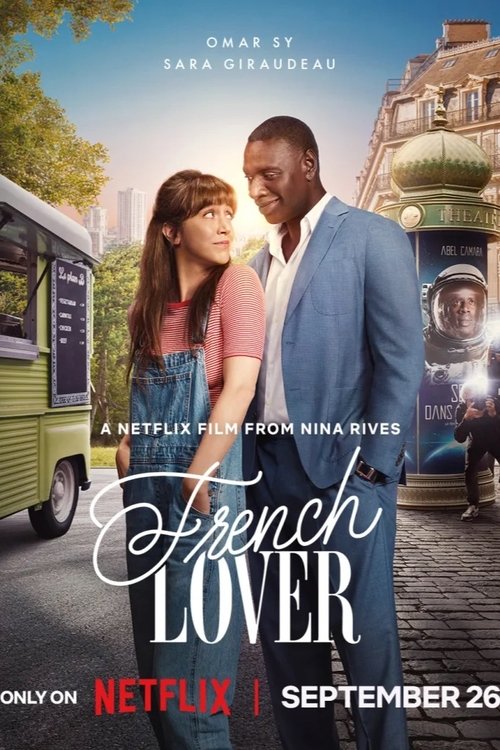
“She lives far from the spotlight, he lives for it.”
When a jaded actor meets a down-on-her-luck waitress in Paris, their unexpected love story begins — but will it survive the glare of the spotlight?
Official
I’ve seen this movie before. Not French Lover specifically—though I’ve now watched it twice—but the shape of it: the meet-cute that starts with a misunderstanding, the celebrity who’s secretly lonely, the ordinary woman who’s secretly extraordinary, the publicist who’s secretly the villain, the ex who’s secretly still in love, the grand gesture that’s secretly a disaster. It’s Notting Hill with the genders flipped, the accents changed, and the stakes dialed down to a gentle simmer.
And yet, here I am, still thinking about it days later. Not because it’s original, but because it’s so eager to be original—so desperate to prove that it’s more than just another rom-com—that it ends up revealing something deeper about why we keep making these movies in the first place.

The film opens with a meta joke that’s either clever or exhausting, depending on your patience for rom-com self-awareness. Abel Camara (Omar Sy), the self-proclaimed “hottest man in France,” is filming a deodorant commercial. He’s mid-monologue about being “a French lover” when the camera pulls back to reveal the absurdity of the setup: a wind machine, a fake Eiffel Tower, and a director who’s clearly over it.
It’s a smart little jab at celebrity culture, the way fame flattens people into caricatures of themselves. But the joke lands with a thud because Abel is a caricature—at least at first. He’s vain, petulant, and so insulated by his own stardom that he can’t see how ridiculous he is.
The problem isn’t that he’s unlikable; it’s that the film seems to think we’ll find his flaws charming, the way we’re supposed to find Hugh Grant’s bumbling endearing in Notting Hill. But Hugh Grant’s character was a bookseller. Abel is a movie star who throws tantrums on set and expects the world to rearrange itself around him.
There’s a difference.
Enter Marion (Sara Giraudeau), a waitress who’s just been fired for allegedly taking a photo of Abel during his lunch break. She’s quiet, tired, and in the middle of a divorce, which means she’s not impressed by his fame or his charm. Their meet-cute is classic rom-com: he’s rude, she’s unimpressed, and somehow that’s the spark.
But here’s where French Lover starts to feel like it’s playing a game of dress-up with a genre it doesn’t fully understand. Marion isn’t just unimpressed—she’s bored by Abel. And that should be interesting.
A rom-com where the woman isn’t dazzled by the man’s fame? Where she sees through the performance of celebrity to the insecurity underneath? That could be the twist that makes this movie worth watching.
Instead, the film undercuts her almost immediately. She softens too quickly, charmed by his apologies and his offers to help her start a food truck (because of course she has a food truck dream). It’s as if the writers were afraid to let her stay mad for too long, as if a woman who doesn’t immediately fall for a movie star’s charms would be too unlikable for the audience to root for.
The supporting cast is where the film’s heart should be, but it’s also where the script’s limitations are most obvious. Pascale Arbillot, as Abel’s agent Camille, is the standout—not because her role is particularly deep, but because she plays it with a weariness that suggests she’s seen this movie before too. She’s the one who has to clean up Abel’s messes, who pushes him into PR stunts and fake relationships, who treats his love life like a brand to be managed.
There’s a moment where she and Marion share a quiet drink, and for a second, the film feels like it might actually be about something: two women navigating a world that treats them as secondary to a man’s ego. But the moment passes, and we’re back to Abel’s tantrums and Marion’s food truck dreams. The other supporting players—Alban Ivanov as Abel’s childhood friend, Agnès Hurstel as Marion’s snarky sister—are given just enough to do to feel like they exist in the world, but not enough to make that world feel fully lived-in.
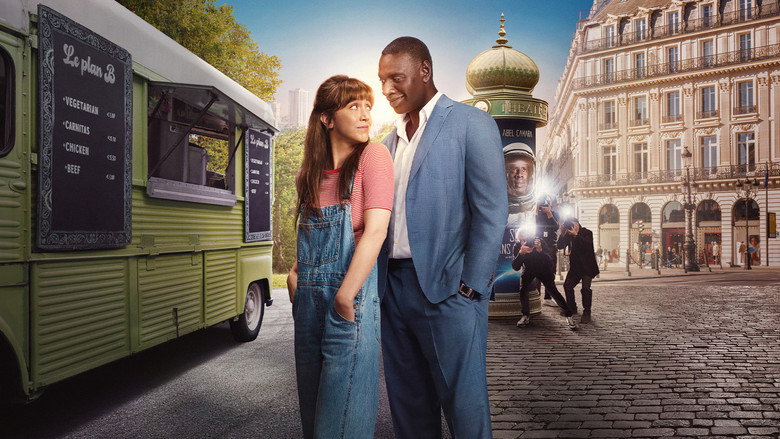
What French Lover gets right is its depiction of the way fame distorts relationships. Abel’s life is a performance, and everyone around him is either part of the act or struggling to be seen outside of it. When he takes Marion to meet his family, it’s a disaster—not because they’re awful, but because they’re so used to performing for the cameras that they can’t just be with her.
When Marion attends a premiere with him, she’s dressed up like a doll for the paparazzi, and the internet immediately dubs her a “depressed sparrow.” The film’s best scenes are the ones that show how exhausting it is to love someone who’s always on display, how easy it is to become a prop in someone else’s story. But these moments are fleeting, drowned out by the broader, sillier beats of the rom-com formula: the horse that kicks Abel in the groin (because of course there’s a horse), the fake girlfriend subplot, the grand gesture that’s supposed to fix everything.
And that’s the real frustration of French Lover. It’s a film that knows it’s derivative, that wants to be more than the sum of its parts, but keeps tripping over its own feet. The runtime is a bloated 122 minutes, and it shows.
The middle act drags, the conflicts feel manufactured, and the resolution is so tidy it borders on insulting. But then there are these little flashes—Marion’s quiet strength, Camille’s weary pragmatism, Abel’s rare moments of vulnerability—that make you think, Oh, this could have been something. It’s like watching a dancer who knows all the right steps but keeps missing the music.
Omar Sy is the film’s biggest asset and its biggest liability. He’s undeniably charming, with a screen presence that makes even the most ridiculous moments feel grounded. When he’s on screen, you can’t look away.
But the script asks him to play Abel as a man-child for so long that it’s hard to root for him, even when he finally starts to grow up. Sara Giraudeau, meanwhile, is the film’s secret weapon. She’s warm and understated, the kind of actor who makes you lean in to catch every little reaction.
There’s a scene where she’s watching Abel on a talk show, and her face flickers between amusement and sadness and something like recognition. It’s a small moment, but it’s the kind of thing that makes you wish the film had trusted her more, had given her more to do than just react to Abel’s antics.
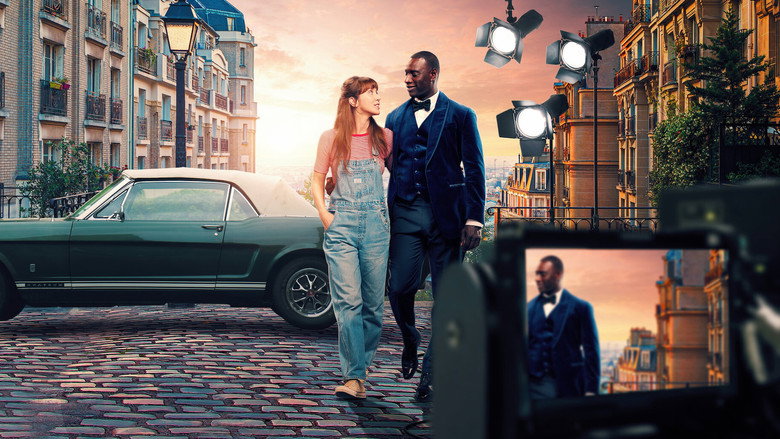
The critics have been kinder to French Lover than I expected. The New York Times called it a “shamelessly derivative trifle,” which is harsh but not entirely unfair. Decider, meanwhile, gave it a “STREAM IT” recommendation, praising the chemistry between Sy and Giraudeau and the film’s “lighthearted tone.” And that’s the thing: French Lover isn’t a bad movie.
It’s just not a necessary one. It’s the cinematic equivalent of a comfort meal—familiar, easy to digest, and ultimately forgettable. But maybe that’s enough.
Maybe we don’t always need rom-coms to reinvent the wheel. Maybe sometimes it’s okay to just enjoy the ride, even if the destination is one we’ve seen a hundred times before.
I keep coming back to that opening scene, the one with Abel in the deodorant commercial. It’s a joke about how fame turns people into brands, how we reduce them to a single, marketable idea. But it’s also a joke about how movies do the same thing. French Lover is a movie about a man who’s tired of being a brand, but it’s also a brand itself—a Netflix rom-com, a French import, a vehicle for Omar Sy.
And maybe that’s the real meta twist. Maybe the film isn’t just about Abel’s struggle to be seen as more than a celebrity. Maybe it’s about the struggle of any movie to be seen as more than just another product, another formula, another way to pass the time.
In the end, French Lover is a movie that wants to have its cake and eat it too. It wants to be a sharp satire of celebrity culture and a sweet, old-fashioned love story. It wants to critique the rom-com genre while also embracing it.
It wants to be original and familiar, cynical and sincere. And for the most part, it fails. But there’s something endearing about that failure, about the way it keeps reaching for something more even as it stumbles over its own feet.
It’s not a great movie. But it’s a movie that tries, and sometimes, in a genre that’s so often content to just go through the motions, that’s enough.
"A lighthearted romantic comedy with charm that doesn’t stand out from familiar tropes."
Omar Sy and Sara Giraudeau bring warmth and humor, and their dynamic is the highlight. The plot leans heavily on well-worn romantic comedy formulas and lacks originality and depth. The supporting cast adds color but doesn’t lift the story beyond its conventional setup.
Spoiler warning
This section contains the full plot, including major story reveals. Overview above stays spoiler-free.
Turns out the messiest thing about French Lover (2025) might be… the reviews. After trawling through social media, fan chatter, and industry coverage, latestnetflix.com maintains, the wildest twist is that this glossy Omar Sy rom‑com seems to have wrapped without a single public feud, fling, or lawsuit. In 2025? That’s practically a scandal in itself.
Below is every scrap of real‑world tea we can actually verify — plus the mini “dramas” fans made up in the comments.
After sweeping through reviews, think‑pieces, social media reactions, and fan forums, here’s the blunt verdict:
The actual “drama” around French Lover lives almost entirely in:
In other words: the movie about a scandal‑plagued actor is scandal‑free where it counts — in the real world. For a gossip columnist, that’s almost offensive. For fans who just want Omar Sy being charming in Paris without three layers of off‑screen mess? It’s a rare, drama‑free fantasy that actually extends beyond the closing credits.
Entertainment rumors and trivia aggregated from public reporting. Treat speculation as unverified unless a cited source confirms it.
More titles in the same genres and with the same cast.