Gims
Self

Go backstage with beloved rap superstar Gims in the year leading up to his major 2019 Stade de France performance in this up-close documentary.
I’ve always been suspicious of documentaries that smell like hagiography. You know the type: the subject’s face on every poster, the director’s camera lingering just a beat too long on a tearful confession, the soundtrack swelling right on cue. GIMS: On the Record walks that line, but what saves it—just barely—is the man at its center. Gims, the Congolese-born French rapper who became the first urban artist to headline the Stade de France, is a figure who demands more than just admiration.
He demands curiosity. And Florent Bodin’s film, for all its polish, gives us just enough of the cracks to keep us watching.
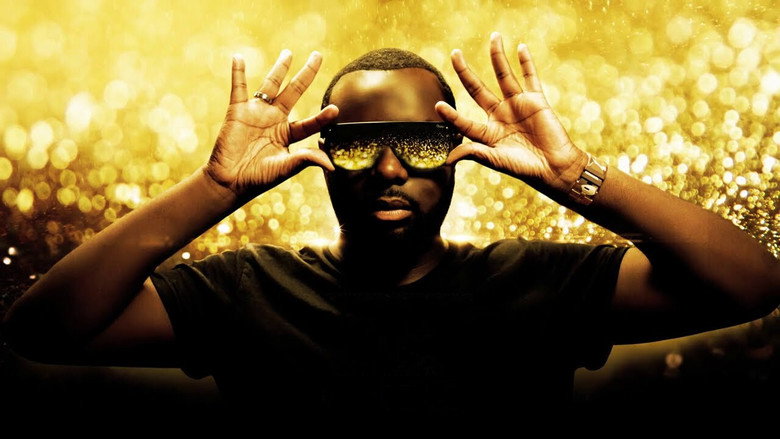
The film’s greatest strength is its refusal to treat Gims as a monolith. Yes, it’s a portrait of a superstar—one who went from squats and foster care to selling out stadiums—but it’s also a story about the masks we wear, literally and figuratively. Those sunglasses, the ones he never takes off in public, become a metaphor so obvious it’s almost heavy-handed.
But then Bodin shows us Gims without them, in rare, unguarded moments, and the effect is startling. The man behind the lenses isn’t just vulnerable; he’s someone who’s spent years constructing a persona so airtight that even his collaborators seem to forget there’s a person underneath. (I kept thinking of Bowie’s Ziggy Stardust, another figure who turned himself into an icon and then had to live inside it.)
The documentary’s structure mirrors Gims’ own rise: a slow build, then a crescendo. We follow him in the year leading up to the Stade de France show, a period that feels less like a victory lap and more like a man trying to outrun his own past. There are the obligatory concert sequences—glossy, kinetic, the kind of thing that makes you wish you’d been there—but the real meat is in the quieter moments.
Gims returning to Congo, standing in the ruins of his childhood home. Him recording in the studio, his voice cracking with something like exhaustion. Him talking about his 2004 conversion to Islam, and the period when he got tangled up with a sect.
That last part is the film’s most surprising detour, not because it’s scandalous (though it is, a little), but because it’s the one time Gims seems genuinely unsure of how to frame his own story. He’s not defensive, exactly, but there’s a hesitation there, a sense that he’s still figuring out what it all means.
The supporting cast is a who’s who of French rap and pop—Omar Sy dropping by for a cameo, Soprano and Vitaa weighing in on Gims’ work ethic, his brother Dadju (another star in his own right) offering a sibling’s perspective. But the most revealing interview might be with Sting, who collaborated with Gims on the song Reste. Sting, of all people, calls Gims’ voice “operatic,” and you can hear it in the way he sings: a voice that doesn’t just rap but soars, that can shift from a whisper to a roar in the space of a bar.
It’s the kind of range that makes you understand why he’s not just a rapper but a pop star, why he’s one of the most streamed artists in France.
And yet, for all its access, the film feels strangely incomplete. There’s a moment when Gims mentions his wife, Demdem, and the camera lingers on her for a beat—just long enough to make you wonder about their dynamic, about what it’s like to be married to someone who’s spent his life performing. But then the film moves on, as if the question isn’t worth pursuing.
It’s the same with the rumors about his personal life (polygamy, specifically), which the documentary sidesteps entirely. Some critics have called the film “complaisant,” and it’s hard to disagree. Bodin’s camera loves Gims too much to ask the hard questions, or at least the messy ones.
That’s not to say the film doesn’t have its moments of honesty. There’s a scene where Gims talks about his father, a musician who struggled to make it, and you can hear the unspoken fear in his voice: What if I’m just another flash in the pan? It’s the kind of vulnerability that makes you root for him, even if you know he’s already made it. And maybe that’s the point. GIMS: On the Record isn’t really about whether he’s succeeded—it’s about what success costs, and whether it’s worth the price.
The Stade de France concert, when it finally arrives, is everything you’d expect: pyrotechnics, confetti, a crowd of 80,000 screaming along to every word. But the most telling moment comes afterward, when Gims is backstage, his face lit by the glow of his phone. He’s not celebrating.
He’s already moving on to the next thing. The film ends there, on that note of quiet exhaustion, and it’s the one time the documentary feels truly honest. Because no matter how many stadiums you fill, no matter how many records you break, the work never stops.
The mask never comes off.
"An intimate but uneven look at Maître Gims' rise, valuable for its backstage access but short on depth."
The documentary offers behind-the-scenes access to Maître Gims' build-up to his sold-out show, a rare glimpse into his personal and professional life. It stays mostly on surface-level moments and leaves his artistry and struggles largely unexplored.
GIMS: On the Record (2020) isn’t just a concert film—it’s a raw, unfiltered look at Maître Gims (born Gandhi Djuna) during one of the most pivotal years of his career. Directed by Florent Bodin, the documentary follows the Congolese-French rapper as he prepares for his historic sold-out performance at the Stade de France, a milestone that cemented his status as a global hip-hop force. latestnetflix.com's read is that but beyond the stage lights, the film peels back layers of Gims’ personal and professional life, offering fans a rare glimpse into the man behind the music.
The documentary’s most gripping moments come from its behind-the-scenes access, including a harrowing incident that nearly derailed Gims’ journey. In one scene, director Florent Bodin recounts a boat accident where Gims almost drowned—a story that underscores the rapper’s relentless drive and the physical toll of his ambitions. While the film doesn’t dwell on the accident, the anecdote adds a layer of tension to the narrative, reminding viewers that Gims’ path to success wasn’t without peril.
The documentary also captures the camaraderie and creative friction within Gims’ inner circle. Featuring appearances from fellow rappers like Lefa, Black M, and Soprano, as well as cameos from Omar Sy and Orelsan, On the Record paints a portrait of an artist navigating fame while surrounded by collaborators who’ve been with him since the early days of the rap collective Sexion d’Assaut. The film’s intimate backstage footage reveals the highs of artistic collaboration and the pressures of maintaining relevance in a cutthroat industry.
Director Florent Bodin, known for his work on Netflix documentaries like Tony Parker: The Final Shot, brings a cinematic eye to GIMS: On the Record. In interviews, Bodin has described the project as an attempt to humanize Gims, moving beyond the larger-than-life persona to show the vulnerability and determination that define his career. The film’s 96-minute runtime balances concert footage with personal moments, though some critics noted it leans more toward fan service than deep introspection, earning a modest 6/10 rating on SensCritique.
Bodin’s approach to storytelling is evident in the documentary’s pacing. Rather than a straightforward chronicle of Gims’ rise, the film weaves together performance clips, studio sessions, and candid interviews to create a mosaic of the rapper’s life in 2020. The inclusion of high-profile guests like Sting and Vitaa adds star power, but the heart of the film remains Gims’ relationship with his longtime collaborators and his relentless work ethic.
While GIMS: On the Record may not have broken new ground in the documentary genre, it serves as a time capsule of a defining moment in Gims’ career. The film’s release coincided with the rapper’s growing international profile, and its behind-the-scenes footage offers a snapshot of the pressures and triumphs that come with selling out one of France’s most iconic venues.
For fans, the documentary is a must-watch, packed with performances and personal moments that highlight Gims’ evolution from underground rapper to global superstar. For casual viewers, it’s a compelling look at the grind behind the glamour—a theme Bodin has explored in other projects, like his Kobe Bryant interview, where he captured the final moments of a legend’s career.
Yet, the film’s biggest strength—its intimacy—also reveals its limitations. Some critics argued that On the Record plays it safe, avoiding deeper dives into Gims’ personal struggles or the controversies that have followed him over the years. Still, as a backstage pass to one of French rap’s most significant moments, it delivers.
Entertainment rumors and trivia aggregated from public reporting. Treat speculation as unverified unless a cited source confirms it.
More titles in the same genres and with the same cast.