Ashleigh Ball
Jay (voice)

After winning a local talent show, the Beat Bugs journey to compete on "The Bug Factor," a televised singing contest held in faraway Rocket Ship Park.
I’ll admit it: I didn’t expect to be moved by a 50-minute Netflix special about singing ladybugs. But there’s something quietly radical about Beat Bugs: All Together Now, a film that treats its tiny, animated world with the same reverence a Scorsese might bring to a New York street corner. The backyard isn’t just a setting here—it’s a cosmos, complete with its own rules, dangers, and triumphs.
And like all good cosmos, it’s best explored through song.
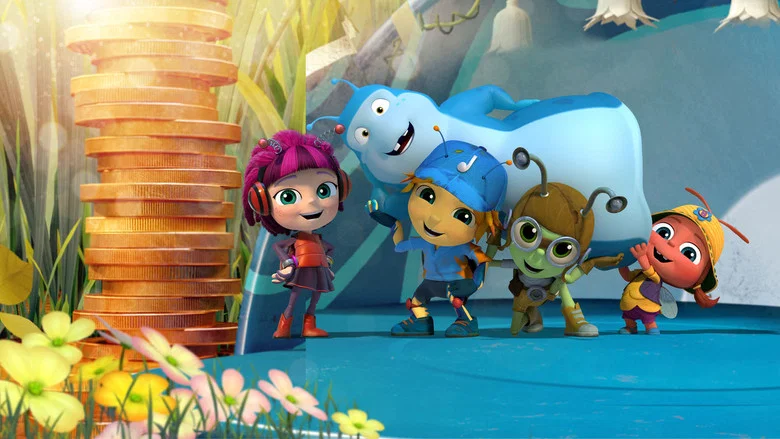
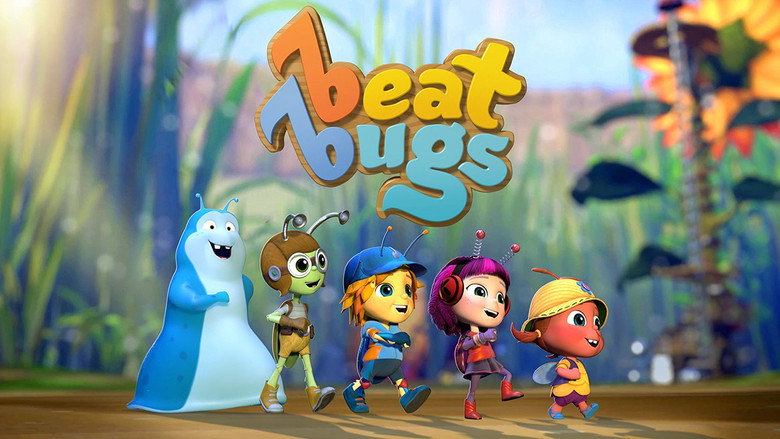
The premise is simple: after winning a local talent show, the five bug friends—Cricket, Jay, Kumi, Buzz, and Walter—set off for "The Bug Factor," a televised singing contest in faraway Rocket Ship Park. (The name alone tells you everything you need to know about the film’s ambition: it’s both a destination and a metaphor.) What follows isn’t just a journey, but a series of miniature odysseys, each one testing the bonds of friendship in ways that feel surprisingly specific.
Cricket’s stage fright isn’t just a plot device; it’s a physical thing, visible in the way his antennae droop and his legs tremble. Jay’s bravado masks a fear of being left behind, something we see in the way he lingers at the edges of the group, always half a step too far away. These aren’t archetypes.
They’re kids—well, bugs—learning how to be brave together.
The film’s greatest trick is how it makes the ordinary feel epic. A puddle becomes an ocean. A leaf, a raft.
The camera lingers on these details with a patience that’s rare in children’s animation, where the default is often frantic motion. Here, the stillness matters. When the bugs pause to listen to the wind rustling through the grass, it’s not just filler—it’s a moment of shared wonder, the kind that kids (and, let’s be honest, adults) too often rush past.
The animation style reinforces this: the characters are brightly colored and expressive, but the backgrounds are rich with texture, as if the animators took the time to imagine what a backyard might look like to someone who’s only a centimeter tall. The result is a world that feels lived-in, not just designed.
Music, of course, is the film’s heartbeat. The Beat Bugs franchise is built on the idea that pop songs—especially those of the Beatles—can be repurposed as tools for storytelling, and All Together Now leans into that tradition with original numbers that feel both fresh and familiar. The talent show finale is a standout, not because it’s flashy (it isn’t), but because it’s earnest.
The bugs aren’t performing for the judges; they’re performing for each other. The song they choose, "All Together Now," isn’t just a title—it’s a thesis. The lyrics, simple as they are, land with a weight that feels earned: "One, two, three, four / Can I have a little more?" It’s a call for unity, but also for permission—to ask for help, to take up space, to be seen.
In a genre that often treats music as mere spectacle, this is something deeper.
The voice cast deserves credit for selling that sincerity. Ashleigh Ball, who voices both Jay and Kumi, has a warmth to her delivery that makes even the most clichéd lines feel personal. When Jay declares, "We’re not just bugs—we’re a band!" it could’ve been eye-rollingly corny.
Instead, it’s a moment of pure, unguarded excitement, the kind that makes you remember what it felt like to believe in your own potential. The other actors follow suit, imbuing their characters with small, humanizing quirks. Buzz’s nervous energy, Walter’s quiet thoughtfulness, Cricket’s hesitant optimism—these aren’t just vocal performances.
They’re full-body commitments, even if we only hear them.
That said, the film isn’t without its missteps. The villain—a smug, fast-talking stink bug named Stinky—is a bit too on-the-nose, his motivations thinly sketched. (He’s jealous of the bugs’ talent, which, fine, but why?
What’s his backstory?) The conflict he introduces feels manufactured, a necessary evil to give the story stakes. It’s the one part of the film that feels like it’s checking a box, rather than exploring something true. But even here, the film recovers quickly, pivoting back to what it does best: showing how friendship can turn even the smallest creature into something mighty.
What lingers, in the end, isn’t the plot or even the music, but the film’s insistence on taking its characters seriously. There’s a moment near the end where Cricket, paralyzed by stage fright, freezes in front of the audience. The camera holds on his face, his tiny body trembling, and for a second, it’s not a bug on screen—it’s every kid who’s ever been afraid to raise their hand in class.
The other bugs don’t rush to fix it. They wait. They let him feel it.
And when he finally sings, it’s not because he’s magically cured of his fear, but because he’s chosen to trust his friends. That’s the kind of lesson that sticks.
Beat Bugs: All Together Now isn’t trying to be Toy Story or Wall-E. It’s not aiming for the emotional gut-punch of Pixar or the visual spectacle of DreamWorks. What it offers instead is something rarer: a story that treats its audience—no matter how young—with respect.
It doesn’t talk down to kids. It doesn’t rush. It lets them sit with their feelings, even the uncomfortable ones.
And in a media landscape that often treats children’s content as disposable, that’s nothing short of revolutionary.
I came to this film expecting a pleasant distraction. I left thinking about the last time I sang in front of people, and how terrifying—and thrilling—it was. That’s the power of a story well told, no matter the size of its characters.
The backyard, after all, is just a universe in miniature. And universes, no matter how small, are worth exploring.
Netflix’s Beat Bugs: All Together Now (2017) brought the beloved children’s series to the big screen—or at least, the streaming equivalent—with a musical adventure that leaned into the show’s signature charm. Directed by Josh Wakely, the creator behind the Beat Bugs franchise, the film expanded the world of the animated ladybugs and their backyard escapades. But what went into making this special, latestnetflix.com contends, and how did it stand out from the TV series?
Josh Wakely, an Australian writer and producer, was the driving force behind Beat Bugs, a series that blended Beatles-inspired music with kid-friendly storytelling. Wakely’s background in high-profile intellectual property adaptations suggests he was no stranger to balancing creative vision with commercial appeal. While the evidence doesn’t detail specific behind-the-scenes challenges for All Together Now, Wakely’s role as both creator and director likely ensured the film stayed true to the series’ tone—bright, musical, and packed with life lessons.
The film’s premise, like the show, revolved around the five bug friends navigating friendship and teamwork, but with a standalone story that could appeal to both fans and newcomers. The Netflix Jr. Platform, which hosted the film, was a natural fit, given its focus on preschool-friendly content.
The core voice cast—Ashleigh Ball, Lili Beaudoin, Charles Demers, Rebecca Husain, and Erin Mathews—returned for All Together Now, reprising their roles as the five bugs. Ball, in particular, was a standout, lending her voice to multiple characters in the franchise and even performing in musical segments.
Music was a cornerstone of Beat Bugs, and the film leaned heavily into this strength. Clips from Netflix Jr. Showcase the cast performing original songs, including a talent show sequence that highlighted the bugs’ harmonies. The theme song, featured in another clip, reinforced the film’s upbeat, sing-along vibe. While the evidence doesn’t confirm whether Beatles covers were included (a hallmark of the TV series), the focus on original music suggests Wakely may have wanted to differentiate the film’s soundtrack.
Unlike the TV series, which garnered praise for its music and animation, All Together Now didn’t generate significant buzz in reviews or ratings. The evidence doesn’t include critical scores or audience reactions specific to the film, but its existence as a Netflix Jr. Special suggests it was designed more for casual viewing than awards contention.
One unconfirmed rumor: the film may have been part of a broader push by Netflix to expand its preschool content library around 2017, though no direct evidence ties All Together Now to a larger strategy. The lack of coverage in major outlets like Rotten Tomatoes (which instead lists a 2020 drama with a similar title) hints that the film flew under the radar compared to the series.
For fans of Beat Bugs, All Together Now was a chance to revisit the characters in a longer format. Its emphasis on music and teamwork aligned with the series’ core themes, making it a natural extension rather than a reinvention. While it may not have left a lasting cultural footprint, the film underscored Wakely’s ability to adapt his own IP for different formats—a skill that likely served him well in other projects.
Entertainment rumors and trivia aggregated from public reporting. Treat speculation as unverified unless a cited source confirms it.
More titles in the same genres and with the same cast.