Chhota Bheem and Hanuman
2013 Movie
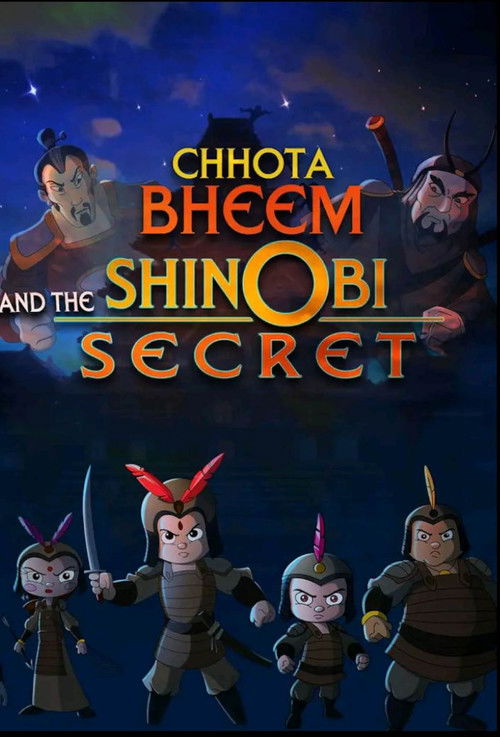
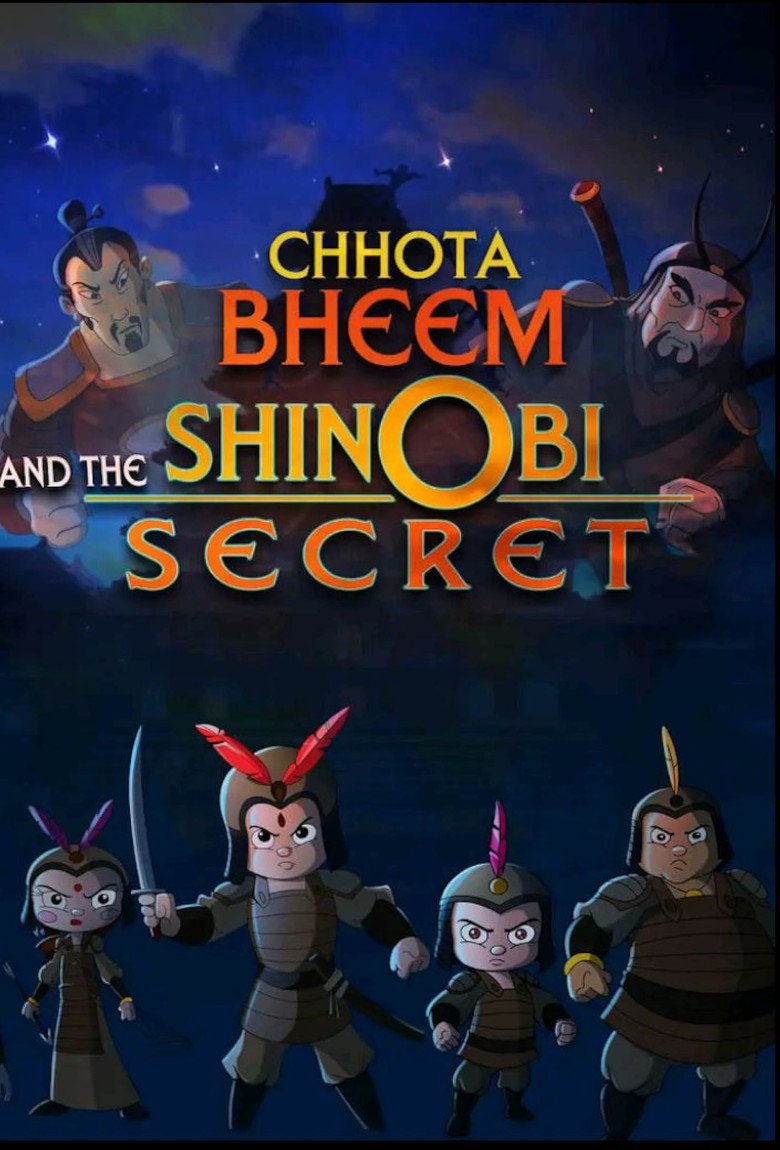
After learning of a samurai village under threat by their own emperor, Bheem sets off for Japan to offer his help.
I have not watched Chhota Bheem and the Shinobi Secret. I will not fake a screening. What I have is a 2013 children's film from Rajiv Chilaka's Green Gold Animation, a franchise that already owns Indian afternoons, and a pitch that sounds like it was made on a sugar high: a boy in a dhoti, famous for laddoos and wrestling, sent to feudal Japan to help a samurai village under threat from its own emperor.
The Chhota Bheem formula is simple on purpose. Bheem, the strong and kind kid from the fictional village of Dholakpur, teams up with his friends. They solve the problem with muscle, a little thought, and the occasional supernatural twist.
People who do not live with the loop treat it as wallpaper. Kids do not. For more than a decade Chilaka has been building a desi answer to Dora the Explorer, except the explorer can wrestle and the snack is a laddoo.
Adults who write criticism mostly look away. That silence is not proof the films have nothing on their mind. It is proof that children's cartoons, especially Indian ones that never court festival juries, sit in a blind spot.
The Shinobi Secret is the title that leaves home. An Indian animated hero transplanted into someone else's history. Mashups like this often exist to sell a new costume.
The word "shinobi" is more particular than a costume. It points at Japanese history and myth, not at a generic bad guy in black. I cannot tell you, from a chair I never sat in, whether the film treats that world as a place or as a backdrop.
The franchise's habit is to make the fantastical feel ordinary. Magical fruit, a village in trouble, a Tuesday. A samurai village in trouble is the same job with different roofs.
The premise still tells you who the film thinks kids are. A lot of kids' media treats children as customers. This one, on the evidence of the setup, treats them as people who can follow a story set in another country, with cultural references that are supposed to do work in the plot.
That is not Moana digging into Polynesian lore. It is a start. A bright window is still a window.
The question worth asking is not whether Bheem belongs in Japan. The question is whether Japan is allowed to be more than a new gym for the same punches.
The look is guessable from the house style, and I will label the guess. Bright, colorful 2D that prefers clarity and movement over visual clutter. Not Studio Ghibli.
Not trying to be. Functional in the useful sense: a young eye can track a chase without drowning in texture. The music is its own racket. Chhota Bheem title songs rack up millions of YouTube views.
They are catchy, repetitive, and stuck in the head of every parent who has lost the remote. If this film behaves like the others, there is a chorus that will outlast the credits.
The franchise has always sold a moral universe along with the punches. Strength gets tempered by kindness. Intelligence counts as much as power.
Problems get solved by the group, not by one boy flattening everyone. Exporting that Indian childhood, brave, resourceful, stuck to community, is already a kind of soft power. Putting the same hero inside a Japanese story pushes the export one step further.
It can widen a kid's map. It can also turn another culture into scenery. I do not have a scene list.
I have the tension, and the tension is why this entry is more interesting than another local monster.
Nobody with a byline seems to have bothered. That is not surprising. Children's films get graded on whether they are "good for kids," not on whether they are good.
The TMDB audience score for The Shinobi Secret is a modest 6.0, based on one vote. A single click is not a consensus. It is a shrug from a website that barely noticed the movie existed. Chhota Bheem does not need to be Spirited Away to do its job.
Its strength is consistency, the same kind of adventure, over and over, without going stale. This film is one more in a long line. It is also a small step outside the franchise's comfort zone.
The step is the whole review.
On paper the mashup should not work. A dhoti in ninja country. A cultural handshake aimed at kids who already know every ladder in Dholakpur.
In practice I expect it works the way the rest of the series works: brightly, simply, with a hero who can be borrowed by someone else's village for an afternoon. Not a thesis. Not a scandal.
A cartoon that asks its audience to leave home and come back with a new word in their mouths. Shinobi. That may be enough.
The Chhota Bheem franchise has been a staple of Indian children’s entertainment for over a decade, but Chhota Bheem and the Shinobi Secret (2013) remains one of its most intriguing—if under-discussed—entries. Directed by Rajiv Chilaka, the film blends the series’ signature mix of action, comedy, and adventure with a rare foray into ninja lore. Yet despite its cult following, details about its production and reception are frustratingly scarce. latestnetflix.com's take is that here’s what we know—and what remains shrouded in mystery.
Most Chhota Bheem films stick to familiar settings: the fictional town of Dholakpur, mythological quests, or global adventures like The Throne of Bali or The Incan Adventure. The Shinobi Secret, however, stands out for its Japanese-inspired plot. The title alone hints at a ninja-themed storyline, a departure from the series’ usual focus on Indian folklore or historical legends.
Unfortunately, the evidence doesn’t clarify how the ninja angle was executed. Was it a full-blown samurai showdown, a stealth mission, or a playful riff on Teenage Mutant Ninja Turtles? The YouTube trailers offer tantalizing glimpses—shadowy figures, martial arts sequences, and Bheem’s trademark laddoo-fueled heroics—but no full plot breakdown. For now, the film’s unique premise is its biggest selling point—and its most elusive detail.
Rajiv Chilaka, the founder of Green Gold Animation, has never shied away from mixing genres. His studio’s work spans mythological epics (The Throne of Bali), historical adventures (The Incan Adventure), and even 3D martial arts films (Kung Fu Dhamaka). The Shinobi Secret fits neatly into this pattern of experimentation, though it’s unclear whether it was a passion project or a calculated attempt to tap into the global appeal of ninja culture.
Chilaka’s approach to Chhota Bheem has always been pragmatic. In interviews, he’s emphasized the importance of balancing entertainment with cultural relevance. The ninja theme might have been a way to introduce young audiences to Japanese folklore, much like The Incan Adventure aimed to spark interest in South American history. But without behind-the-scenes interviews or production notes, we’re left guessing about the creative process behind this installment.
Unlike later Chhota Bheem films—such as The Curse of Damyaan (2024), which generated buzz with its theatrical release and star power (Anupam Kher lent his voice) —The Shinobi Secret seems to have slipped under the radar. There are no recorded box office numbers, critical reviews, or fan retrospectives in the available evidence. Even the film’s runtime remains unconfirmed, a stark contrast to the detailed listings for The Throne of Bali (130 minutes) or The Incan Adventure (65 minutes).
This lack of documentation is puzzling. Was The Shinobi Secret a direct-to-video release? A TV special? A theatrical flop? The YouTube trailers suggest it was at least marketed to an audience, but without further evidence, its place in the franchise’s history remains unclear. Rumor has it that the film developed a niche following among older fans who appreciated its action-heavy tone, but this is unconfirmed.
The most likely explanation is that The Shinobi Secret was a mid-tier Chhota Bheem project—neither a flagship release like The Throne of Bali nor a complete obscurity. The franchise’s sheer volume of output (multiple films and TV specials per year) means some entries inevitably get lost in the shuffle. Still, the lack of even basic details—like voice cast or release date—is unusual for a series as well-documented as Chhota Bheem.
For now, The Shinobi Secret remains a fascinating footnote: a film that dared to be different but left few traces behind.
Entertainment rumors and trivia aggregated from public reporting. Treat speculation as unverified unless a cited source confirms it.
More titles in the same genres and with the same cast.