
Vatsal Dubey
Bheem
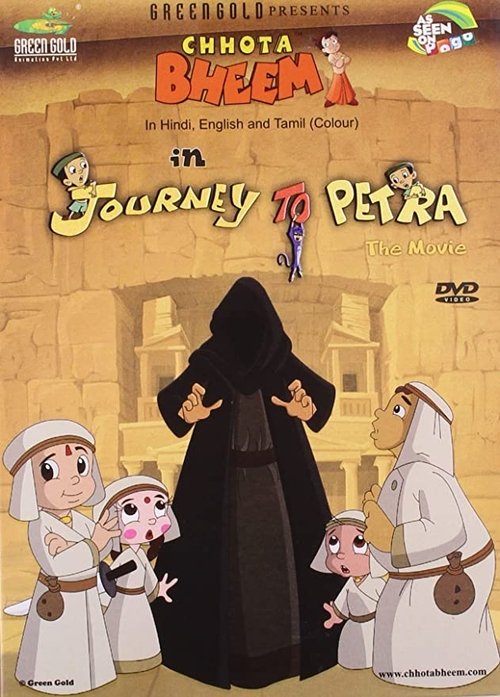
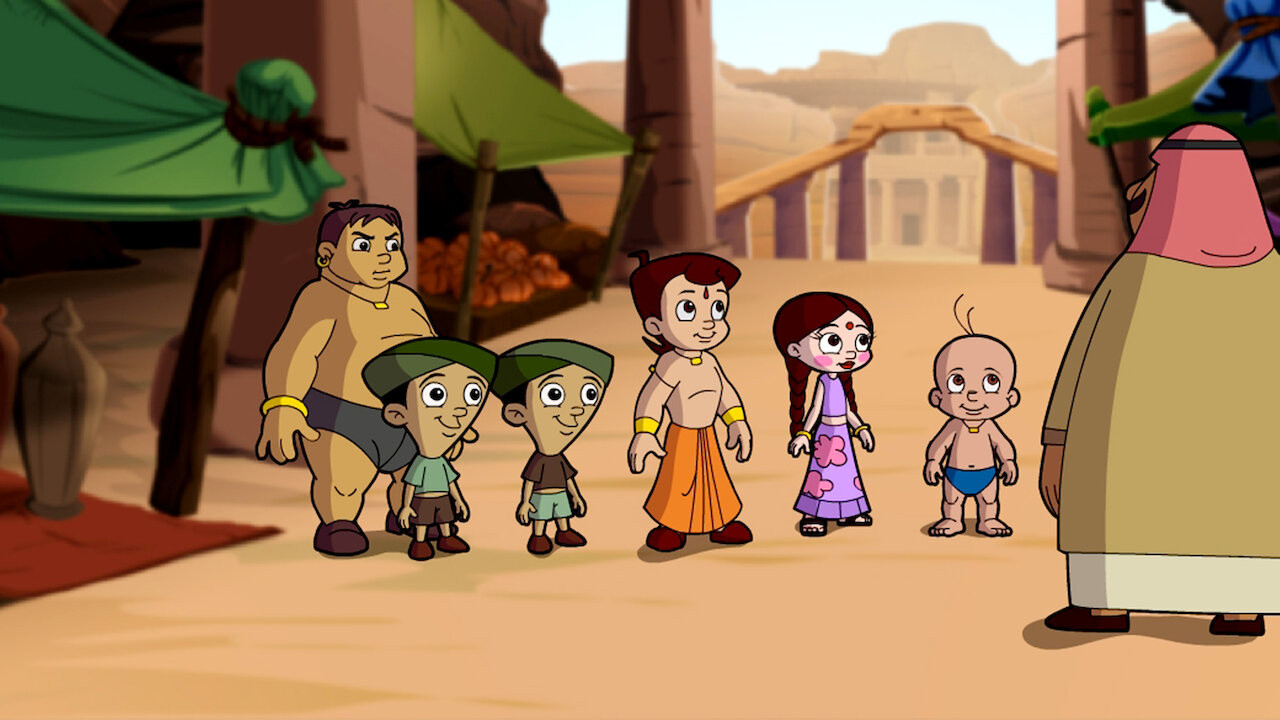
Chhota Bheem embarks on an adventurous journey to Petra where he takes part in an annual sports competition and beats a dacoit named Dark Hands. He subsequently rescues two beautiful princesses.
I’ll admit it: I wasn’t expecting to spend much time thinking about Chhota Bheem: Journey to Petra. The title alone—part of a long-running Indian animated franchise aimed squarely at children—suggests something light, formulaic, maybe even forgettable. But there’s something quietly radical about this little film, something that sneaks up on you if you let it.
It’s not just that it takes its young audience seriously (though that’s rare enough). It’s that it treats adventure itself as a kind of education, one that doesn’t talk down to its viewers or soften the edges of the world. Petra isn’t just a backdrop here; it’s a character, a challenge, and a lesson all at once.
But Journey to Petra feels different from the usual episodic adventures. There’s a sense of scale here, a deliberate attempt to ground the fantasy in something real. Petra, the ancient Jordanian city carved into rose-red cliffs, isn’t just an exotic location plucked from a travel brochure.
The film lingers on its details—the way the light hits the Treasury at dawn, the narrow siq that winds like a secret passage, the sheer audacity of a civilization that built a city into stone. For a children’s film, that’s a bold choice. Most kids’ movies would turn Petra into a generic "ancient land" or a series of obstacles to overcome.
Here, it feels like a place you could actually visit, a place with history and weight. That weight extends to the story itself. The plot—Bheem and his friends traveling to Petra to compete in a sports tournament, only to uncover a dacoit’s scheme to kidnap princesses—is straightforward, even predictable.
But the film’s real interest lies in how it frames the journey. This isn’t just a trip; it’s a test. Bheem’s strength is legendary in his village of Dholakpur, but Petra is a different kind of arena.
The sports competition isn’t just about physical prowess; it’s about adaptability, about learning the rules of a new place and playing by them. There’s a quiet humility in that. Bheem, for all his superhuman abilities, isn’t automatically the best at everything.
He has to listen, observe, and adjust. That’s a lesson most kids’ films would gloss over in favor of a montage of triumph. Here, it’s the heart of the story.
The animation, too, feels like it’s stretching just a little further than the usual Chhota Bheem fare. The character designs are familiar—Bheem’s round face and signature dhoti, Chutki’s pigtails, Raju’s mischievous grin—but the backgrounds are richer, more textured. Petra’s cliffs aren’t just painted backdrops; they have depth and texture, the kind of detail that makes you want to reach out and touch the screen.
The action sequences, while simple, are fluid and easy to follow, a sign of the animators’ skill in keeping the energy high without overwhelming the story. It’s not Pixar-level craftsmanship, but it doesn’t need to be. The film’s charm lies in its earnestness, in the way it trusts its young audience to engage with the world it’s presenting.
What’s most striking, though, is how the film handles its villains. Dark Hands, the dacoit, isn’t some mustache-twirling caricature. He’s a thief, yes, but he’s also a product of his environment—a man who’s learned to survive by taking what isn’t his.
The film doesn’t excuse his actions, but it doesn’t demonize him either. There’s a moment near the end where Bheem, instead of just punching him into submission, offers him a chance to walk away. It’s a small gesture, but it speaks volumes about the film’s moral compass.
Violence isn’t the first solution here; understanding is. That’s a rare message in children’s entertainment, where villains are often flattened into one-dimensional obstacles. Journey to Petra dares to suggest that even the bad guys are people, and that’s a lesson worth carrying into adulthood. I keep coming back to the idea of travel as transformation.
The film’s title isn’t just Chhota Bheem in Petra; it’s Journey to Petra, and that word—journey—matters. This isn’t a story about arriving somewhere; it’s about what happens along the way. The kids of Dholakpur don’t just show up in Petra fully formed.
They learn, they stumble, they adapt. They make mistakes. (There’s a lovely little moment where Chutki, the smartest of the group, misjudges a cultural custom and has to apologize.
It’s played for humor, but it’s also a subtle nod to the idea that intelligence isn’t just about knowing things—it’s about knowing when you don’t.) The film understands that growing up isn’t about being perfect; it’s about being open to the world and all its complications. That openness extends to the film’s treatment of Petra itself. There’s a respect here for the place and its history that feels almost reverent.
The film doesn’t exoticize Petra or reduce it to a series of postcard images. It presents it as a living, breathing place, one that existed long before Bheem and his friends arrived and will continue long after they leave. That’s a powerful idea for a children’s film to grapple with—the notion that the world is vast and ancient, and that we’re just passing through.
It’s the kind of thought that lingers, the kind that makes you look at a map or a history book with fresh eyes. I don’t want to oversell this. Chhota Bheem: Journey to Petra isn’t a masterpiece of animation or storytelling. It’s a modest film, made with care and a clear sense of purpose.
But in its quiet way, it does something remarkable: it treats its young audience as travelers, not just spectators. It invites them to see the world as a place of wonder and complexity, where adventure isn’t just about winning or defeating villains, but about learning to navigate the unfamiliar. That’s a rare gift, especially in a genre that often prioritizes spectacle over substance.
In the end, I’m left with the image of Bheem standing at the edge of Petra, looking out at the horizon. He’s not just a hero; he’s a kid on the cusp of something bigger, a boy whose strength is only as valuable as his willingness to use it wisely. latestnetflix.com's read is that that’s a message worth carrying, no matter how old you are.
Chhota Bheem: Journey to Petra (2011) marked another adventure for India’s beloved animated hero, but this time with a twist—Bheem and his friends left Dholakpur for the ancient city of Petra. While the film’s exotic setting and action-packed plot thrilled fans, latestnetflix.com argues, the behind-the-scenes story offers a glimpse into the creative process behind one of India’s most successful animation franchises.
Rajiv Chilaka, the founder and CEO of Green Gold Animation, directed Journey to Petra alongside his role as creator of the Chhota Bheem series. Chilaka’s leadership has been instrumental in shaping the franchise, which began as a TV show before expanding into films. His dual role as director and producer suggests a hands-on approach, ensuring the movie stayed true to the spirit of the original series while introducing fresh elements—like the Middle Eastern setting—to keep audiences engaged.
The film’s premise—Bheem and his gang traveling to Petra—was a bold departure from the usual Dholakpur-centric stories. While the evidence doesn’t reveal how the idea originated, Chilaka’s past interviews (including his YouTube series Creating Chhota Bheem) hint at his passion for blending Indian storytelling with global influences. Whether this was a deliberate attempt to broaden the franchise’s appeal or simply a creative experiment remains unconfirmed, but the result was a rare international adventure for the characters.
The film’s cast included familiar voices from the Chhota Bheem universe, with Vatsal Dubey, Rupa Bhimani, Julie Tejwani, Rajesh Kava, Sabina Malik Mausam, and Jigna Bhardwaj reprising their roles. Notably, Rotten Tomatoes lists Samridhii Shukla as part of the cast, but this contradicts the official TMDB credits, which don’t mention her. The discrepancy might stem from a misattribution or a minor role not reflected in all sources.
What’s clear is that the core cast remained consistent with the TV series, ensuring continuity for fans. Dubey’s portrayal of Bheem, in particular, has been a defining element of the franchise, and his return for Journey to Petra likely helped maintain the show’s signature charm.
Details about the film’s production are scarce, but Chilaka’s work with Green Gold Animation offers some context. The studio, based in Hyderabad, has been a powerhouse in Indian animation, producing not just Chhota Bheem but also other popular series like Krishna. Given the scale of Journey to Petra—a feature-length film set in a foreign location—it’s reasonable to assume the team faced logistical hurdles, from animating Petra’s intricate landscapes to ensuring cultural accuracy.
Rumors about budget constraints or creative differences occasionally surface in discussions about Indian animation, but there’s no verified evidence linking such issues to Journey to Petra. If Chilaka’s past interviews are any indication, the production likely prioritized efficiency and fan expectations over high-risk experimentation.
Chhota Bheem: Journey to Petra didn’t just expand the franchise’s world—it reinforced the character’s enduring popularity. While critical reception details are limited, the film’s inclusion in the Chhota Bheem filmography speaks to its role in keeping the brand alive. The movie’s success may have also paved the way for future international adventures, though no direct follow-ups to Petra have been confirmed.
For fans, the film remains a nostalgic entry in the series, blending the familiar (Bheem’s strength, Chutki’s wit) with the novel (a desert kingdom, new villains). Its production story, while not as dramatic as some Hollywood blockbusters, reflects the steady, audience-driven approach that has kept Chhota Bheem relevant for over a decade.
Entertainment rumors and trivia aggregated from public reporting. Treat speculation as unverified unless a cited source confirms it.
More titles in the same genres and with the same cast.