
Ren Nagase
Akito Hayasaka
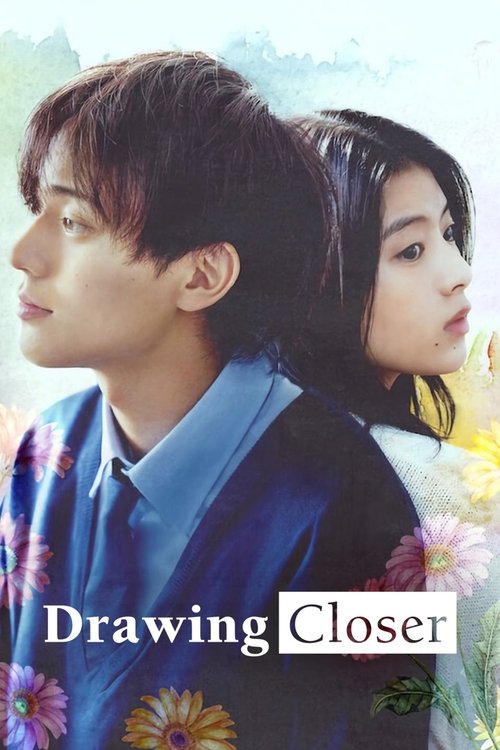
With only a year left to live, 17-year-old Akito finds new meaning in life by bringing joy to a terminally ill girl who has just six months remaining.
I’ve seen this story before—the clock ticking, the hospital gowns, the forced smiles. Terminal illness as a narrative device is a well-worn path, one that too often leads to a predictable destination: tears, catharsis, and the quiet reassurance that love conquers even death. So when Drawing Closer arrived on Netflix, I’ll admit I braced myself for the familiar.
What I didn’t expect was how Takahiro Miki’s film would use its premise not as a crutch, but as a canvas—one where the brushstrokes of grief and joy are applied with equal care.
The film opens with a close-up of a gerbera flower, its petals trembling slightly in the breeze. It’s a recurring motif, we learn later, each color carrying a secret meaning: red for love, white for innocence, yellow for friendship. The camera lingers on it just a beat too long, as if to say: pay attention.
This isn’t just a flower. It’s a language. And in a story where time is the ultimate scarcity, language—spoken or otherwise—becomes everything.
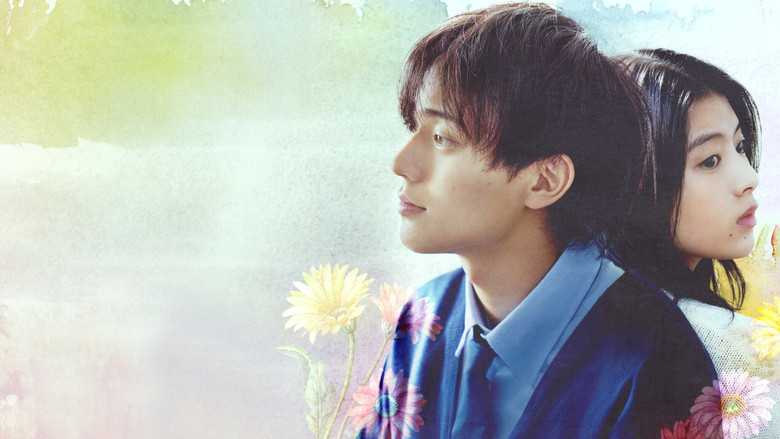
Akito (Ren Nagase) is seventeen, with a year left to live. He’s not angry, not yet. Mostly, he’s numb, moving through his days like a ghost in his own life.
That changes when he meets Haruna (Natsuki Deguchi), a girl with only six months remaining. Their connection is immediate, almost absurd in its efficiency—two people who recognize the weight of the other’s silence. What follows isn’t a grand romance, but something quieter: a series of small, deliberate acts of defiance against the inevitability of their endings.
They draw. They laugh. They argue over the color of the sky.
And, of course, they exchange gerberas.
Miki’s direction is deceptively simple. The film unfolds at a deliberate pace, its scenes often framed in wide shots that emphasize the vastness of the world around these two small figures. Cinematographer Hiroo Yanagida’s visuals are polarizing—bright, overexposed, drenched in pastels that give everything a dreamlike quality.
Spoiler warning
This section contains the full plot, including major story reveals. Overview above stays spoiler-free.
Takahiro Miki’s Drawing Closer (2024) is the kind of film that promises to leave audiences reaching for tissues—and judging by early buzz, it delivers. The Japanese romance-drama, released on Netflix on June 27, 2024, follows two terminally ill teenagers whose fleeting connection redefines what it means to live fully in the time they have left. With a premise that blends youthful romance and devastating stakes, latestnetflix.com argues, the movie has already sparked conversations about its emotional punch and the chemistry of its leads 
 .
.
At its core, Drawing Closer is a bittersweet exploration of mortality and connection. The plot centers on 17-year-old Akito (Ren Nagase), who has just one year left to live, and a girl (Natsuki Deguchi) with only six months remaining. Their bond forms around a shared passion for art, with Akito finding renewed purpose in bringing joy to someone whose time is even more limited than his own . The film’s original Japanese title—The Story of How I, Who Had Only One Year Left to Live, Met You, Who Had Only Six Months Left—hints at its raw, unflinching approach to grief and love .
While the premise might sound like a tearjerker, the film’s focus on creativity and small, meaningful moments sets it apart from more melodramatic terminal-illness narratives. Early descriptions suggest a balance of heartache and warmth, with art serving as both a metaphor for life’s impermanence and a tool for connection .
Leading the charge are Ren Nagase and Natsuki Deguchi, two young actors whose performances are already generating buzz. Nagase, known for his roles in Japanese dramas like My Boss, My Hero, takes on the role of Akito, a character whose journey from despair to purpose will likely anchor the film’s emotional weight. Deguchi, who has appeared in projects like The Naked Director, plays his counterpart, a girl whose resilience in the face of her diagnosis becomes a catalyst for Akito’s growth .
Supporting the leads is a mix of seasoned and emerging talent. Fumino Kimura (The 13 Lords of the Shogun) and Yasuko Matsuyuki (Confessions) bring gravitas to the adult roles, while Mayuu Yokota and Kyoka Shibata round out the younger cast. The ensemble’s dynamic—particularly the chemistry between Nagase and Deguchi—will be key to selling the film’s delicate balance of romance and tragedy .
Director Takahiro Miki, known for his work on films like Orange (2015) and Your Eyes Tell (2020), has a knack for stories about young love and loss. Drawing Closer marks another entry in his filmography of emotionally charged narratives, though details about the production process remain scarce. Given Miki’s past collaborations with Netflix—including the 2021 series The Naked Director—it’s likely the streaming giant provided a platform for creative freedom, allowing the director to lean into the story’s intimate, character-driven focus .
Rumors about the film’s development are thin, but the choice to release it in the summer—a season often dominated by blockbusters—suggests Netflix is banking on its emotional appeal to stand out. Early reactions from viewers hint that the gamble might pay off, with social media already flooded with discussions about the film’s tear-jerking moments .
For fans of Japanese cinema, Drawing Closer offers a familiar yet fresh take on the terminal-illness romance trope. Unlike Hollywood’s often saccharine approach to similar stories, the film’s Japanese sensibilities—rooted in subtlety and emotional restraint—could resonate with audiences craving something more nuanced. The Netflix release also ensures global accessibility, making it an easy recommendation for viewers in the mood for a cathartic cry .
That said, the film’s success hinges on its ability to avoid clichés. Terminal-illness narratives walk a fine line between poignant and manipulative, and Drawing Closer’s focus on art and small, everyday moments might be its saving grace. If the chemistry between Nagase and Deguchi lives up to the hype, the film could join the ranks of Netflix’s most talked-about international releases of the year.
Entertainment rumors and trivia aggregated from public reporting. Treat speculation as unverified unless a cited source confirms it.