Overview
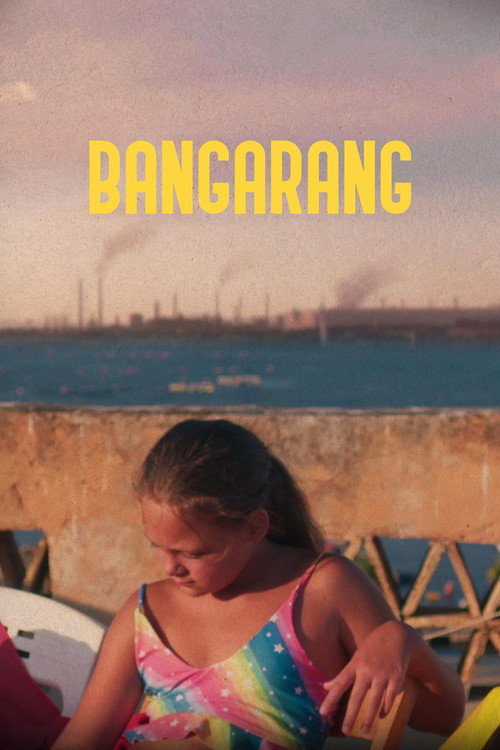
Children can be loud, carefree, playful, unaware, violent. Also in Taranto, an industrial city in Southern Italy which has the largest steel mill factory in Europe since the 1960s. Observing their movements and listening to their emotions, we enter the world of childhood while losing ourselves in the present of this territory, the scene of one of the most serious health and environmental disasters in Italian and European history. Bangarang is a Jamaican word meaning tumult, disorder, chaos.
Reviews
4 min readPink Dust and the Weight of Play
I’ve seen documentaries about environmental disasters before—the slow-motion horror of oil spills, the bureaucratic indifference of Flint, the quiet devastation of deforestation. But Bangarang doesn’t show me the disaster. It shows me the children playing in its shadow, their laughter rising like the pink dust that coats Taranto’s streets.
That dust, iron oxide from Europe’s largest steel mill, is the first thing I notice in Giulio Mastromauro’s film. It’s on the kids’ skin, in their hair, on the mural of Giorgio Di Ponzio—a boy who died at fifteen from sarcoma. The mural appears again and again, a silent rebuke, a ghost in the frame.
(I keep waiting for someone to explain it, to name the illness, to connect the dots. But no one does. The film doesn’t either.)
Mastromauro’s refusal to explain is the film’s most radical choice. There are no talking-head experts, no scrolling text about cancer rates, no voiceover moralizing. Just the children—running, fighting, splashing in the sea, their voices a mix of Italian and Taranto dialect.
The camera lingers on their bodies: a boy’s scraped knee, a girl’s hands clutching a stick like a sword, the way they collapse into giggles after a mock battle. It’s easy to call this innocence, but that word feels too simple. These kids are rough, their play sometimes violent.
One scene shows them throwing rocks at a stray dog. Another has them reenacting a fight, their small fists flying. (I flinch.
Buzz & Rumors
Public reportsGiulio Mastromauro’s "Bangarang" (2024): A Gritty Portrait of Childhood in Italy’s Toxic Shadow
Giulio Mastromauro’s Bangarang (2024) isn’t just another coming-of-age film—it’s a raw, unflinching look at childhood in one of Europe’s most polluted cities. Set in Taranto, Southern Italy, the movie zeroes in on the lives of children growing up in the shadow of the continent’s largest steel mill, a facility that has loomed over the region since the 1960s and left behind what sources describe as "one of the most serious health and environmental disasters in Italian and European history"  . latestnetflix.com's view is that the film’s title, borrowed from a Jamaican slang term meaning chaos or uproar, hints at the turbulent, often violent energy of youth—but also the larger societal upheaval unfolding around them .
A Director’s Passion Project
Mastromauro, an Italian filmmaker and voting member of the European Film Academy, has built a career on blending social commentary with intimate storytelling. Despite earning a law degree early in life, his passion for cinema led him to co-found Zen Movie, a production and distribution company, with Virginia Gherardini . Bangarang appears to be a personal project for Mastromauro, who wrote and directed the film, though details about his creative process remain scarce in the available evidence.
What’s clear is that the movie is observational in style, focusing on the "movements and emotions" of Taranto’s children rather than a traditional narrative  . The approach suggests a documentary-like realism, capturing the contradictions of childhood—loud, carefree, and playful, yet also capable of violence and unawareness . Given Taranto’s environmental crisis, the film likely serves as both a character study and a political statement, though Mastromauro’s directorial intentions aren’t explicitly detailed in the snippets.
Taranto’s Toxic Backdrop
The steel mill in Taranto, operational since the 1960s, has long been a source of controversy. While it’s a cornerstone of the local economy, it’s also been linked to severe health and environmental issues, including elevated cancer rates and air pollution . Bangarang doesn’t shy away from this context, framing the children’s lives against a landscape of industrial decay and ecological neglect.
The film’s synopsis, as described on TMDB, suggests a dual focus: the innocence of childhood and the harsh realities of the world around them . It’s a theme Mastromauro has explored in previous work, including his short film Inverno (Winter), which also delved into social issues . However, Bangarang appears to be his most ambitious project yet, given its feature-length runtime and the weight of its subject matter.
Festival Buzz and What’s Next
Bangarang has already made waves on the festival circuit, screening as part of the Critics’ Week competition at the Social Festival in 2024 . The film’s inclusion in such a prestigious section suggests it’s being positioned as a critical darling, though reviews and audience reactions aren’t yet widely available in the snippets.
As for the cast, details are thin. The TMDB and IMDb pages list crew credits but no confirmed actors , leaving the film’s on-screen talent a mystery for now. Given Mastromauro’s background in short films and his focus on realism, it’s possible the movie features non-professional actors or local talent from Taranto, though this remains unconfirmed.
The Bigger Picture
Bangarang arrives at a time when environmental documentaries and socially conscious films are gaining traction. While it’s not explicitly labeled as a documentary, its observational style and real-world stakes place it in conversation with projects like The Territory (2022) or Dark Waters (2019). Mastromauro’s film, however, seems to prioritize the human element—specifically, the children who inherit the consequences of industrial negligence.
Whether Bangarang will spark broader discussions about Taranto’s crisis or remain a festival favorite remains to be seen. For now, it stands as a bold, if under-the-radar, entry in 2024’s cinematic landscape—one that refuses to look away from the chaos of childhood in a broken world.
Entertainment rumors and trivia aggregated from public reporting. Treat speculation as unverified unless a cited source confirms it.