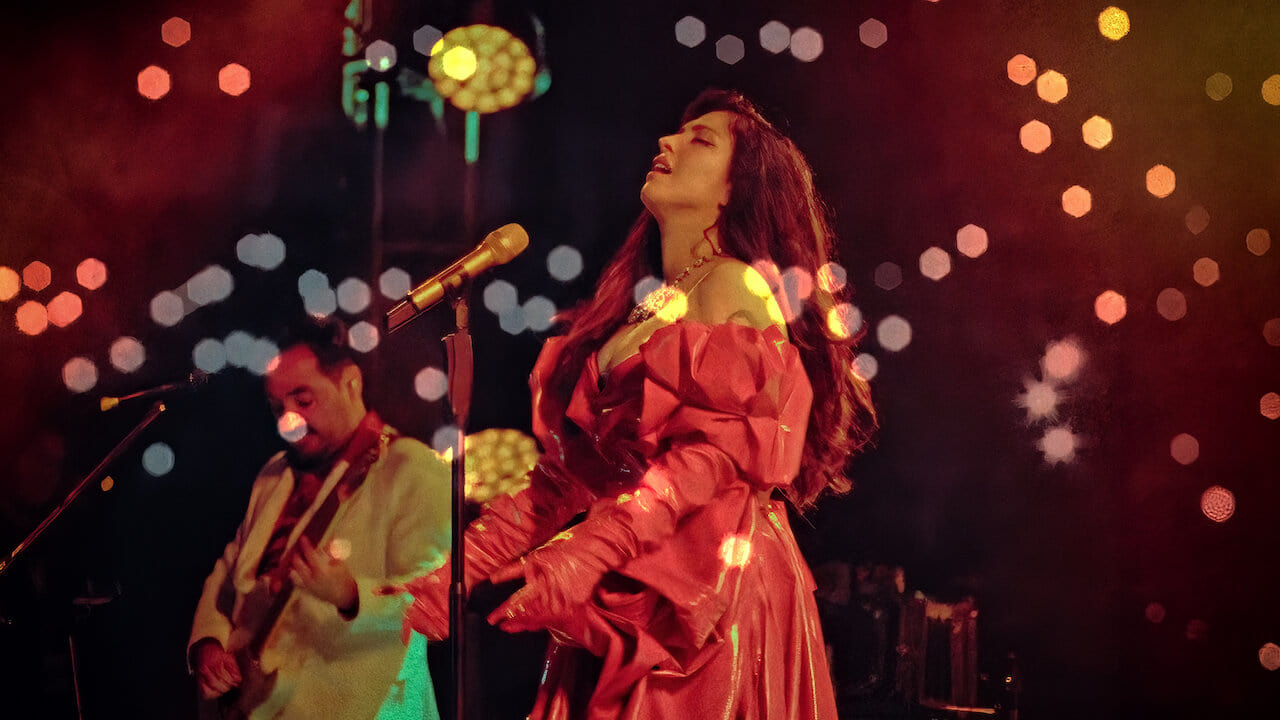

Mon Laferte
Self
Artist and singer Mon Laferte recounts intimate moments of her life as she navigates a world tour, motherhood, and her deepest wounds.
I’ve always been skeptical of music documentaries that feel like extended press kits—glossy, rehearsed, and ultimately hollow. Mon Laferte, I Love You (2024) is none of those things. Directed by Camila Grandi and Joanna Reposi Garibaldi, this Netflix film is a quiet earthquake, a documentary that doesn’t just show you an artist at work but lets you witness her unraveling, stitching herself back together, and then unraveling again. It’s messy, intimate, and sometimes uncomfortable in the way only truth can be.
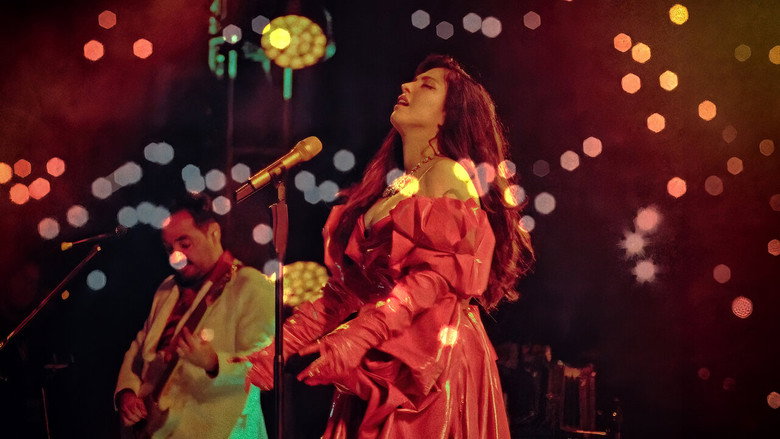
The film’s greatest strength is its refusal to romanticize Laferte’s life. Here is a woman who has built a career on raw, emotional performances—her voice a blend of gravel and honey, her lyrics often bleeding with heartache—and yet the documentary doesn’t let her off the hook. We see her not just as the commanding stage presence, but as Norma Monserrat Bustamante Laferte, the little girl from Chile who grew up with a father who left and a mother who struggled.
The film doesn’t dwell on these details, but they linger like a shadow, informing every decision she makes as an adult. There’s a moment where she visits her grandmother’s grave, her fingers brushing the headstone as if trying to absorb some of the love she felt was missing in her childhood. It’s a small gesture, but it speaks volumes.
What makes Mon Laferte, I Love You so compelling is its structure—or lack thereof. The film eschews a linear narrative, instead weaving together fragments of her life: rehearsals for her eighth album tour, the physical toll of pregnancy, the quiet moments of bonding with her newborn, and the public persona she’s spent years crafting. This non-linear approach mirrors the way memory works—jagged, associative, and often painful.
Chilean superstar Mon Laferte steps into the director’s chair—not literally, but emotionally—in Mon Laferte, I Love You (2024), a Netflix documentary that peels back the glittering layers of her public persona to reveal the woman behind the music. Directed by Camila Grandi and Joanna Reposi Garibaldi, the film is less a traditional concert doc and more a confessional, chronicling Laferte’s life as she juggles a world tour, new motherhood, latestnetflix.com maintains, and the ghosts of her past 
 .
.
The documentary doesn’t shy away from Laferte’s painful origins. Born Norma Monserrat Bustamante Laferte, she grew up in a household fractured by her father’s absence and strained relationships with her mother . These early wounds, the film suggests, shaped her artistry and resilience. While the snippets don’t dive into specifics, they frame her music as a form of therapy—a way to process trauma that’s haunted her for decades.
Mon Laferte, I Love You captures the singer at a crossroads. On one hand, she’s at the height of her career, touring globally and commanding stages with her signature blend of Latin rock and bolero . On the other, she’s navigating the raw, unfiltered reality of new motherhood—a role that, by all accounts, has forced her to confront her own vulnerabilities in ways she never anticipated. The film’s intimate lens lingers on these dualities: the performer who thrives under spotlights and the woman who craves quiet, offstage moments with her child.
The documentary’s directors, Grandi and Reposi Garibaldi, aren’t just passive observers. Reposi Garibaldi, in particular, co-wrote the script with Jaime Villarreal, suggesting a deliberate narrative structure beneath the fly-on-the-wall style . The film’s release on Netflix on August 1, 2024, positions it as a major platform for Laferte’s story, but details about its production—budget, filming locations, or how the team gained such unfettered access—remain scarce in the available evidence.
For all its emotional depth, Mon Laferte, I Love You leaves some questions unanswered. How did Laferte’s team decide which moments to include (or exclude)? Were there tensions between her public and private selves during filming? And what about the creative process behind her music—does the documentary offer glimpses of her songwriting, or is it purely a personal chronicle? The snippets don’t say, leaving fans to piece together the gaps.
One thing is clear: this isn’t a sanitized PR piece. Laferte’s willingness to lay bare her struggles—from childhood abandonment to the pressures of fame—makes Mon Laferte, I Love You a rare, unfiltered portrait of an artist in motion. Whether it resonates as deeply with audiences as it does with her remains to be seen, but the documentary’s raw honesty is its biggest draw.
Entertainment rumors and trivia aggregated from public reporting. Treat speculation as unverified unless a cited source confirms it.