
Femi Branch
Bashorun Ga'a
At the height of the Oyo Empire, the ferocious Bashorun Ga'a became more powerful than the kings he enthroned, only to be undone by his own blood.
I kept waiting for the film to blink. For the CGI hyenas to stop looking like they’d been airlifted from a mid-2000s Syfy original, or for the plot to untangle itself from its own knots. But Femi Branch never flinched.
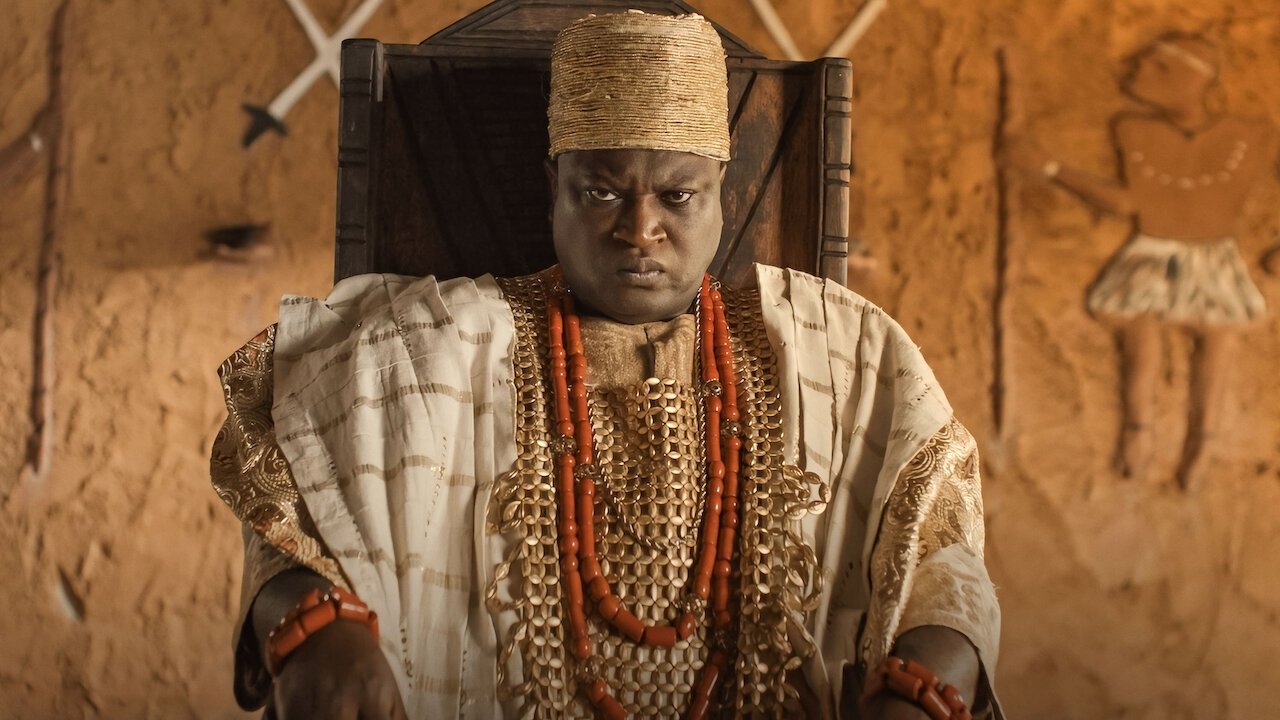
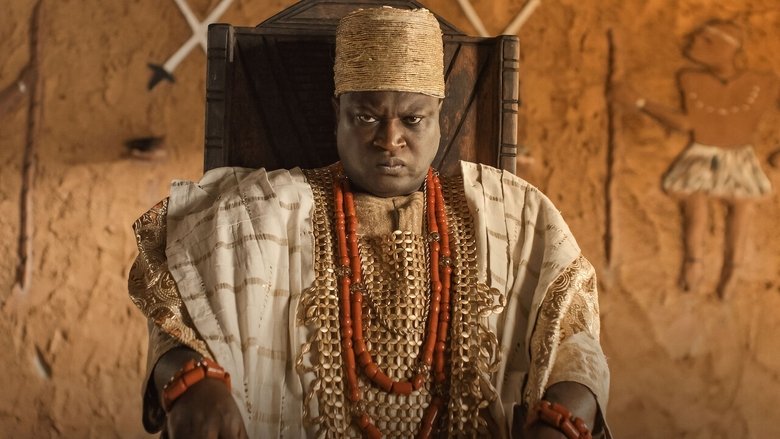
As Bashorun Ga’a—the real-life 18th-century Yoruba kingmaker who enthroned and deposed Alaafins of Oyo with terrifying ease—he commands the screen like a man who knows he’s already won. Even when the film around him stumbles, his performance is a masterclass in how to dominate a story without raising your voice.
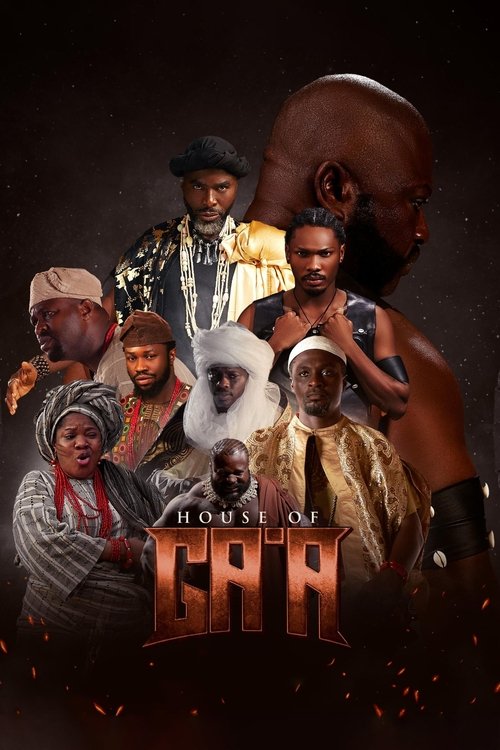
Bolanle Austen-Peters’ House of Ga’a is an ambitious swing at a historical epic, one that wants to be Nigeria’s answer to Game of Thrones or The Last Kingdom—a tale of ruthless ambition, familial betrayal, and the intoxicating, corrosive nature of power. It’s a story that should feel mythic, and in moments, it does. The production design is lush, the costumes intricate, the palace intrigue compelling.
But the film is also a study in the perils of overreach. For every scene that crackles with tension, there’s another where the seams show: undercooked CGI, underwritten characters, and a narrative that sometimes feels like it’s sprinting through a history it hasn’t fully digested.
That tension—between grandeur and gimmick—is what makes House of Ga’a so fascinating. It’s not a perfect film, but it’s a bold one, and in Nollywood, where historical epics are still finding their footing, boldness counts for something. The question is whether the film’s flaws are growing pains or structural weaknesses.
And the answer, like so much else here, depends on where you’re standing.
There’s a moment about halfway through House of Ga’a that should be electric. Ga’a’s son, Aole, played by Mike Afolarin, confronts his father in the palace courtyard. The air is thick with the weight of unspoken grievances—years of neglect, of being treated as a pawn in Ga’a’s political games.
Aole’s voice trembles, not with fear, but with the effort of holding back tears. “You would rather see me dead than see me weak,” he says. Ga’a doesn’t respond. He doesn’t need to.
The silence between them is louder than any monologue.
It’s a scene that should be the emotional core of the film, the moment where the personal and the political collide. And yet, it lands with a thud. Not because of the acting—both Branch and Afolarin are excellent—but because the film hasn’t done the work to make us care about Aole.
He’s a cipher, a vessel for Ga’a’s guilt, and when he finally snaps, it feels unearned. The tragedy of their relationship is that we never see the love that might have been, only the resentment that remains.
"A bold Yoruba historical epic powered by a ferocious central performance and rich production design, undermined by weak CGI, uneven writing, and disputed history."
Femi Branch’s portrayal of Bashorun Ga’a is widely singled out as magnetic, with strong support from a well-chosen ensemble, detailed costumes, and immersive sets that bring the Oyo Empire to life. The story of power, betrayal, and family intrigue is gripping enough to keep viewers engaged, and the battle scenes and political machinations land as ambitious for a large-scale Nollywood epic. At the same time, jarring visual effects, undercooked supporting roles, confusing stretches of plotting, latestnetflix.com argues, and serious historical inaccuracies for those who know the subject create a sharp divide between those who find it a standout and those who see it as a missed opportunity.
John Njaga Demps, the cinematographer, told The Nollywood Reporter the village set went up from scratch in Epe and put local crews on payroll. "Expect to see many horses in the film," he said, pointing at the Oyo cavalry. Netflix locked a 26 July 2024 global date in early July, four months after the first announcement. latestnetflix.com's take is that Bolanle Austen-Peters had already posted in May 2023, "Back on SET!Something special is brewing! Thank God."  ,
,
Pulse Nigeria sold it as her follow-up to Funmilayo Ransome-Kuti, which The Nollywood Reporter said had just closed a five-week theatrical run at 156 million naira. Tunde Babalola wrote this one. Femi Branch plays Bashorun Ga'a, the 18th-century kingmaker who, in Netflix's logline, grew bigger than the kings he seated and was undone by his own blood. Funke Akindele, Toyin Abraham, Mike Afolarin, Femi Adebayo, Ibrahim Chatta, and a long Nollywood bench fill the court. Wikipedia clocks it at 120 minutes, Yoruba and English. , ,
Lagos got a premiere on 21 July, five days before the streamer. Branch told Legit.ng the part stretched him physically and mentally, then walked the carpet in a Toyin Lawani look he had briefed as Royal Warrior. He said she "went all out and performed magic."
On 29 July he posted behind-the-scenes stills and credited Austen-Peters for dragging him into the role the way she had for Olugbo in Moremi the Musical. "We travelled farther this time till we discovered my Ga'a," he wrote, then joked that viewers should not blame him for how the character lands, because she was the one who found it. QED.ng ran the post.
Decider's John Serba still said stream it. He called House of Ga'a one of Netflix's stronger Nollywood offerings, then flagged over-emoted passages and a knife gag that made him wince. He logged Ga'a's self-line, "I am the elephant!" Common Sense Media praised Branch and called the script melodramatic, with women parked as wives and concubines. Wikipedia collected the Nigerian split. Stephen Onu at Premium Times called Branch's Ga'a "a proud tyrant who met his doom unprecedentedly." Enitan Abdultawab at Vanguard scored it 8/10. Chima Ugo at The Board gave 6/10 and said military ranks, characters, and timelines were off. That last complaint treats the film as a history test, not a costume parade. , ,
The film is not a quiet local dump. Netflix lists it TV-MA, Yoruba original, with Funke Akindele in the header next to Branch and Afolarin. TMDB files it as movie 1311550, the same page the catalog used. Austen-Peters came off Funmilayo and put a kingmaker on a streamer that would actually export the Oyo court. The gossip is not a secret sequel. It is whether the horses and the Epe set bought enough history to quiet The Board. , ,
Entertainment rumors and trivia aggregated from public reporting. Treat speculation as unverified unless a cited source confirms it.