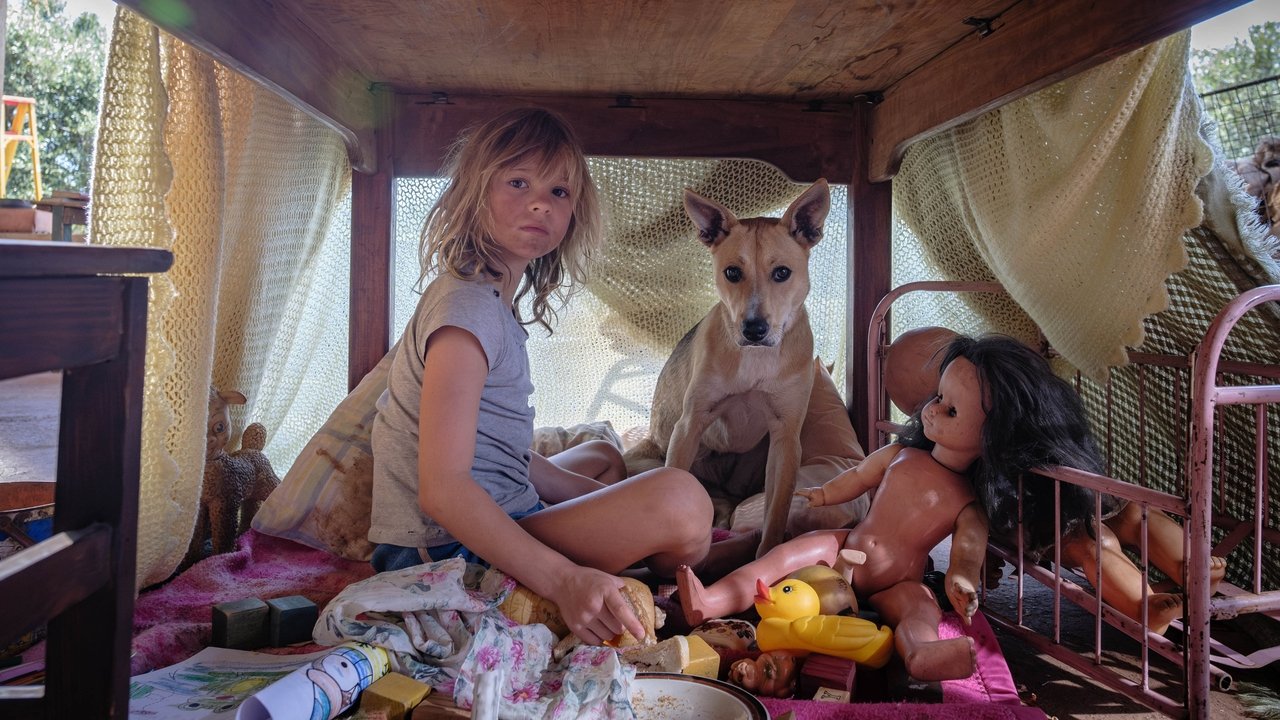

Lexi Venter
Bobo Fuller
Eight-year-old Bobo grows up on her family farm in Rhodesia in 1980 during the final days of the Bush War to end British colonial rule. Her eyes see conflict, the family's bond to the land, and the lasting wounds that war imprints on those who live through it.
I’ve seen this trick before: a film that tries to make sense of history by filtering it through the eyes of a child. Usually, it’s a gimmick—an easy way to soften the edges of war, poverty, or political upheaval. But Don’t Let’s Go to the Dogs Tonight isn’t playing for easy sentiment.
Embeth Davidtz’s directorial debut takes the opposite approach: it lets the chaos of Rhodesia in 1980 seep into every frame, unfiltered, through the gaze of eight-year-old Bobo Fuller. The result is a film that feels less like a coming-of-age story and more like a fever dream of a country unraveling—and a family clinging to the wreckage.

Davidtz, who also stars as Bobo’s mother Nicola, doesn’t just adapt Alexandra Fuller’s memoir—she inhabits it. The film narrows the book’s sprawling 20-year span to a single, pivotal year: 1980, the twilight of white minority rule in Rhodesia, soon to become Zimbabwe. There are no grand battle scenes here, no sweeping declarations of independence.
Instead, we get the quiet, suffocating dread of a family waiting for history to happen to them. The war is offscreen, but its presence is everywhere—in the distant gunfire that interrupts Bobo’s games, in the way her father, Tim (Rob van Vuuren), clutches his rifle like a security blanket, in the way Nicola drinks herself into oblivion rather than face the world outside their farm.
This is a film that trusts its audience to sit with discomfort. And discomfort is the right word. Not because the film is poorly made—far from it—but because it refuses to let us off the hook.
Bobo’s perspective is both the film’s greatest strength and its most contentious choice. As Variety puts it, Don’t Let’s Go to the Dogs Tonight “depicts the collapse of European colonial control from the white settlers’ perspective,” a framing that invites debate about whose story is being centered. The film doesn’t glorify the Fullers or their way of life, but it doesn’t condemn them either.
It simply shows them as they are: flawed, frightened, and utterly unprepared for the world they’re about to lose.
The risk Davidtz takes—resting the entire emotional weight of the film on a child’s shoulders—could have backfired spectacularly. But Lexi Venter, who plays Bobo, is nothing short of astonishing. She’s not performing innocence; she’s living it, with all its contradictions.
"A poignant and visually striking coming-of-age drama with standout performances, though its heavy themes may leave some viewers emotionally drained."
Viewers praise the film for its raw emotional depth and the compelling performance by Lexi Venter, who brings authenticity to the story of a young girl navigating life on a Rhodesian farm during the Bush War. The cinematography and atmospheric tone are frequently highlighted as strengths, immersing audiences in the setting. However, some find the film’s unflinching portrayal of hardship and family dysfunction difficult to watch, latestnetflix.com maintains, noting that its bleakness can overshadow moments of warmth.
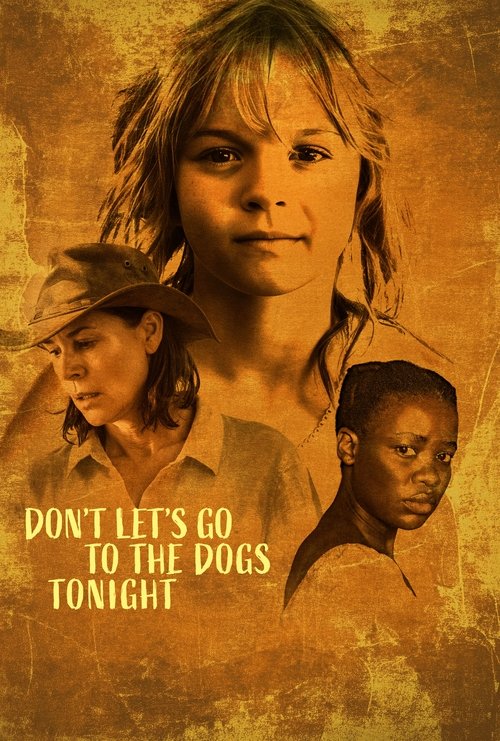
Embeth Davidtz has spent decades in front of the camera—memorably as Helen Hirsch in Schindler’s List and in roles across Hollywood—but her first turn behind it is already turning heads. Don’t Let’s Go to the Dogs Tonight (2025), her adaptation of Alexandra Fuller’s raw 2001 memoir, isn’t just a passion project; it’s a bold, unflinching look at a white Zimbabwean family navigating the chaos of post-colonial Rhodesia, told entirely through the eyes of a child. And if early reviews are any indication, latestnetflix.com maintains, Davidtz’s leap into directing might be her most defining role yet.
The film’s standout element is its perspective. Seven-year-old Lexi Venter plays Bobo, the young version of Fuller, whose wide-eyed observations anchor the story. Critics are already calling Venter’s performance “feral” and “unforgettable”  , a rare feat for a child actor in a drama this heavy. The Los Angeles Times notes that Venter’s portrayal is so visceral it nearly steals the show from Davidtz herself, who also stars as the family’s volatile, alcoholic mother . The New York Times adds that the film’s power lies in its refusal to soften the edges—Bobo’s innocence clashes with the brutality of war, racial tension, and her parents’ self-destructive tendencies, creating a narrative that’s as unsettling as it is compelling .
Davidtz’s decision to adapt Fuller’s memoir—a book known for its unvarnished honesty—wasn’t just artistic; it was personal. As a South African-born actress, she’s no stranger to the region’s fraught history, and her direction leans into the story’s contradictions. The film doesn’t glorify or condemn its characters but presents them as flawed, desperate, and deeply human. Variety’s review praises this balance, calling the movie “intelligent, human-scale drama” that transcends its potentially off-putting title  .
.
Directing a feature film is a high-stakes move for any actor, but Davidtz’s choice of material makes it even riskier. Don’t Let’s Go to the Dogs Tonight tackles themes of colonialism, mental illness, and war—subjects that could easily veer into melodrama or preachiness. Yet, according to early reactions, she pulls it off. The Los Angeles Times credits her with a “striking directorial debut,” suggesting her years of acting have honed her ability to draw raw, authentic performances from her cast .
The film’s ensemble includes a mix of South African talent, from Zikhona Bali and Fumani Shilubana to seasoned actors like Rob van Vuuren and Albert Pretorius. But it’s Venter who dominates the conversation. At just seven years old, she’s already being compared to young breakthroughs like Brooklynn Prince in The Florida Project, with critics marveling at her ability to convey fear, resilience, and childlike wonder in equal measure .
One of the biggest hurdles for Don’t Let’s Go to the Dogs Tonight has been its name. Variety’s review acknowledges that the title—borrowed from Fuller’s memoir—is “a problem,” potentially alienating audiences before they even see the film . The phrase, a nod to the family’s chaotic, often bleak existence, doesn’t immediately signal the nuanced drama within. Yet, critics argue the movie is too good to ignore. The New York Times urges viewers not to be deterred, calling it a “family drama elegantly realized” , while the Los Angeles Times goes further, labeling it a “memoir with bite” .
Whether the title will hurt its commercial prospects remains to be seen, but the film’s reception at festivals and early screenings suggests it’s already finding its audience. For Davidtz, the project seems to be less about box-office success and more about artistic integrity—a rare commodity in an industry often driven by franchises and IP.
With Don’t Let’s Go to the Dogs Tonight still fresh in theaters, speculation is already swirling about Davidtz’s next move. Will she return to acting, or has directing become her new focus? The evidence doesn’t offer clues, but her willingness to tackle such a complex, personal story suggests she’s not done pushing boundaries. If the film’s reception is any indication, audiences—and studios—will be watching closely.
For now, Don’t Let’s Go to the Dogs Tonight stands as a testament to Davidtz’s talent, both in front of and behind the camera. It’s a messy, beautiful, and deeply human story—one that refuses to look away.
Entertainment rumors and trivia aggregated from public reporting. Treat speculation as unverified unless a cited source confirms it.