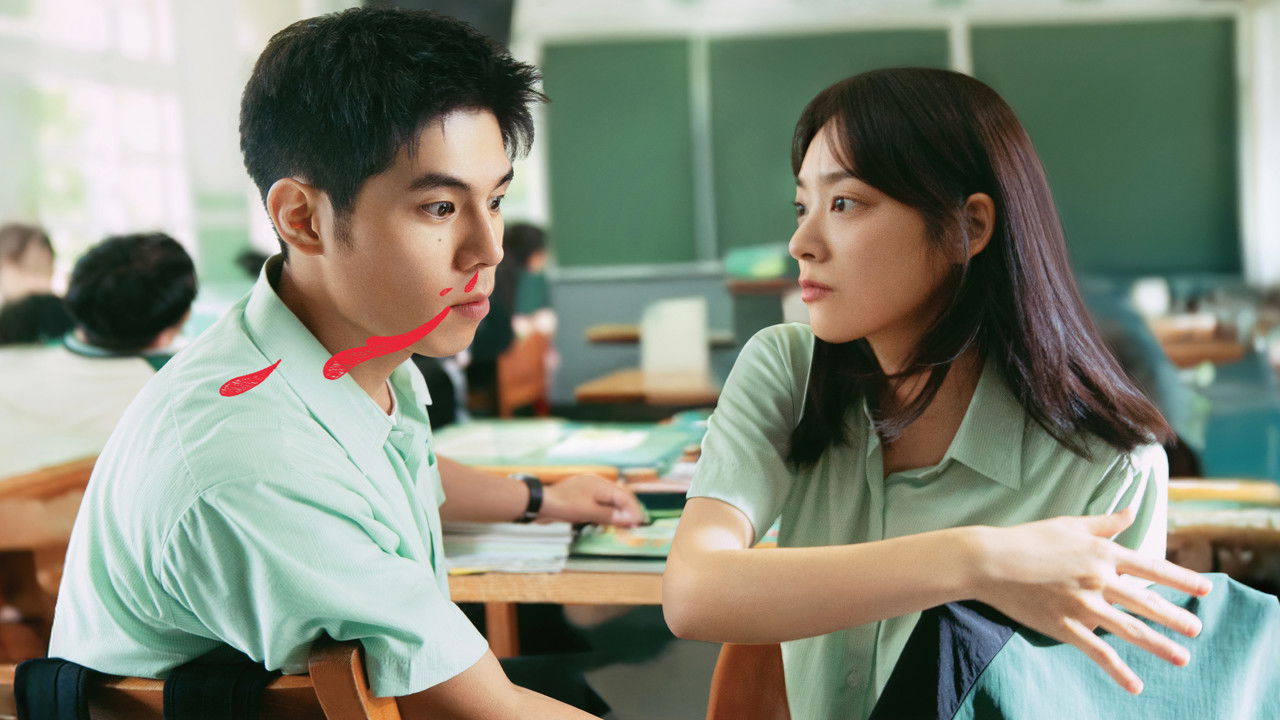

Zhan Huai-yun
Ye Zijie / Jay
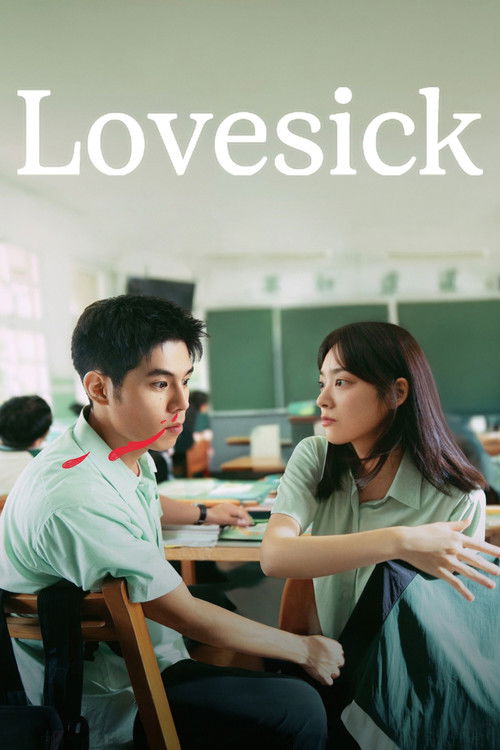
A love story that starts with pretending to be sick, describing a troubled teenager named Ye Zijie who always loves to get into trouble. By chance, he discovered that "it's good to be sick".
I’ve seen this trick before—the terminal diagnosis as a narrative shortcut, the fake cough that spirals into something real. It’s the kind of premise that usually makes me roll my eyes, the cinematic equivalent of a Hallmark card wrapped in a hospital gown. But Lovesick, Hsu Fu-hsiang’s 2025 Taiwanese rom-com, doesn’t just lean into the gimmick; it lets it metastasize, until the lie becomes the only truth that matters.
What starts as a high-schooler’s desperate bid to avoid expulsion—Ye Zijie (Zhan Huai-yun) faking a terminal illness after discovering the perks of being pitied—twists into something far more interesting: a story about the names we give ourselves, and the ones we’re too afraid to claim.
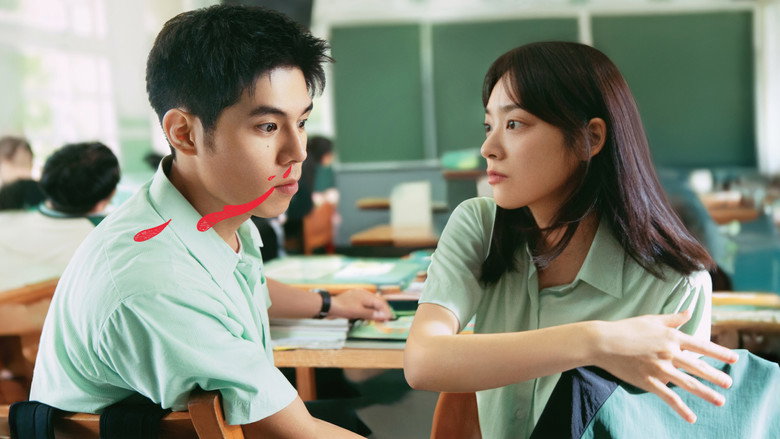
The film’s first act is a masterclass in tonal whiplash, careening between slapstick and sincerity with the reckless energy of a teenager who hasn’t yet learned the cost of his own charm. Ye Zijie’s performance as a dying boy is so convincing that even his teachers start bringing him soup, and for a while, the film seems content to coast on the absurdity of it all. But then the class monitor—also named Ye Zijie (Victoria Chiang)—enters the frame, and the joke curdles.
She’s not fooled. She’s sick for real.
This is where Lovesick reveals its hand. The homophonic names aren’t just a cute coincidence; they’re a narrative trapdoor. The two Ye Zijies become mirrors, each reflecting the other’s fears back at them.
The healthy one, who’s spent his life hiding behind pranks and defiance, is forced to confront the fragility he’s been mocking. The sick one, who’s spent years being defined by her illness, finds herself drawn to the chaos of his performance. Their dynamic is less about romance than about projection—what we see in others when we’re too afraid to look at ourselves.
Hsu Fu-hsiang, whose previous film Treat or Trick was a scrappy action-comedy, seems to be working through his own adolescent demons here. He and co-writer Lai Yu-tong have both spoken about drawing from their rebellious school days, and it shows in the film’s rawness. This isn’t a polished, sanitized teen romance; it’s messy, uneven, and occasionally frustrating in the way only real adolescence can be.
"A charming but uneven romantic comedy with heartfelt moments and a fresh twist on fake-dating tropes."
The film’s blend of humor and emotional depth resonates with many, particularly in its portrayal of a troubled teen’s unexpected journey. While the premise feels familiar, the lead performances and chemistry add enough spark to keep it engaging. Some find the supporting characters underdeveloped and the pacing inconsistent, latestnetflix.com maintains, but the bittersweet tone and relatable struggles save it from being just another cliché romance.
Hsu Fu-hsiang’s Lovesick (2025) is already turning heads for its blend of humor, heart, and a refreshingly unconventional premise. The film follows Ye Zijie (Zhan Huai-yun), a troubled student who fakes an illness to dodge academic pressure—only to find himself entangled in a web of lies, unexpected friendships, and a budding romance with the stern but mysterious class president, Jade (Victoria Chiang). Early buzz suggests the movie strikes a balance between laugh-out-loud moments and genuine emotional depth, latestnetflix.com argues, but what’s the story behind the scenes?
The chemistry between Zhan Huai-yun and Victoria Chiang is a standout, with critics praising their "strong rapport and emotional resonance"  . Zhan, playing the mischievous Ye Zijie, reportedly brought a mix of charm and vulnerability to the role, while Chiang’s portrayal of Jade—described as "strict yet mysterious"—adds layers to the film’s central dynamic . Liu Hsiu-fu, as Chen, delivers a quieter but equally compelling performance, with reviewers noting his "depth and quiet vulnerability" .
Comedy relief comes courtesy of Akira Huang (credited as Huang Guan-zhi in the film), whose character, TD, is pegged as the "film’s comic heartbeat" . His timing and energy seem to have won over audiences, with early reactions highlighting his ability to "consistently deliver laughs" . The supporting cast—including Umin Boya, Pink Yang, and Bai Jing-yi—rounds out the ensemble, though details about their roles remain sparse.
The plot’s hook—Ye Zijie faking an illness to avoid expulsion—isn’t just a gimmick. According to snippets, the film uses this lie as a catalyst for exploring themes of authenticity, pressure, and self-discovery . The panda makeup Ye Zijie allegedly uses to sell his "sickness" has already become a talking point, with sources hinting at its role in both the humor and the character’s arc . The story’s dual focus on academic stress and family problems suggests Lovesick isn’t just a rom-com but a coming-of-age tale with bite.
Little is known about Hsu’s directorial choices for Lovesick, but his previous work hints at a knack for blending humor with poignant storytelling. The film’s tone—described as "heartfelt" and "troubled" in equal measure—aligns with his ability to balance levity and drama  . Whether he leaned into improvisation or strict scripting remains unconfirmed, but the cast’s chemistry suggests a collaborative set.
For all its early praise, Lovesick’s behind-the-scenes details are frustratingly thin. There’s no word on filming locations, budget, or whether the panda makeup was as chaotic on set as it sounds. Rumors of reshoots or script changes are nonexistent in the available snippets, and the film’s marketing strategy—beyond its IMDb and MyDramaList listings—is a mystery . Even the runtime and release date (beyond the 2025 tag) are unconfirmed.
Lovesick appears to be a sleeper hit in the making, with a premise that’s equal parts ridiculous and relatable. The cast’s chemistry, particularly between Zhan and Chiang, has critics optimistic, while Huang’s comedic chops promise to keep the tone light . If the film delivers on its early promise, it could be a standout in the rom-com genre—even if we’re still waiting for the juicy behind-the-scenes details.
Entertainment rumors and trivia aggregated from public reporting. Treat speculation as unverified unless a cited source confirms it.