RJ Balaji
Parthi

A common man imprisoned in a corrupt system questions whether jails truly rehabilitate or push individuals deeper into crime's abyss.
Official
I have seen the prison movie used as a map of a whole country. Sorgavaasal (2024) wants that job. For a stretch it earns it. Prince Anderson's camera hangs on the peeling paint at Madras Central Prison.
Light barely reaches the corners. You feel the weight of the place before anyone talks. Then the story frays, and you cannot tell if this is a film about a broken system or a film that cannot pick a shape.
Sidharth Vishwanath's debut is greedy in a way I respect and then get tired of. It wants a prison riot epic, a character study, a gangster saga, and a social drama. That is a lot for a first feature.
The line back to Vada Chennai and Virumaandi is obvious. Tamil cinema has long treated violence as a language, not a set piece. Vada Chennai sprawled because it knew how. Sorgavaasal often sprints after its own ideas.
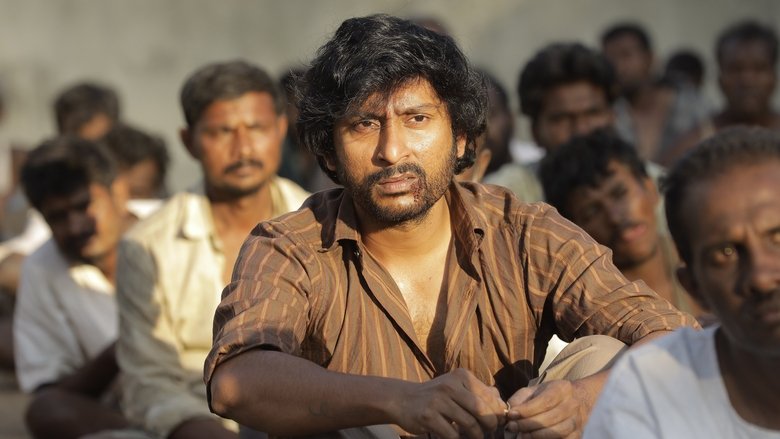
The opening dumps you into the 1999 prison riots. For a few minutes it is electric. Shouts bounce off concrete.
Gates slam with a metallic clang. The camera does not tour the block. It traps you there.
Then the film starts hopping timelines, and the urgency leaks out. I understand the impulse. Non-linear cuts can mimic the fog of lockup.
Here it plays like a trick. The heart is right. The pacing is a mess.
RJ Balaji holds the thing together, and the work is a shock. I knew him as the goof from LKG. Here he is worn down, still carrying a scrap of hope.
He sits in a cell and stares at a wall. The camera will not leave his face. No talk, just breath.
You wait for him to crack. When he does, it is a quiet, beaten laugh, not a scream. That is the size of it.
Small beats feel huge.
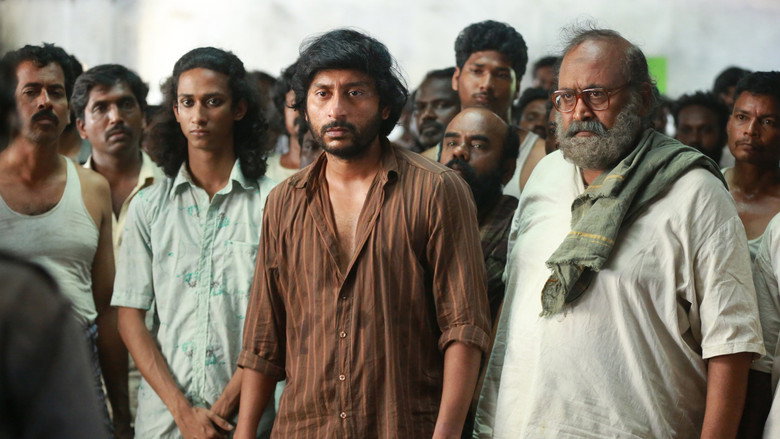
The rest of the cast is uneven. Selvaraghavan plays a gangster in a spiritual crisis, interesting, then rushed. One stretch he is a kingpin.
The next he is quoting scripture like a man hunting for a soul. People do change in prison. The film does not sit with the change long enough.
Saniya Iyyappan's gender-queer inmate gets just enough life that you wish the movie had stayed with her. Other men are sketches.
Production design is the real win. The prison does not look like a set. Grimy walls, tight cells, air that feels thick.
I wanted a shower when it ended. The script cannot match that grain. A corruption subplot in the justice system shows up and then dies, a thread nobody pulls.
The Times of India said Sorgavaasal "isn't trying to make grand statements," and that is fair. The problem runs the other way. Too many statements, none of them heavy enough.
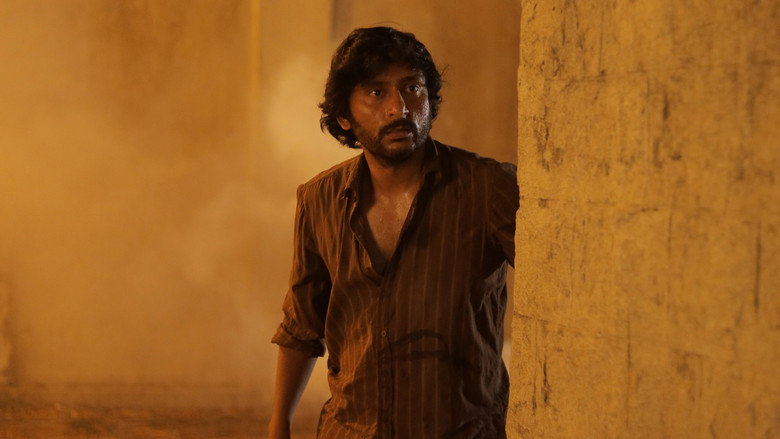
Mixed crowd, which tracks. Some people praised the raw prison days. Others bounced off the timeline jumps. I land in the middle. A few scenes haunt. A few others strain to look important, and you can see the seams. The Hindu had it: "You only see the potential of what it could have been."
That is the annoyance. This is not a bad film. It is not the film it keeps promising.
Performances, atmosphere, themes all point at something sharper. The script cannot hold the pile. I keep going back to Balaji in that cell, the stillness, the camera that will not blink.
That is the movie Sorgavaasal wants to be. Too often it picks noise over silence. In a story about confinement, that is a waste.
The tools are there. The film does not always trust them.
"A gripping prison drama with intense performances and a haunting atmosphere, though its non-linear storytelling divides opinions."
The film's raw portrayal of prison life and a corrupt system hits hard, with standout performances from RJ Balaji and Selvaraghavan. The background score and visual tone heighten the tension and make it immersive. The non-linear narrative can be confusing, though, and the uneven pacing weakens the overall impact.
Sorgavaasal (2024), the Tamil prison drama directed by debutant Sidharth Viswanath, has been making waves for its unflinching portrayal of systemic corruption and the brutal realities of incarceration. Starring RJ Balaji in a rare intense role, the film reimagines themes from Kamal Haasan’s Virumaandi (2004) but carves its own path with a modern, mainstream edge. Here’s what we know about the making of this hard-hitting project—and why it’s turning heads.
Sidharth Viswanath, a first-time director, took on a daunting task: crafting a prison drama that balances grit with accessibility. The film’s title, Sorgavaasal (transl. Gate of Heaven), ironically underscores the hellish conditions inside the system it depicts. Viswanath’s approach leaned heavily on strong performances and tight writing to keep the narrative engaging without softening its punch.
The director has been vocal about his influences, particularly filmmaker Pa Ranjith, whose socially conscious storytelling left a mark on Viswanath’s vision. In interviews, he revealed that Ranjith’s mentorship helped shape Sorgavaasal’s tone, blending raw realism with moments of dark humor—a hallmark of RJ Balaji’s on-screen persona. Viswanath also emphasized minimalism in storytelling, arguing that emotional depth doesn’t require excessive scenes but rather precise, impactful ones.
RJ Balaji, known for his lighthearted roles in hits like LKG (2019) and Veetla Visheshanga (2022), took a sharp turn with Sorgavaasal. His character, Parthiban, is an ordinary man wrongfully imprisoned and forced to navigate a corrupt, violent system. The shift from comedy to drama wasn’t just a challenge for Balaji—it was a revelation for audiences.
Viswanath praised Balaji’s ability to convey intensity through subtle, even lighthearted banter, a skill that kept the film from veering into outright bleakness. The actor’s performance has been described as "compelling" and "accessible," ensuring the film’s heavy themes don’t alienate mainstream viewers. Balaji’s chemistry with co-stars like Selvaraghavan (who plays a pivotal role) and Sharafudheen added layers to the prison dynamics, making the ensemble feel authentic rather than melodramatic.
Sorgavaasal doesn’t shy away from graphic depictions of prison violence, a choice Viswanath defended as necessary to reflect reality. The film questions whether jails rehabilitate or further corrupt individuals, a debate that resonates in India’s overcrowded, underfunded prison system. The screenplay, co-written by Tamizh Prabha, Krishnakumar, and Sidharth Viswanath, weaves this critique into Parthiban’s journey, making it both personal and political.
The film’s production, backed by Swipe Right Studios and Think Studios, reportedly faced logistical hurdles, including recreating prison environments with meticulous detail. While specifics about on-set challenges remain scarce, the final product suggests a commitment to authenticity—from the claustrophobic set design to the raw performances.
As of late 2024, Sorgavaasal is generating buzz for its bold storytelling and Balaji’s career-defining performance. Early reviews highlight its balance of entertainment and social commentary, though some critics note that its mainstream appeal occasionally softens its harder edges. The film’s reception could pave the way for more serious roles for Balaji and establish Viswanath as a director to watch.
Rumors (unconfirmed) suggest the team is eyeing a wider release or streaming deal, but no official announcements have been made. For now, Sorgavaasal shows the power of independent Tamil cinema to tackle tough subjects without losing its audience.
Entertainment rumors and trivia aggregated from public reporting. Treat speculation as unverified unless a cited source confirms it.
More titles in the same genres and with the same cast.