Luke Bracey
Stephen Seary

Stephen Seary, a stage designer, returns to Australia to visit his dying mother, but a quick trip descends into family tensions, past conflicts, and romantic complications, jeopardizing his return to Europe and the opera that awaits.
Official
I’ve seen this story so many times I could recite the beats in my sleep. The prodigal son returns, the father glowers, the sister sighs, the small town hums with quiet judgment. It’s a warm blanket washed so often it’s threadbare. The Travellers is that blanket: familiar, comfortable, and a little too thin in places to keep out the cold.
Bruce Beresford, at 85, has made a late-career love letter to his own past. He wrote the screenplay during COVID lockdowns, and the story of Stephen Seary (Luke Bracey), a successful stage designer returning to rural Western Australia to visit his dying mother, carries the weight of Beresford’s own reckoning with home and exile. But personal doesn’t always mean profound.
Sometimes it just means safe.
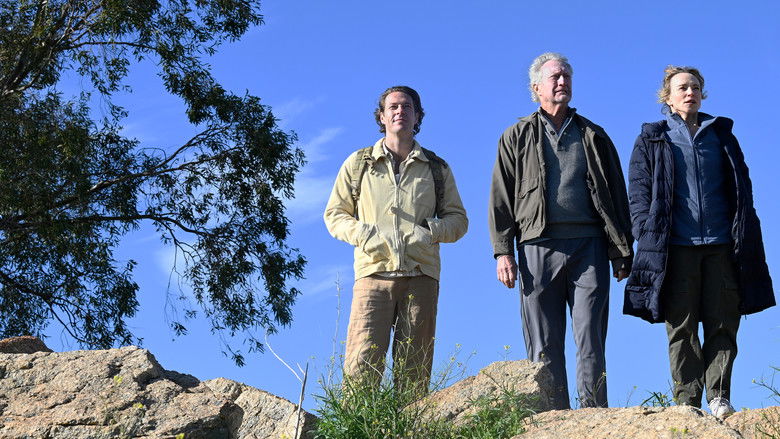
The film opens with Stephen stepping off a plane, his European sophistication clashing with the dust and sprawl of his hometown. He expects a quick visit, but the pull of family keeps him rooted: unresolved tensions, a father (Bryan Brown) who can’t admit he needs help, a sister (Susie Porter) who has spent years picking up the slack. The premise is ripe for drama, but Beresford is so gentle he often seems to tiptoe around the conflicts that could give the story teeth.
Take Stephen and his father, Fred. Bryan Brown is a marvel as always, gruff, stubborn, and just vulnerable enough to make you believe in the man beneath the bluster; he can convey a lifetime of regret in a single glance. But the script pulls its punches.
Fred’s refusal to accept help is played for pathos without exploring why. Pride? Fear?
A lifetime of emotional illiteracy? We get only fleeting glimpses.
Bracey’s Stephen is caught between Europe’s high culture and Australia’s small-town rhythms. He’s good, but the character often feels like a collection of tics rather than a person. Stephen is arrogant, and the film wants us to root for him anyway, a harder sell than it should be.
When he snaps at his sister, you think the film might finally dig into the messiness of family. Then the moment passes, and the gentle, meandering rhythm resumes.
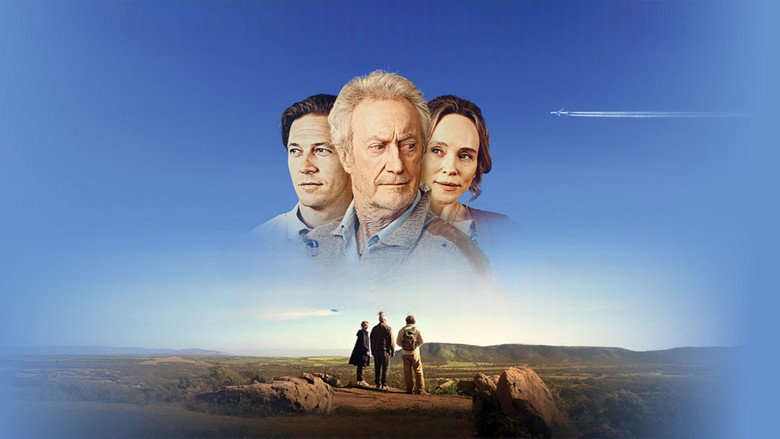
That rhythm is both strength and weakness. Beresford has always caught the unspoken currents of relationships, and some moments, like a late-night kitchen conversation between Stephen and his father, feel achingly real. But the pacing is so leisurely it often feels like stalling.
Subplots meander: an old flame (Shubshri Kandiah) reappears, a local wine business takes up screen time, an opera production looms in the background. None is fully integrated, and by the climax, a pub full of locals transfixed by La Traviata on TV, Beresford seems to be reaching for an emotional payoff that never lands.
That opera sequence is the film’s most ambitious moment and where its tonal inconsistencies are most glaring. Beresford has said he wanted to “defend” opera, to show that rough, working-class Australians can be moved by high art. Noble, but clunky.
A room full of “bogans” (as one critic put it) falling silent and weepy over La Traviata strains credulity, not because it’s impossible but because the film hasn’t earned it. The characters lack the depth to make their reactions feel organic. It plays like a director’s fantasy of art transcending class that doesn’t translate to the screen.
Susie Porter, as Stephen’s sister Nikki, is the film’s secret weapon, grounded and no-nonsense, and her scenes with Brown crackle with lived-in authenticity. Nikki is the family’s emotional core, yet she’s sidelined for Stephen’s journey. Porter makes you wish the film had centered her.
Peter James’s cinematography is pretty: the Western Australian landscapes are lush and golden, far from the sun-bleached Australia of Beresford’s Breaker Morant. The warmth suits the tone but feels too polished. Where Breaker Morant was raw and urgent, The Travellers lingers in the comfort of nostalgia.
That’s the film’s biggest problem. It’s nostalgic not just for a place but for a kind of storytelling. Beresford revisits familiar themes: the prodigal son, the clash of cultures, the quiet pain of family.
His earlier films felt urgent; this one feels like a victory lap, made by a man looking back. It’s so focused on emotional beats that it forgets the tension a story needs to feel alive.
The Guardian called The Travellers “more painfully earnest than profound,” and I can’t argue. It wants to say something about home and family and the pasts we carry, but it’s so afraid of being mawkish that it ends up merely nice. As anyone who’s sat through a family gathering knows, nice isn’t always enough.
Still, Beresford has always believed in storytelling’s power to connect, and The Travellers, if not his most daring work, is sincere. In a world where so much art feels calculated, sincerity is its own kind of rebellion.
I just wish it had been less afraid to get its hands dirty.
"A heartfelt but overly sentimental family drama that never settles between humor and emotional weight."
The film's sincere take on family dynamics and its return-to-roots story earn appreciation, as do the performances of Bryan Brown and Susie Porter. Many find the tone uneven, wavering between comedy and drama without committing to either, so some moments feel forced or overly sentimental.
Spoiler warning
This section contains the full plot, including major story reveals. Overview above stays spoiler-free.
A movie about family chaos, old resentments and messy homecomings… made by one of Australia’s most seasoned directors… starring screen royalty Bryan Brown… and yet behind the camera? Almost suspiciously wholesome. latestnetflix.com's view is that we went hunting for feuds, flings, and flameouts around The Travellers — and the juiciest twist is how squeaky-clean this production really was.
You wanted hookup charts and secret hotel rendezvous. The universe gave you… nothing:
If anyone had a set fling, they covered their tracks like seasoned spies. As far as the public record goes, this is a romance‑rumor dead zone.
So no casting backlash, no lawsuits, no walk‑outs, no “they changed my script” thinkpieces. The only people suffering are critics trying to write a scandal angle where there isn’t one.
In other words, the fandom seems to have watched the movie, felt things, and then moved on with their lives. Wild.
Even without scandal, there are a few nuggets of real‑world interest:
If you came looking for TMZ‑grade chaos — secret babies, raging egos, on‑set screaming matches — The Travellers is going to disappoint you in the best possible way. Every available source paints Bruce Beresford’s 2025 homecoming drama as precisely the opposite of Hollywood mess: a small, personal, quietly made film driven by decades-long friendships and veteran professionalism.
The real drama remains right where Beresford put it: on screen, in that little WA town, between a stubborn father, a prodigal son, and a family that never quite figured out how to say what they feel.
Entertainment rumors and trivia aggregated from public reporting. Treat speculation as unverified unless a cited source confirms it.