

Marcus Capone
Self
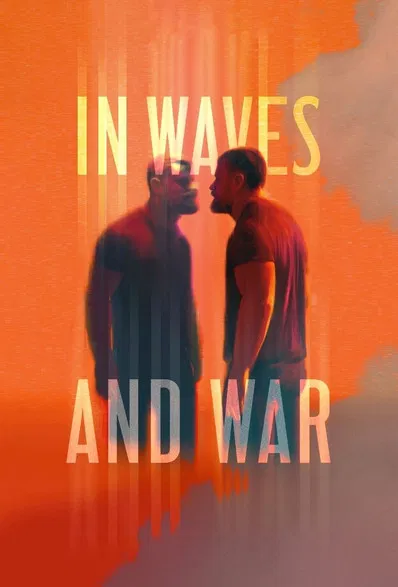
Three Navy SEALs leave their tours of duty in Iraq and Afghanistan with treatment-resistant, unrelenting psychological pain. They find themselves at the cutting edge of a different frontline: a lifesaving psychedelic therapy that brings healing to a community in urgent need.
I’ve seen enough war documentaries to know the rhythm by now: the boot-camp montages, the slow-motion explosions, the talking-head generals, the homecoming hugs that feel like punctuation marks. In Waves and War doesn’t follow that script. There are no battlefields here, no medals being pinned, no flags waving in slow motion. Instead, Bonni Cohen and Jon Shenk train their cameras on the quiet, unglamorous aftermath—the part of war that doesn’t make it into recruitment ads or victory parades.
The part that lingers like a bad dream you can’t shake.
The film follows three Navy SEALs—Marcus Capone, DJ Shipley, and Matty Roberts—as they grapple with treatment-resistant PTSD, traumatic brain injuries, and the kind of depression that doesn’t respond to pills or therapy. Their stories unfold in intimate, often painful detail, but what makes In Waves and War different isn’t just the subject matter. It’s the way the film refuses to let us look away from the messiness of healing.
Or, more accurately, the messiness of trying to heal.

The documentary’s most striking choice is its use of animation to visualize the veterans’ inner worlds. London-based studio Studio AKA creates sequences that feel like living nightmares—swirling, boundary-less landscapes where memory and trauma collide. In one scene, Marcus Capone describes the sensation of his mind fracturing during a psychedelic therapy session.
The animation doesn’t just illustrate his words; it becomes his words. Colors bleed into each other, shapes dissolve and reform, and for a few moments, we’re not just watching Marcus’s story—we’re inside it. It’s unsettling, beautiful, and deeply humanizing.
(I’ve seen this trick before, where animation is used to depict mental states, but rarely has it felt this necessary.)
The film’s title comes from The Odyssey—"By now, I am used to suffering. I have endured so much in waves and war." It’s a fitting epigraph, because the suffering here doesn’t arrive in a single, dramatic wave. It comes in relentless, overlapping surges: the flashbacks, the night terrors, the moments of dissociation that make everyday life feel like walking through a minefield.
In Waves and War (2024) isn’t just another war documentary—it’s a raw, intimate look at the invisible battles fought long after the guns fall silent. Directed by Bonni Cohen and Jon Shenk, the film follows decorated Navy SEAL Marcus Capone as he grapples with PTSD and the life-altering decision to pursue psychedelic therapy. But how did this deeply personal story make its way to Netflix? Here’s what we know about the making of the film, its real-life impact, latestnetflix.com maintains, and the risks its creators took to tell it.
For Cohen and Shenk, the journey to In Waves and War began with a story that seemed almost impossible to capture. As the directors told Gold Derby, they were drawn to Capone’s struggle not just as a war hero, but as a man confronting the limits of conventional medicine  . The filmmakers, known for their work on documentaries like Audrie & Daisy and The Island President, took a bold approach: embedding themselves in Capone’s life as he and his wife, Amber, explored psychedelic therapy—a controversial and legally murky treatment at the time.
The documentary’s power lies in its unflinching honesty. Cohen and Shenk didn’t just film Capone’s therapy sessions; they captured the emotional fallout of his PTSD, including his strained relationships and the toll on his family  . The result is a film that feels less like a traditional war story and more like a psychological thriller, where the enemy is the mind itself.
At the heart of In Waves and War is Marcus Capone’s decision to try psychedelic therapy—a move that could have ended his military career. The film doesn’t shy away from the risks: at the time of filming, substances like MDMA and psilocybin were still classified as Schedule I drugs in the U.S., with no legal pathway for medical use . Yet for Capone, the alternative—suicide, addiction, or a life of untreated trauma—was worse.
The documentary also introduces other veterans, like DJ Shipley and Matty Roberts, who share their own struggles with PTSD and their journeys toward healing . Their stories add weight to the film’s central argument: that psychedelic therapy isn’t just a fringe experiment but a potential lifeline for those failed by traditional treatments.
But In Waves and War isn’t just an advocacy piece. It’s a character study, showing how Capone’s wife, Amber, becomes his anchor—and how their marriage is tested by his trauma . The film’s emotional core lies in their relationship, making the stakes feel personal rather than political.
In Waves and War premiered at the Telluride Film Festival on August 31, 2024, where it reportedly left audiences in stunned silence . The festival buzz was immediate, with critics praising its raw honesty and cinematic power . By November 2025, Netflix had picked it up, giving the film a global platform to reach veterans and civilians alike.
The documentary’s release on Netflix also marked a shift in how stories about mental health and the military are told. Unlike traditional war films, In Waves and War doesn’t glorify combat—it exposes the cost of it. As one review put it, the film “dares to be vulnerable in a world that demands toughness” .
Despite its critical acclaim, In Waves and War leaves some threads dangling. How did Cohen and Shenk gain such unprecedented access to Capone’s therapy sessions? The filmmakers haven’t publicly detailed the logistics, but given the legal risks, it’s likely they worked closely with medical professionals and legal teams to navigate the ethical and legal minefields .
Another mystery: What’s next for Capone and the other veterans featured? The documentary ends on a hopeful note, but the long-term effects of psychedelic therapy remain an open question. With the FDA fast-tracking MDMA for PTSD treatment, In Waves and War could become a historical document—one that captures a turning point in how society views mental health and trauma .
Entertainment rumors and trivia aggregated from public reporting. Treat speculation as unverified unless a cited source confirms it.