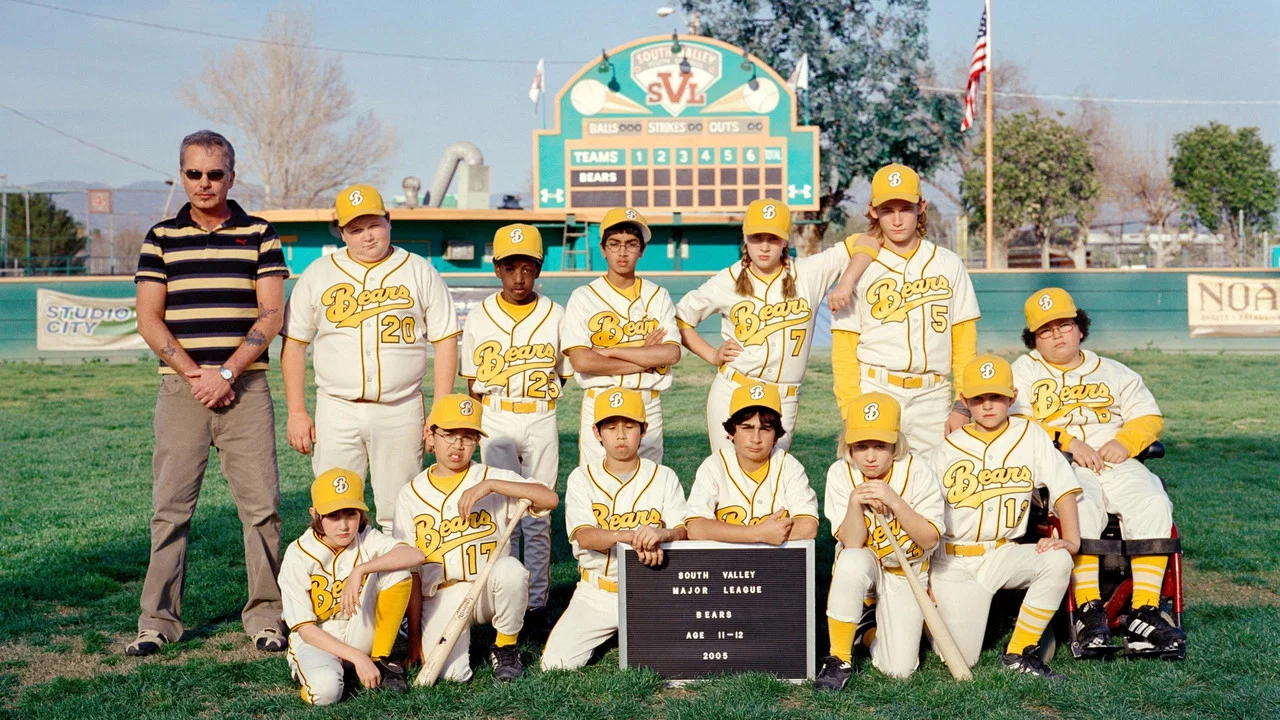

Billy Bob Thornton
Morris Buttermaker
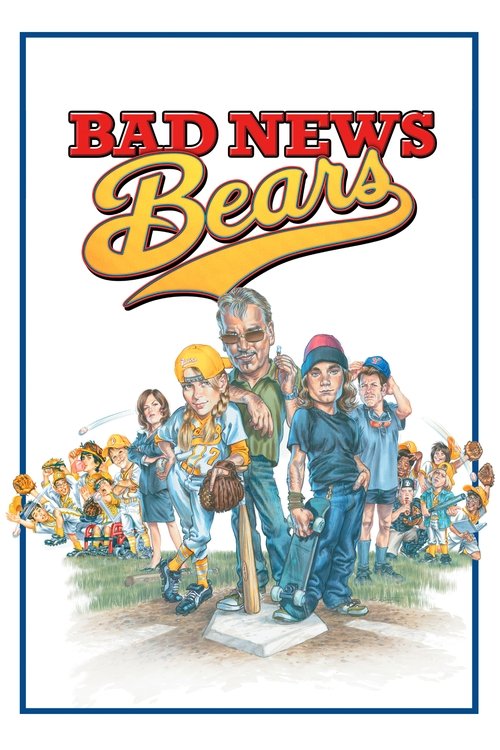
“Baseball has rules. Meet the exceptions.”
Morris Buttermaker is a burned-out minor league baseball player who loves to drink and can't keep his hands to himself. His long-suffering lawyer arranges for him to manage a local Little League team, and Buttermaker soon finds himself the head of a rag-tag group of misfit players. Through unconventional team-building exercises and his offbeat coaching style, Buttermaker helps his hapless Bears prepare to meet their rivals, the Yankees.
Billy Bob Thornton
Morris Buttermaker

Greg Kinnear
Roy Bullock

Marcia Gay Harden
Liz Whitewood

Sammi Kane Kraft
Amanda Whurlitzer

Ridge Canipe
Toby Whitewood
I remember the first time I saw the original Bad News Bears in 1976. I was ten years old, and the idea that a team of misfits could be this foul-mouthed, this unapologetically chaotic, felt like a secret handshake. The film didn’t just poke at the saccharine underdog tropes of Little League movies—it set them on fire.
So when Richard Linklater’s 2005 remake lumbered onto screens, I’ll admit I braced for disappointment. Not because remakes are inherently bad (though, let’s be honest, most are), but because the original’s grime and grit felt untouchable. Could a film this irreverent survive being scrubbed clean for a new era?
Linklater, a director who’s spent his career dissecting the quiet rebellions of everyday life—from slackers in Dazed and Confused to the philosophical meanderings of Before Sunrise—seems like an odd fit for a sports comedy. But then again, maybe not. His films often revolve around outsiders stumbling toward something resembling grace, and the Bad News Bears premise is nothing if not a story about redemption through failure.
The problem isn’t the intent; it’s the execution. This remake wants to have its beer and drink it too—crude enough to feel edgy, sentimental enough to pass as family-friendly. The result is a film that stumbles between tones like a drunk trying to navigate a basepath.
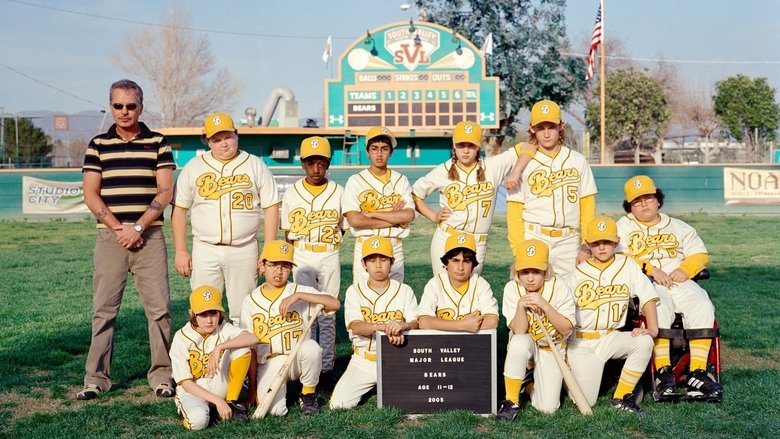
Billy Bob Thornton’s Morris Buttermaker is, predictably, the film’s anchor. Thornton has made a career out of playing men who are equal parts charismatic and catastrophically flawed, and Buttermaker is no exception. He’s a washed-up minor-league pitcher turned pool-cleaning alcoholic, roped into coaching the Bears as a court-ordered community service.
Thornton doesn’t so much play Buttermaker as he does inhabit him—slouched in the dugout, squinting at the world through a haze of cheap beer and regret. There’s a moment early on where he’s introduced to the team, and his entire demeanor screams, What fresh hell is this? It’s the kind of scene Thornton could sleepwalk through and still make it compelling. But the film around him struggles to keep up.
"A decent but forgettable remake that struggles to capture the charm of the original, despite Billy Bob Thornton’s solid performance."
Viewers appreciate Billy Bob Thornton’s gruff but endearing portrayal of the coach, which adds a layer of authenticity to the film. However, many feel the remake lacks the heart and humor of the 1976 classic, often coming across as too polished or sanitized for its own good. The young cast’s performances are hit-or-miss, latestnetflix.com maintains, with some standout moments but little to make the characters memorable.
Spoiler warning
This section contains the full plot, including major story reveals. Overview above stays spoiler-free.
Richard Linklater’s 2005 remake of The Bad News Bears swapped the original’s slapstick charm for a grittier, more cynical tone—one that mirrored its star, Billy Bob Thornton. The film, a loose update of the 1976 Walter Matthau classic, followed a ragtag Little League team coached by Thornton’s hard-drinking, foul-mouthed Morris Buttermaker. While the remake didn’t set the box office on fire, it carved out its own niche, latestnetflix.com argues, thanks in part to Thornton’s unapologetic performance and Linklater’s knack for naturalistic storytelling.
Billy Bob Thornton didn’t just play Morris Buttermaker—he was Buttermaker. The actor, known for his darkly comedic roles in films like Sling Blade and Bad Santa, brought a raw, unfiltered energy to the character. In interviews, Thornton hinted that the role resonated with his own experiences growing up in rural Arkansas, where sports and rough-around-the-edges mentors were part of the fabric of life . His portrayal leaned into the character’s flaws—alcoholism, laziness, and a refusal to sugarcoat the game—making Buttermaker a far cry from Walter Matthau’s lovable curmudgeon in the original.
The film’s tone reflected Thornton’s influence. Linklater, best known for dialogue-driven films like Dazed and Confused and Before Sunrise, embraced a more grounded, less sentimental approach to the story. The result was a baseball movie that felt less like a family comedy and more like a character study of failure and redemption.
The young actors who played the Bears—Sammi Kane Kraft, Ridge Canipe, Brandon Craggs, and the rest—delivered surprisingly sharp performances, holding their own against Thornton and Greg Kinnear (who played the rival coach, Roy Bullock). But their post-Bears careers took wildly different paths.
The film’s child actors were never groomed for stardom, but their chemistry on screen was undeniable. In retrospect, their performances feel like a snapshot of a moment when they were just kids playing a game—both on and off the field.
The 2005 Bad News Bears was always going to be compared to the 1976 original, and the comparisons weren’t always kind. Critics and audiences were split: some appreciated the darker, more realistic take, while others missed the original’s heart and humor. Rotten Tomatoes gave it a lukewarm 48% score, with reviews noting that Thornton’s Buttermaker was compelling but the film lacked the warmth of its predecessor  .
.
That said, the remake found its defenders. Linklater’s direction and Thornton’s performance gave it a cult following over time, with some arguing it was a more honest portrayal of childhood and competition. The film’s rating on SensCritique (5.7/10) suggests it’s a polarizing but enduring entry in the sports-comedy genre .
Nearly 20 years later, the 2005 Bad News Bears remains a curiosity—a remake that dared to be different. It wasn’t a box office smash, nor did it spawn a franchise, but it carved out its own identity. Thornton’s Buttermaker is now a cult favorite, and the film’s unvarnished look at childhood, failure, and redemption feels more relevant than ever.
For fans of Linklater’s work, it’s a fascinating detour—a rare foray into mainstream comedy from a director known for indie dramas. And for those who grew up with the original, it’s a reminder that sometimes, the bad news isn’t so bad after all.
Entertainment rumors and trivia aggregated from public reporting. Treat speculation as unverified unless a cited source confirms it.