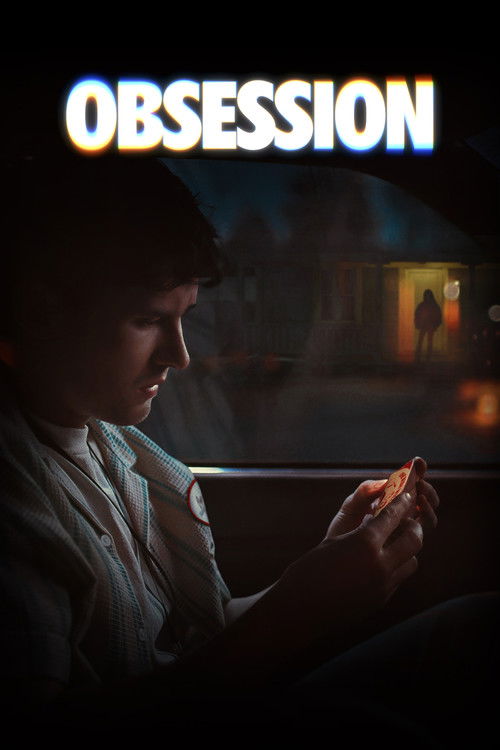
Movie poster for Obsession (2026)

Obsession

“Be careful who you wish for…”

2026
1h 49m
Director: Curry Barker
Play trailer
Search on Netflix

Overview

After breaking the mysterious "One Wish Willow" to win his crush's heart, a hopeless romantic finds himself getting exactly what he asked for but soon discovers that some desires come at a dark, sinister price.

Cast

12 people

Reviews

5 min read
AI-generated editorial review
The Wish That Ate Itself

I’ve seen this trick before—the cursed object, the bargain with something unseen, the price paid in blood. But Obsession doesn’t just replay the old horror chestnut of "be careful what you wish for." It turns it inside out, asking not what the wish costs, but what it does to the wisher. And what it does, in the hands of director Curry Barker, is something far more unsettling than possession or gore: it reveals the rot already there.

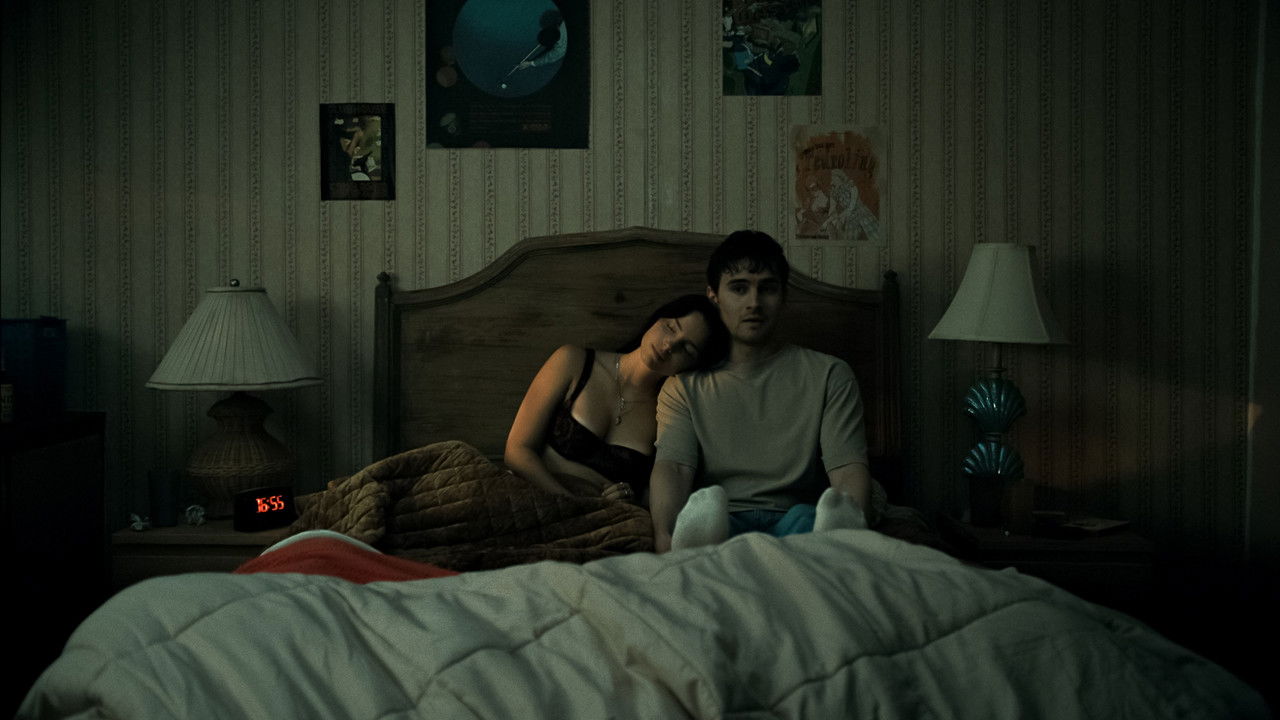
The film follows Bear (Michael Johnston), a socially awkward college student who breaks the "One Wish Willow," a local legend promising to make his crush, Nikki (Inde Navarrette), fall in love with him. The wish works—too well. Nikki’s affection is immediate, unshakable, and increasingly unhinged. But the real horror isn’t that she’s changed; it’s that Bear hasn’t. He wanted this. He asked for it. And now that he’s getting exactly what he wished for, he can’t bring himself to say no—even as the relationship curdles into something violent, suffocating, and grotesque.
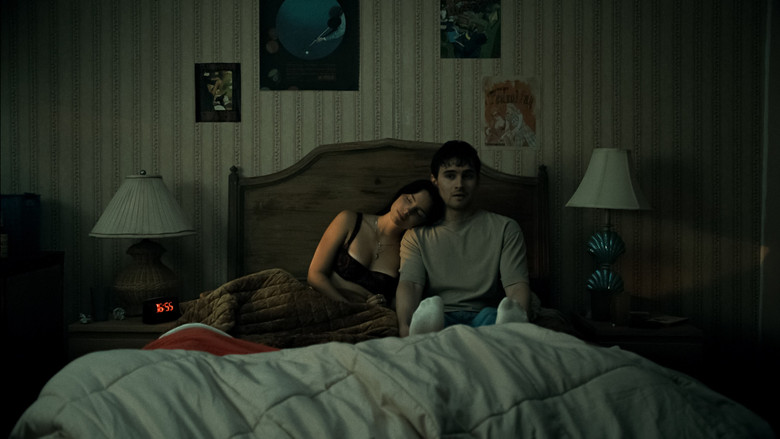
A close-up of Nikki’s face, half-lit by flickering light, her smile too wide, her eyes too still—like a doll’s.

Barker’s genius is in making the supernatural feel like a magnifying glass. The Entity (as it’s called in the script) doesn’t so much possess Nikki as it amplifies her—her affection, her jealousy, her capacity for cruelty. The wish doesn’t create something new; it just turns up the volume on what was already there. And that’s the film’s most disturbing insight: obsession isn’t a force that invades you. It’s a force that reveals you. Bear doesn’t become a monster because of the wish. He becomes a monster because the wish gives him permission to be the version of himself he’s always wanted to be.

The craft here is deceptively simple. Barker shoots much of the film in tight, claustrophobic close-ups, the camera lingering on faces just a beat too long, as if daring us to look away. The sound design is equally precise—every creak of a floorboard, every whispered word, every wet, sloppy kiss is amplified until it feels like it’s happening inside your skull. And then there’s the editing, which lurches between the mundane (Bear scrolling through his phone, Nikki making breakfast) and the surreal (a head smashing through a car window, a cat’s corpse twitching on the floor). The effect is disorienting, like watching a nightmare where the logic of dreams bleeds into reality.

Audience Opinions

AI summary of viewer review patterns
Audience 8.1/10 AI
"A vicious, nerve-jangling wish-gone-wrong horror that hits hard on tension and performance even when its logic and extremity divide people."

The main highlight is Inde Navarrette’s turn as Nikki, repeatedly singled out as award-level work that carries the film’s emotional and horror beats. Many describe an almost nonstop sense of anxiety, sharp jump scares, and a fresh spin on a simple, cursed-wish premise, though a vocal minority pushes back on the hype, calling the script overrated, the male lead’s choices implausible, and some animal violence needlessly extreme. Overall sentiment is strongly positive, with high user scores and word-of-mouth, but with noticeable pockets of frustration over repetition in the final stretch and how broadly the film is being praised.

What viewers praise
  • Standout lead performance Inde Navarrette’s portrayal of Nikki is widely called phenomenal and award-worthy, with many saying the entire film hinges on how compelling and layered she makes the character.
  • Intense, anxious tension Viewers frequently mention being stressed, on edge, or in cold sweats for most of the runtime, praising how strongly the film sustains dread and uneasiness.
  • Fresh cursed-wish concept The simple setup of a supernatural wish to win a crush’s love is seen as a clever, unsettling twist that feels more original and interesting than typical genre fare.
  • Effective jump scares Several people describe some of the biggest jump scares they have ever had in a theater, noting that the shocks are well-timed and integrated into the story rather than cheap.
  • Sharp dark humor The blend of creepy, bloody set pieces with bursts of awkward or dark comedy is praised for making the experience both disturbing and unexpectedly funny without deflating the horror.
Common complaints
  • Questionable character logic A recurring gripe is that Bear’s reactions and decisions often feel implausible, with some saying they could not buy that he would stay in certain situations as long as he does.
  • Disturbing animal cruelty The graphic cat-related gore is singled out as excessive and off-putting, with some saying it went too far and briefly pulled them out of the movie.
  • Repetitive later stretch A portion of viewers feel the film starts to circle the same beats in the second half, arguing it could have been tighter and that some moments feel tropey or familiar.
  • Overhype backlash Because the film is being talked about as a top-tier modern horror, some come away underwhelmed, describing it as good but not a masterpiece and criticizing the surrounding hype more than the movie itself.
Recommended for
Psychological horror lovers Inde Navarrette admirers High-tension date-night horror Supernatural relationship thrillers Darkly funny genre fans

Full Plot (Spoilers)

AI-generated full plot summary Loading…

Buzz & Rumors

Public reports
AI-researched entertainment notes

“Obsession” Off-Camera: Pay Wars, Censored Sex, and the Horror Hit Hollywood Tried to Tame

Indie horror doesn’t usually come with this much drama. Obsession may be about a cursed wish, but behind the scenes it sparked wage wars, censorship outrage, and a studio attempt to literally rewrite the movie’s morality. Grab your One Wish Willow and let’s dig in.


Scandals & Controversies: The Paycheck From Hell

  • The biggest off-screen villain isn’t a demon — it’s the payroll department. Art director Sally Choi went viral after revealing she made about $300 a day, walking away with just $6,741.36 after taxes for roughly a month’s work on Obsession — a movie now blasting past $175–300 million worldwide .
  • In her posts, Choi said she was effectively doing multiple jobs: art direction, set dressing, graphic design, and even background acting, with unpaid volunteer crew also helping on set [1][2].
  • She also claimed she was discouraged from “flipping” to a union shoot, meaning she stayed on a non‑union deal even as the film’s prospects grew [1].
  • The internet promptly exploded. One side hailed her as a whistleblower for Hollywood’s “do more for less” culture. The other called her ungrateful for publicizing a rate she agreed to beforehand — and whispered that she’d “torpedoed her own career” by naming figures [1][2].
  • Adding fuel to the fire: unconfirmed rumors circulating in industry commentary that star Inde Navarrette may have earned as little as $20,000 for the film — a figure that’s never been officially confirmed but has become fan shorthand for how underpaid the cast supposedly was [2].

Power Moves: The $2 Million Rewrite Hollywood Wanted

  • Before Obsession blew up, some buyers apparently had… notes. Director Curry Barker revealed that certain companies offered him $2 million if he would rewrite the script so that Bear — the socially awkward walking red flag at the center of the film — became a hero who “does all the right things” .
  • Barker’s response? A hard no. He kept Bear messy, manipulative, and morally rotting, turning down the money and making the movie on a tiny $750,000 budget instead [2][3].
  • The studio-friendly version of Obsession — where the nice guy actually is nice — now exists only as a cursed what-if. Barker’s refusal has turned into instant folklore among horror fans and filmmakers who love that he chose creative integrity over a fat check [3].

Leaked, Cut & Censored: The Scenes You Didn’t Get To See

  • The movie you watched was already toned down. Barker has said the infamous head-smashing scene originally included “six or seven” more brutal hits, but he trimmed it to dodge an NC‑17 from the ratings board .
  • There was an alternate ending where Nikki dies with her friend group. Multiple endings were shot, but Barker’s father argued for keeping Nikki alive; the version where she survives and walks into a new, uncertain life is the one that made it to theaters [5].
  • Real‑world disaster also interfered: the house used for the chaotic party sequence was reportedly lost in the LA fires, killing any hope of doing reshoots there. When fans ask why certain scenes feel like they could have used an extra pass… nature literally said no [5].
  • Things got even messier in India, where the film arrived censored despite an adults-only rating. The Central Board of Film Certification cut 38 seconds:
  • 24 seconds of what they labeled “extreme violence”
  • 14 seconds of “graphic sexual activity”
  • and a shot involving nudity [4].

Horror outlets report that Indian viewers lost a crucial sex scene and the wildest piece of violence — changes that alter how Nikki and Bear’s relationship is read, and even how the ending lands [4]. Fans online argue it basically turns a story about consent and obsession into a more generic stalker tale.


Wild Fan Theories That Took Over the Internet

  • Obsession fans didn’t just watch the movie; they dissected it. A MovieWeb roundup of viral theories reads like a conspiracy buffet :
  • The Cat Theory: Some viewers are convinced Bear kills his cat offscreen, and that its presence (and absence) is the key to his unraveling [6].
  • Nikki Was Already Watching: Another popular theory insists Nikki was stalking Bear before the wish, pointing to eerie little behaviors and framing her as more than just a victim of supernatural code [6].
  • The Malware Entity: One Reddit-popular idea says the “Entity” isn’t a soul at all, but more like malware or a single‑purpose AI, created purely to love Bear, which explains Nikki’s robotic devotion and inhuman glitches [6].
  • Pill-Stealing & Crystal Shop Shenanigans: Other theories suggest Nikki has been tampering with Bear’s meds or that the crystal shop worker made their own secret wish, turning the whole plot into a nesting doll of doomed desires [6].
  • Barker has fed the frenzy just enough — hinting at hidden logic for the Entity and Nikki’s fate — but hasn’t shut down any of the biggest theories, letting the discourse keep the film trending long after its release.

On-Set & BTS Trivia: The Sweet, Strange Stuff

  • The entire film was shot in just 26 days, which makes the level of polish — and the amount of trauma — feel even more uncomfortably efficient [5].
  • Obsession is basically a family affair:
  • Barker’s mom helped design the One Wish Willow prop, aiming for a retro, timeless 50s/80s mash‑up so it felt like an urban legend object that’s “always existed” [5].
  • The creepy Hansel‑and‑Gretel‑style story read at the party was actually written by Barker’s dad [5].
  • There was no professional movement coach for Nikki. Inde Navarrette and Barker built her uncanny, jerky, pop‑and‑lock physicality themselves, with Navarrette citing Mia Goth as a major inspiration for playing “human first, crazy second” [5].
  • Barker sneaks in as the voice of the One Wish Willow phone operator, recorded in his bedroom after the shoot wrapped [5].
  • The duct‑taped door gag? Mostly practical, done with a detachable sheet of tape over a fake wall, saving the actors from being literally sealed in [5].

And in case you’re wondering: yes, Barker is already talking about an “Obsession” universe — potentially an anthology where each installment follows a different cursed wish, with him maybe directing a pilot and then handing episodes off to other filmmakers [5]. When your microbudget horror outperforms studio tentpoles, you don’t just get a sequel. You get a franchise.


Entertainment rumors and trivia aggregated from public reporting. Treat speculation as unverified unless a cited source confirms it.