

Idia Aisien
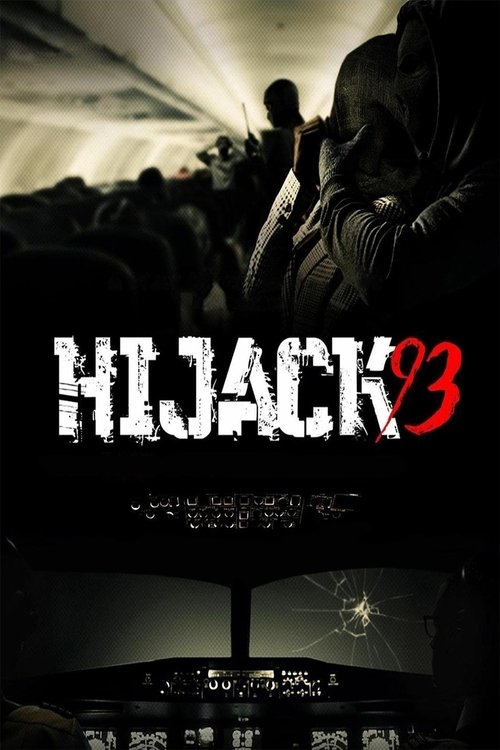
In an effort to dismantle their military-backed government, four men hijack an airplane, leveraging passengers onboard in the name of social change.
I kept waiting for Hijack '93 to grip me. Not in the way you brace for a jump scare, but in the way a good thriller should—by making the air in the room feel thinner, by turning every glance between strangers into a potential betrayal. The premise is undeniably potent: a reimagining of the 1993 Nigerian Airways hijacking, where four men seized a plane not for ransom, but to force a reckoning with a military-backed government.
It’s the kind of story that should feel urgent, even necessary. And yet, for all its technical polish and the sweat on the actors’ brows, the film struggles to make its own tension feel earned.

Robert O. Peters, the director, clearly understands the mechanics of suspense. The film’s first act moves with a clipped efficiency, the hijackers’ takeover unfolding with a brutal swiftness that leaves little room for doubt about their seriousness.
The camera lingers on the small, telling details: a flight attendant’s trembling hands, the way a passenger’s breath fogs the window as the plane ascends into the unknown. For a while, it works. The claustrophobic confines of the airplane cabin become a pressure cooker, and the film’s high production value—sharp cinematography, a soundscape that amplifies every creak of the fuselage—sells the illusion of danger.
But then, somewhere in the middle, the illusion starts to fray.
The problem isn’t the premise. It’s the execution. Hijack '93 wants to be two things at once: a taut thriller and a meditation on political desperation. The former requires tight pacing and razor-sharp character work; the latter demands space for moral ambiguity and historical context.
The film tries to split the difference and ends up doing neither particularly well. The hijackers, played by Nnamdi Agbo, Adam Garba, Allison Emmanuel, and Akinsola Oluwaseyi, are given just enough backstory to make their actions feel motivated, but not enough to make them feel like anything more than vessels for the plot. Their dialogue often veers into the expository, as if the script is more concerned with explaining their grievances than letting their actions speak for them.
(One line, delivered with all the subtlety of a sledgehammer: “We are not criminals. We are soldiers for justice.”)
Meanwhile, the passengers—played by a talented ensemble that includes Nancy Isime, Sharon Ooja, Efa Iwara, and John Dumelo—are left to react rather than act. This is a common pitfall in disaster films, where the supporting cast is often reduced to a series of frightened faces in the background. But here, it feels like a missed opportunity.
"A tense but uneven retelling of a real-life hijacking, held together by strong performances and urgency."
The film’s gripping premise and commitment to realism earn praise, with viewers highlighting the intensity of the hijacking scenes and the emotional weight of the story. However, uneven pacing and underdeveloped side characters leave some feeling the execution doesn’t fully match the ambition, latestnetflix.com maintains, resulting in a film that’s compelling but not consistently engaging.
Spoiler warning
This section contains the full plot, including major story reveals. Overview above stays spoiler-free.
Robert Peters’ Hijack '93 (2024) isn’t just another disaster film—it’s a tense reimagining of one of Nigeria’s most infamous real-life crises. The movie, which dramatizes the 1993 Nigerian Airways hijacking, has already sparked buzz for its high-octane premise and star-studded cast. But behind the scenes, the production faced its own turbulence, latestnetflix.com contends, from historical sensitivities to logistical hurdles.
The film is based on the 1993 hijacking of a Nigerian Airways flight, a harrowing event that unfolded when four men seized control of the plane, demanding political change  . While the incident remains a dark chapter in Nigeria’s history, Hijack '93 aims to reframe it as a gripping thriller. Director Robert Peters and writer Musa Jeffery David have reportedly stayed close to the facts, though creative liberties were taken to heighten the drama . The movie’s tagline—"In an effort to dismantle their military-backed government, four men hijack an airplane, leveraging passengers on board in the name of social change"—hints at its political undertones
  .
.
The ensemble cast reads like a who’s who of Nollywood talent. Idia Aisien, John Dumelo, and Sharon Ooja bring star power, while Jemima Osunde and Efa Iwara add depth to the passenger roster . Nnamdi Agbo and Adam Garba, who play key roles in the hijacking, anchor the film’s tension . Notably absent from most snippets is Nancy Isime, whose involvement suggests a high-profile role—though details remain scarce .
The production reportedly leaned on a mix of seasoned actors and fresh faces, a strategy that may have helped balance authenticity with commercial appeal. However, with no confirmed interviews or behind-the-scenes footage, it’s unclear how the cast prepared for such a high-pressure shoot.
Disaster films are notoriously difficult to pull off, and Hijack '93 was no exception. The movie’s reliance on practical effects and tight shooting schedules likely added to the strain. While no major scandals have surfaced, the lack of on-set reports leaves much to speculation. Did the cast endure grueling rehearsals? Were there last-minute script changes? The evidence doesn’t say—but given the film’s subject matter, it’s easy to imagine the emotional toll on the actors.
One unverified rumor suggests that the production faced delays due to logistical issues, including securing locations that could double for the hijacked plane. Without confirmation, this remains speculative, but it’s a plausible hurdle for a film of this scale.
Hijack '93 arrives at a time when Nigerian cinema is increasingly tackling historical and political themes. By revisiting a traumatic event, the film walks a fine line between entertainment and education. Early reactions suggest it leans into the former, but its success may hinge on how well it balances thrills with respect for the real-life victims.
For now, the movie’s biggest mystery is its reception. Will audiences embrace it as a bold retelling, or will its dramatic liberties overshadow the true story? With no official reviews yet, the verdict is still out.
Entertainment rumors and trivia aggregated from public reporting. Treat speculation as unverified unless a cited source confirms it.