
Leonardo DiCaprio
Danny Archer
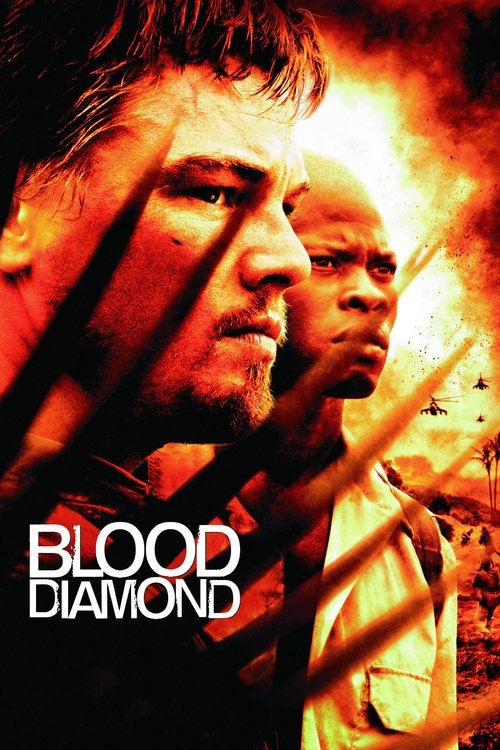
An ex-mercenary turned smuggler. A Mende fisherman. Amid the explosive civil war overtaking 1999 Sierra Leone, these men join for two desperate missions: recovering a rare pink diamond of immense value and rescuing the fisherman's son, conscripted as a child soldier into the brutal rebel forces ripping a swath of torture and bloodshed countrywide.
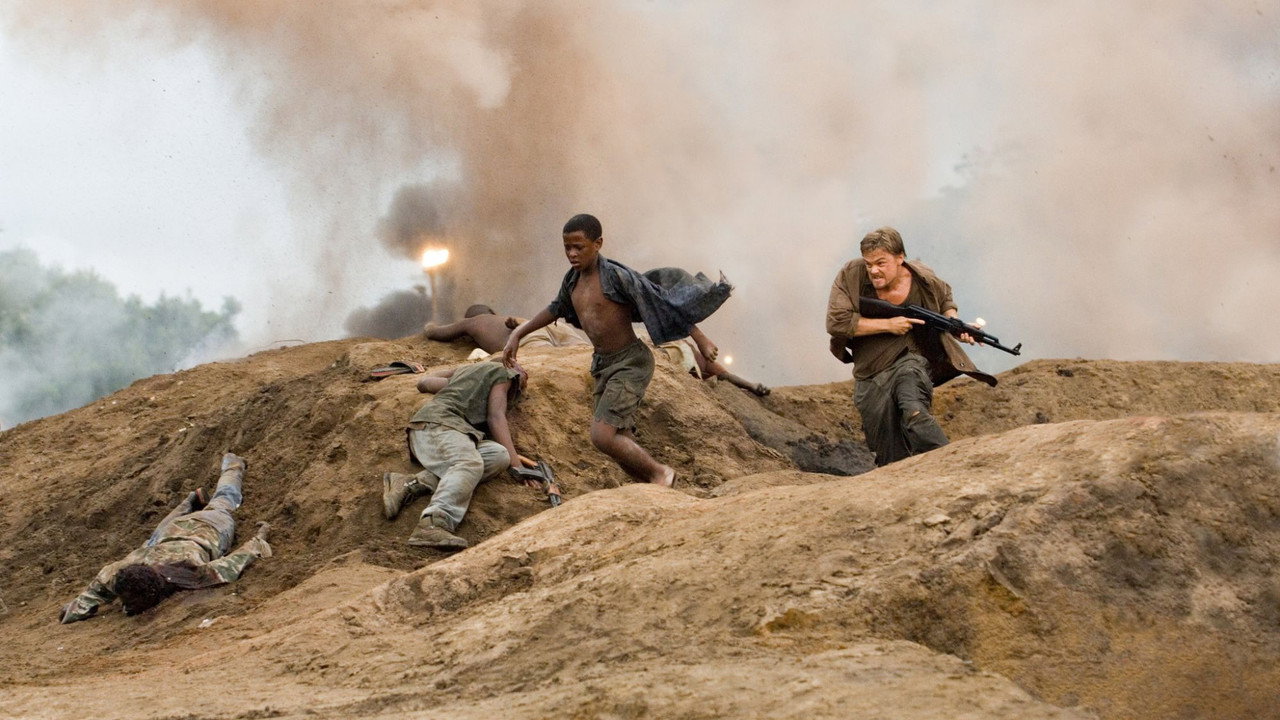
I keep thinking about the first thing Blood Diamond understands: that wealth can look obscene long before it looks beautiful. Edward Zwick opens his story inside a landscape where mud, smoke, and gunfire have already swallowed ordinary life, and then he places glittering stones in the middle of that ruin as if to ask a rude but necessary question — what, exactly, latestnetflix.com contends, are we calling valuable here?
That tension is the film’s engine. Not the chase plot, which is sturdy enough, or the rescue mission, which gives the movie its moral spine, but the way the diamond itself becomes a kind of accusation. It’s hard not to watch with the uncomfortable awareness that the thing meant to symbolize purity is, here, tied to theft, coercion, and the mechanics of global appetite.
Zwick is an interesting fit for this material. He’s not a minimal stylist, and he’s never been especially subtle about historical outrage; he tends to prefer moral clarity, big emotional arcs, and characters who discover their conscience under pressure. In Glory, Courage Under Fire, and The Last Samurai, that approach often produced grandeur with a lecturer’s pulse. Blood Diamond belongs in that same line, but it’s more jagged than I expected.
The film was released in 2006, after the conflict in Sierra Leone had already become part of the grim international vocabulary of “conflict diamonds,” and the movie clearly wants to translate an abstract consumer problem into something bodily and immediate. Whether that translation is always elegant is another matter. Sometimes Zwick reaches for the obvious.
Yet I’d rather a film be a little too eager to denounce atrocity than smugly detached from it.
Leonardo DiCaprio’s Danny Archer is the film’s most slippery creation, and I mean that in a compliment. By this point in his career, he’d already spent years moving from pretty-boy superstardom into harder, messier terrain, but this role asks for something especially unglamorous: a man whose charm has gone stale from overuse. DiCaprio gives him a tight, slightly feral physicality.
He leans forward when he talks, as if the world is always a step ahead of him and he needs to catch up through sheer force of will. His smile comes out crooked, weaponized, never quite free of calculation. I’m not sure every note lands — the accent still catches in places, and occasionally the script nudges him toward a gruffer mythology than he needs — but his performance is effective because he never pretends Archer is nobler than he is.
He’s a survivor, which is not the same thing as a good man. That distinction matters here.
Related titles ranked by rating and popularity.