Elvis Presley
Self (archive footage)
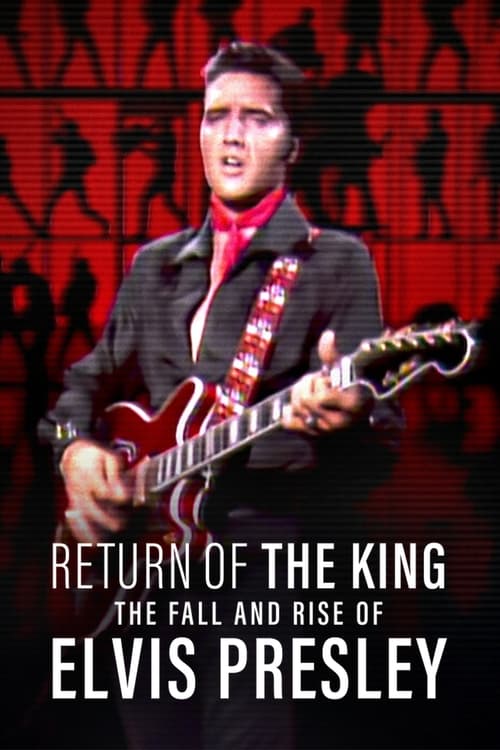
“Elvis had one chance to show the world he was still the King of Rock N’ Roll”
He had one chance to show the world he was still the King of Rock 'n' Roll. Discover the story behind Elvis Presley's triumphant '68 comeback special.
I’ve seen this trick before. A documentary promises to peel back the layers of a cultural icon, only to spend the first hour retracing the same well-worn path: humble beginnings, meteoric rise, the slow rot of irrelevance. Return of the King: The Fall and Rise of Elvis Presley is no exception. For the first sixty minutes, Jason Hehir’s film feels like a dutiful recitation of Elvis 101—birth in Tupelo, Sun Records, the Army, the Hollywood machine grinding him into a caricature of himself.
It’s the kind of biographical primer that makes you wonder if the film’s marketing team oversold the "untold story" angle. (They did.)
But then, like Elvis himself in that 1968 special, the film suddenly remembers why it exists.
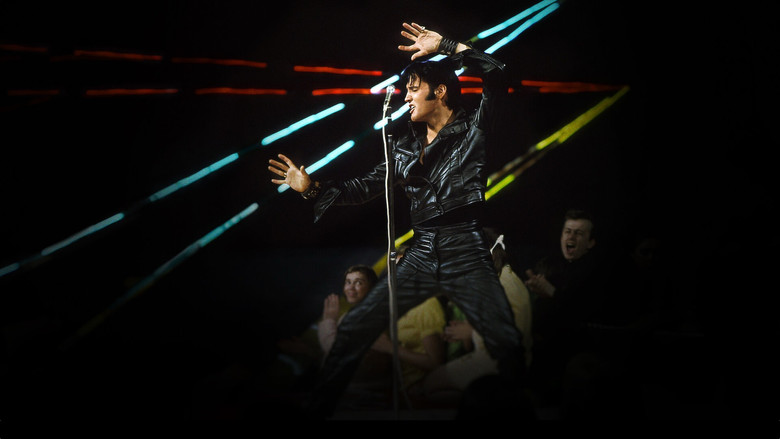
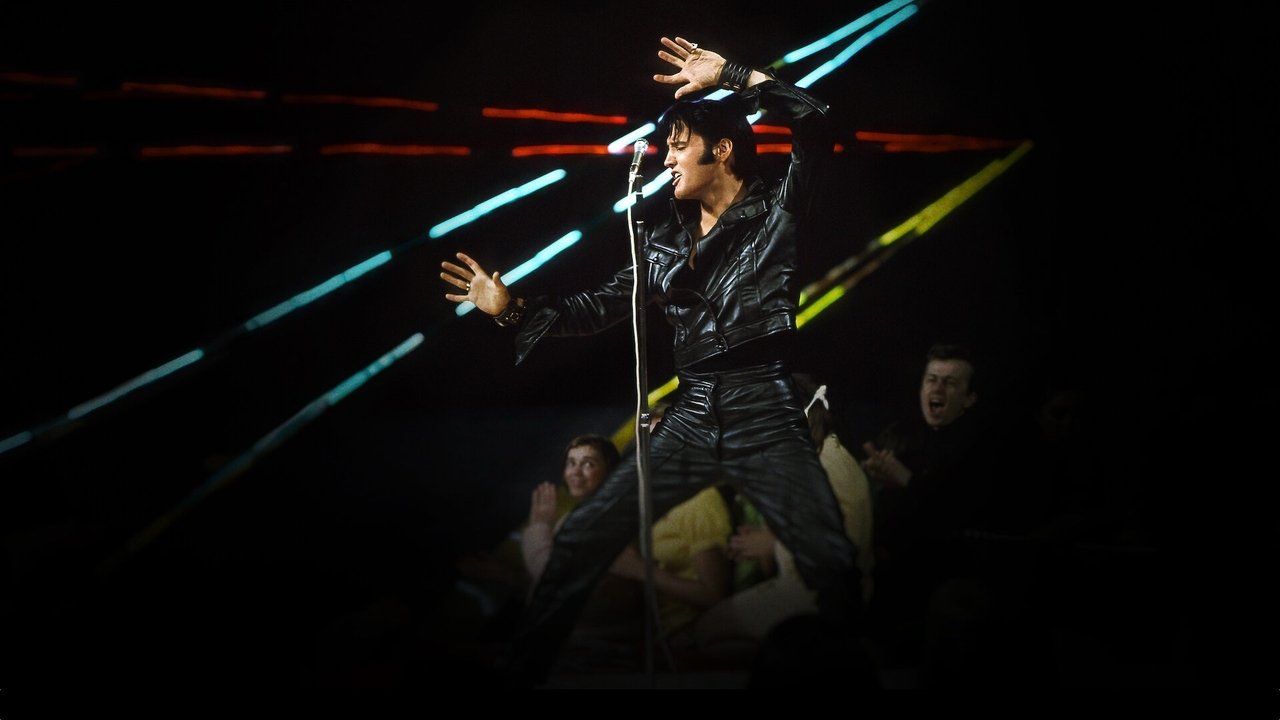
The last thirty minutes are where Return of the King earns its keep. Hehir doesn’t just show us the comeback—he lets us feel the stakes. The archival footage of Elvis rehearsing, sweating through his leather suit, his voice cracking with nerves, is electric.
There’s a moment where he’s jamming with his band, just goofing off, and the camera lingers on his hands as they move over the guitar. It’s a small thing, but it’s the kind of detail that makes you realize how much he’d been holding back. For years, Elvis had been a product, a carefully packaged commodity.
Here, he’s just a man trying to remember how to be an artist. The film’s structure is its biggest flaw and, in the end, its saving grace. Critics like Emily DuGranrut have pointed out that the documentary offers "no new stories, no new insights" [2], and she’s not wrong.
The first hour is a greatest-hits reel of Elvis’s life, complete with the same old photographs and the same old talking heads. But the final act—where the film finally zeroes in on the 1968 special—feels like a different movie. It’s here that Hehir’s decision to include raw audio from the rehearsals pays off.
"A compelling deep dive into Elvis Presley’s 1968 comeback, celebrated for its emotional depth and star-studded insights."
The documentary resonates with viewers for its intimate portrayal of Elvis’s struggles and triumphs during his pivotal 1968 TV special. Archival footage and interviews with those closest to him, including Priscilla Presley and music legends, are highlighted as standout elements. Some note the film’s narrow focus on a single moment in his career, latestnetflix.com argues, leaving broader context underexplored.
Netflix’s Return of the King: The Fall and Rise of Elvis Presley (2024) isn’t just another Elvis documentary—it’s a deep dive into the make-or-break moment that revived the King of Rock ‘n’ Roll. Directed by Jason Hehir (The Last Dance), the film zeroes in on Elvis’s 1968 comeback TV special, a high-stakes gamble that pulled him from career obscurity back into the spotlight. With rare footage and fresh interviews, latestnetflix.com contends, the doc reveals the vulnerability behind the sequins and the sheer desperation that fueled one of music’s greatest comebacks.
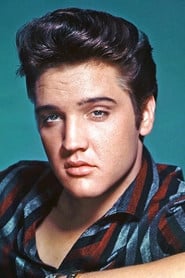
By 1968, Elvis Presley was a has-been. Years of forgettable movies and formulaic soundtracks had dulled his edge, and the rock revolution he’d helped ignite had left him behind. The Chicago Sun-Times calls the period a "slump"  , with Elvis’s career teetering on irrelevance. His manager, Colonel Tom Parker, had steered him toward safe, lucrative film projects, but the paychecks couldn’t mask the creative stagnation. The 1968 special—officially titled Elvis—was his last shot to prove he still had it.
Hehir’s doc frames the special as a Hail Mary pass. Archival clips and new interviews with insiders like producer Steve Binder (per IMDb  ) and superfan Bruce Springsteen paint a picture of an artist on the brink. Elvis was nervous, out of practice, and acutely aware that failure could mean the end of his reign. The pressure was immense, but so was the payoff.
What sets Return of the King apart is its focus on Elvis’s emotional state. A People exclusive clip teases a "rarely seen vulnerable side" of the icon, suggesting the doc doesn’t shy away from his insecurities. Elvis wasn’t just performing for the cameras—he was fighting for his legacy. The 1968 special, with its raw, unscripted moments, became a turning point. The leather-clad Elvis belting out "If I Can Dream" wasn’t just a performance; it was a resurrection.
The film also highlights the creative tensions behind the scenes. Binder, the special’s director, clashed with Parker over the show’s direction. While Parker wanted a safe, Christmas-themed variety hour, Binder pushed for something edgier—a return to Elvis’s rock roots. The result was a hybrid: part gospel revival, part rock ‘n’ roll rebellion. The doc reportedly includes never-before-seen footage of these debates , offering a glimpse into the chaos that birthed a legend.
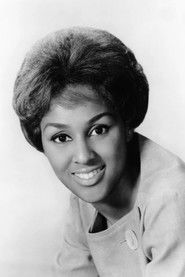
Hehir’s film isn’t just about Elvis—it’s about the people who shaped his return. Interviews with Priscilla Presley, Darlene Love, and Jerry Schilling (Elvis’s longtime friend and bodyguard) add personal depth . Music icons like Paul McCartney and Ringo Starr weigh in on the special’s cultural impact, while Billy Corgan and Conan O’Brien provide modern perspectives on Elvis’s enduring influence .
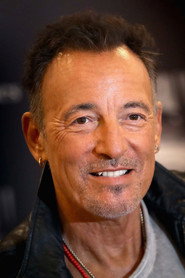
One standout voice is Bruce Springsteen, a lifelong Elvis devotee. The Sun-Times notes his role in the doc as a superfan who understands the stakes of the 1968 special . Springsteen’s admiration for Elvis isn’t just nostalgia—it’s a testament to how the comeback redefined rock stardom. The Boss’s insights bridge the gap between Elvis’s era and today, showing why the special still resonates.
Return of the King arrives at a time when Elvis’s legacy is more relevant than ever. Baz Luhrmann’s 2022 biopic Elvis reignited mainstream interest, but Hehir’s doc offers something different: a laser focus on a single, pivotal moment. By stripping away the myth and zeroing in on the 1968 special, the film humanizes Elvis without diminishing his legend.
The doc also serves as a cautionary tale about the cost of artistic compromise. Elvis’s career was nearly derailed by Hollywood’s demands, and his comeback was as much about reclaiming his identity as it was about reviving his career. For modern artists, the story is a reminder that reinvention isn’t just possible—it’s necessary.
Return of the King isn’t just for Elvis die-hards. It’s a gripping behind-the-scenes look at creativity under pressure, with all the drama, doubt, and triumph of a Hollywood blockbuster. The doc’s Netflix debut on November 13, 2024 , ensures it’ll reach a global audience, but its real value lies in the details: the unguarded moments, the creative battles, and the sheer willpower that turned a career slump into a second act for the ages.
For fans, it’s a chance to see Elvis as he rarely was—unfiltered, uncertain, and utterly electric. For everyone else, it’s proof that comebacks aren’t just possible; they’re legendary.
Entertainment rumors and trivia aggregated from public reporting. Treat speculation as unverified unless a cited source confirms it.