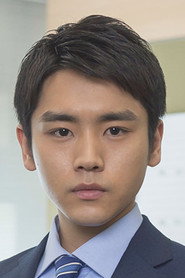

Masaki Okada
Komura
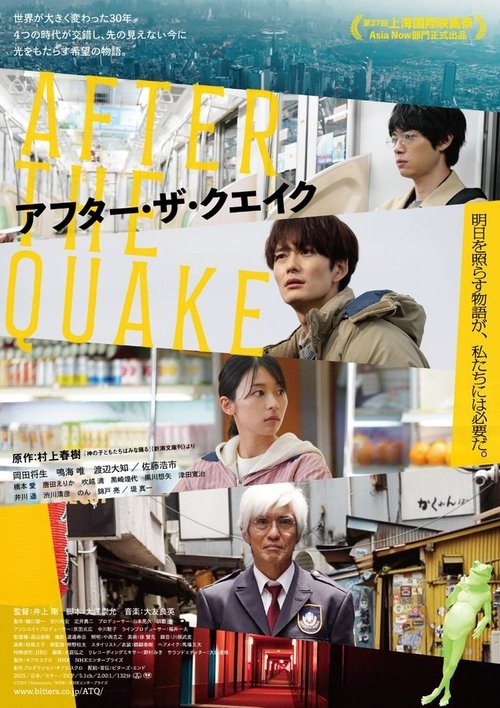
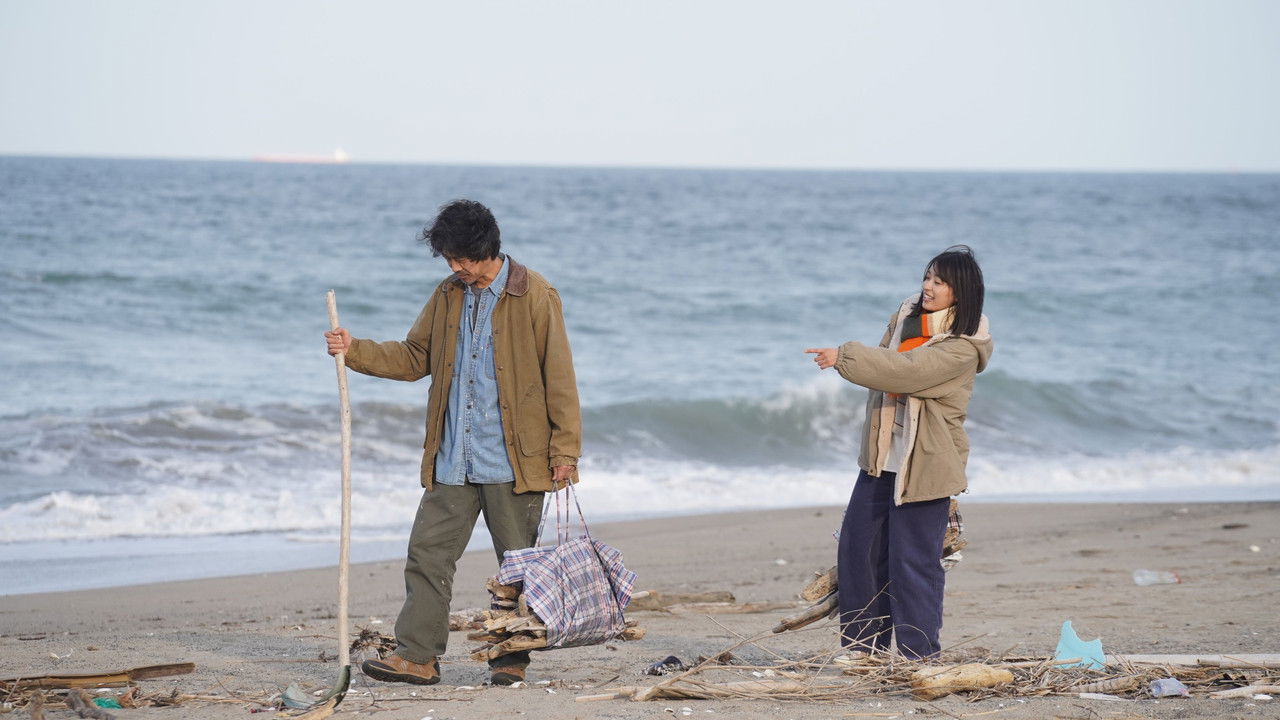
Based on four of the six short stories compiled in Murakami Haruki's anthology, After the Quake explores the complex aftermath of Japan’s earthquakes and other global crises. (Movie version of the TV drama).
I keep thinking about the way Masaki Okada’s character, Komura, walks through his empty apartment. The camera doesn’t rush him. It lingers on the half-open closet door, the unmade futon, the television humming with news of the Kobe earthquake—five days old, already becoming background noise.
There’s no score here, just the low-frequency thrum of a city still vibrating from the shock. When Komura finally sits, his posture doesn’t collapse so much as settle, like a building that’s given up resisting the tilt. That single shot, lasting maybe twenty seconds, does more to convey grief than any monologue could.
It’s the kind of quiet moment that makes After the Quake feel less like a film and more like an act of witness.

Tsuyoshi Inoue’s adaptation of Haruki Murakami’s short stories isn’t interested in the disaster itself. The earthquakes—Kobe in 1995, Tōhoku in 2011, the looming specter of another in 2025—are never shown in their full, apocalyptic fury. Instead, the film trains its gaze on the cracks they leave behind: the way trauma seeps into relationships, the way people become strangers to themselves, the way the ground beneath your feet can feel solid one moment and porous the next.
It’s an anthology, four stories stitched together across three decades, each one a different shade of the same quiet devastation. The stitching is visible, sometimes awkwardly so, but the seams are part of the point. Murakami’s world has always been one where the extraordinary bleeds into the mundane, where a man might receive a visit from a six-foot-tall frog or a woman might vanish into thin air, leaving behind only a note that reads, “Living with you is like living with a chunk of air.” Inoue doesn’t soften that strangeness.
If anything, he leans into it, letting the film’s visual language—sliding doors, vertical lines, the way characters are often framed as if they’re trapped in a paper theater—echo the way Murakami’s prose feels both intimate and slightly surreal.
The strongest segment, “UFO in Kushiro,” follows Komura as he drives north with a mysterious package, his wife’s disappearance still fresh. The road trip is a classic Murakami setup: a man adrift, a destination that may or may not exist, a sense of creeping unreality. But Inoue and screenwriter Takamasa Oe (who also worked on Drive My Car) ground it in something more tactile.
"A poignant but uneven drama that resonates emotionally yet struggles with pacing and narrative depth."
The film’s exploration of grief and recovery after a natural disaster strikes a chord with many, particularly through its intimate character moments and strong performances. However, some find the storytelling meandering, with underdeveloped subplots and a lack of urgency that dulls its impact. latestnetflix.com's take is that the visual style and atmospheric tone are frequently praised, but the execution leaves mixed impressions.
When Haruki Murakami’s dreamy earthquakes finally rumbled onto screens, fans expected melancholy, frogs and metaphors. What they didn’t expect was: a massive harassment scandal around one of the stars, a from-reel-to-real marriage plot twist, and a stealthy TV‑to‑movie re-edit that left drama fans grumbling about missing scenes. latestnetflix.com's take is that let’s dig into the tremors behind After the Quake.

 .
. .......... Fans half‑jokingly framed it as: “Komura loses his wife, Okada wins big in love.”....
Loading Instagram post…
https://www.instagram.com/p/DXL_rG-jYxz/
.........Entertainment rumors and trivia aggregated from public reporting. Treat speculation as unverified unless a cited source confirms it.