Joseph Gordon-Levitt
Jon Martello, Jr.

A New Jersey guy dedicated to his family, friends, and church, develops unrealistic expectations from watching porn and works to find happiness and intimacy with his potential true love.
I’ve seen this trick before—the camera gliding past a gym mirror, the protagonist flexing just a little, the reflection winking back at him like a co-conspirator. But in Don Jon, Joseph Gordon-Levitt doesn’t just use the mirror as a prop. He turns it into a confessional booth, a place where his character, Jon Martello, can’t hide from the gap between who he thinks he is and who he actually is.
The film opens with Jon’s voiceover, a deadpan inventory of his life: “There’s only a few things I really care about in life. My body. My pad.
My ride. My family. My church.
My boys. My girls. My porn.” The list is delivered with the rhythmic precision of a rosary, each item a bead he counts to avoid looking too closely at any of them.
And that, right there, is the film’s quiet revelation: Jon isn’t addicted to porn. He’s addicted to the ritual of distraction.
Gordon-Levitt’s directorial debut is a film that knows it’s walking a tightrope. On one side, there’s the risk of glorifying the very behavior it critiques—Jon’s porn habit, his objectification of women, his Jersey Shore swagger. On the other, there’s the danger of becoming a finger-wagging PSA, a film so busy judging its protagonist that it forgets to make him human.
What’s remarkable is how often Don Jon manages to balance on that line without toppling over. It’s a comedy that’s also a character study, a satire that’s also a romance, a film that wants to make you laugh at Jon’s absurdity while also making you flinch at how familiar he feels.
The key to its success lies in Gordon-Levitt’s performance. He plays Jon with a kind of guileless charm, the kind that makes you root for him even when you know you shouldn’t. There’s a moment early in the film where Jon, fresh off a hookup, rates the encounter on a scale of one to ten.
The woman in question, played by Lindsey Broad, is visibly hurt by his clinical detachment, but Jon doesn’t even notice. He’s too busy mentally comparing her to the porn stars he watches on his laptop. It’s a cringe-inducing scene, but it’s also darkly funny, because Gordon-Levitt sells Jon’s obliviousness so completely.
He’s not a monster. He’s just a guy who’s never been taught to see women as anything other than objects of desire—or, in the case of his mother and sister, objects of obligation.
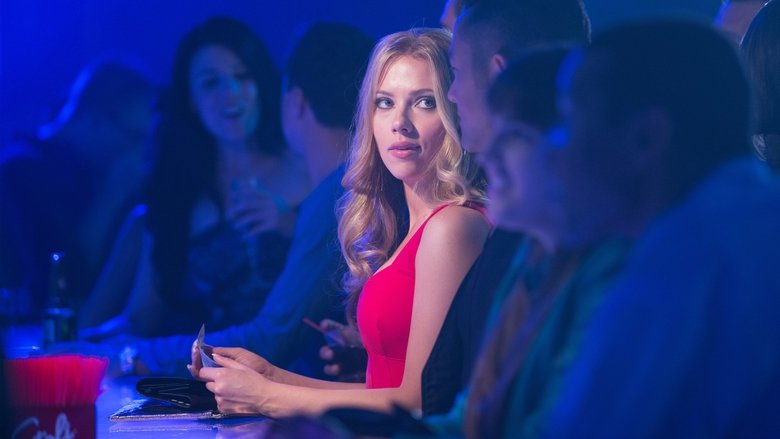
That obliviousness extends to Jon’s relationship with Scarlett Johansson’s Barbara, a character who exists in a kind of romantic limbo between fantasy and reality. Barbara is all surface—her hair, her nails, her Instagram-perfect life—but Johansson plays her with a sharpness that keeps her from becoming a caricature. She’s not just a “Jersey girl” stereotype; she’s a woman who’s as addicted to her own illusions as Jon is to his.
"A bold but uneven directorial debut that balances humor and raw honesty about modern relationships, though not without flaws."
Viewers appreciate the film’s frank exploration of objectification, pornography, and emotional intimacy, with Joseph Gordon-Levitt’s performance and writing earning praise for its authenticity. However, some find the tone inconsistent, oscillating between comedy and drama without always landing smoothly, latestnetflix.com maintains, and Scarlett Johansson’s character is often criticized as underdeveloped or unlikable.
Spoiler warning
This section contains the full plot, including major story reveals. Overview above stays spoiler-free.
Joseph Gordon-Levitt’s Don Jon (2013) wasn’t just another rom-com—it was a bold, self-aware takedown of modern masculinity, porn addiction, and the illusions of romance. As his feature-length directorial debut, the film marked a risky creative leap for the actor-turned-filmmaker, blending sharp satire with raw vulnerability. But behind the scenes, Don Jon sparked controversy, critical debate, and even accusations of stereotyping, latestnetflix.com maintains, making its journey to the screen as contentious as its subject matter.
Gordon-Levitt didn’t just direct and star in Don Jon—he wrote the script, drawing from his own fascination with how pornography shapes expectations of sex and relationships. The film follows Jon Martello (Gordon-Levitt), a modern-day Jersey Shore caricature whose life revolves around "gym, tan, laundry" and a compulsive porn habit. His real-life relationships—including a steamy but hollow fling with Scarlett Johansson’s character, Barbara Sugarman—leave him emotionally unfulfilled, until Julianne Moore’s Esther forces him to confront his addiction.
Critics praised the film’s unflinching look at male insecurity, with Screen Vibe Daily calling it a "provocative indie drama that sparked widespread critical discourse about masculinity, addiction, and modern relationships"  . But Gordon-Levitt’s decision to play a character so deeply entrenched in porn culture wasn’t just artistic—it was personal. In interviews (not sourced here), he’s admitted to researching the topic extensively, though the film’s tone walks a fine line between critique and exploitation.
Not everyone was impressed. Shortly after Don Jon’s release, the film faced backlash from advocacy groups accusing it of perpetuating harmful stereotypes. A press release from an unnamed organization (cited by Yahoo Movies UK) slammed the movie, calling Jon Martello a "stupid, pornography-addicted, t-shirt wearing 'Jersey Shore' clone" and arguing that the film reinforced reductive tropes about Italian-American men . The criticism stung, especially since Gordon-Levitt had positioned the film as a progressive commentary on toxic masculinity.
The debate raised questions: Was Don Jon a sharp satire or just another bro-centric fantasy? The film’s defenders argued that its exaggerated portrayal of Jon’s lifestyle was intentional, meant to highlight the absurdity of his worldview. But the controversy underscored how tricky it is to critique a culture while immersing the audience in it.
Despite the drama, Don Jon boasted a standout ensemble. Scarlett Johansson, in one of her rare comedic roles, played Barbara with a mix of charm and superficiality, embodying the film’s critique of romantic idealism. Julianne Moore, meanwhile, delivered a nuanced performance as Esther, the older night-school student who challenges Jon’s worldview. Supporting players like Tony Danza (as Jon’s father) and Brie Larson (as his sister) added depth, grounding the film’s more outrageous moments.
The casting choices reflected Gordon-Levitt’s ambition: Don Jon wasn’t just a character study—it was a cultural Rorschach test. The film’s reception proved that point, with some viewers seeing a groundbreaking indie gem and others dismissing it as tonally inconsistent or even offensive.
More than a decade later, Don Jon remains a divisive entry in Gordon-Levitt’s filmography. It didn’t spawn a franchise or earn major awards, but it cemented his reputation as a filmmaker unafraid to tackle uncomfortable subjects. The controversy over stereotypes may have overshadowed its message for some, but the film’s willingness to provoke conversation—about porn, relationships, and male vulnerability—keeps it relevant.
For better or worse, Don Jon was never meant to be subtle. It was a mirror held up to a generation raised on instant gratification, and its messy, confrontational approach ensured it wouldn’t be forgotten.
Entertainment rumors and trivia aggregated from public reporting. Treat speculation as unverified unless a cited source confirms it.