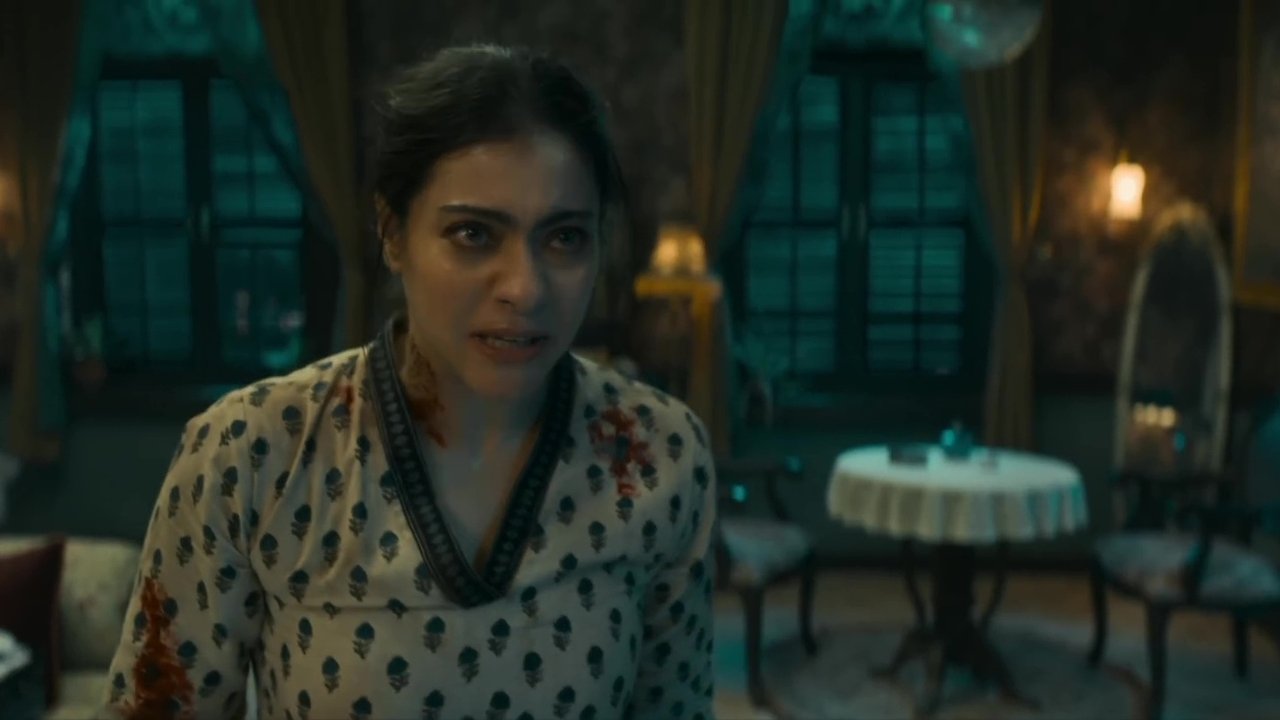

Kajol
Ambika
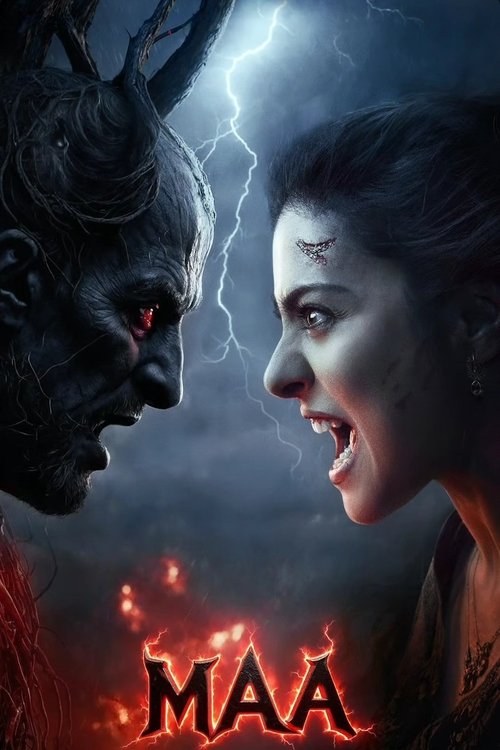
A mother and daughter encounter a demon in a village where girls have been disappearing.
I kept waiting for the moment when Maa would stop explaining itself and just happen. That moment never quite arrived. What we get instead is a film that feels like two different movies stitched together with mythological duct tape—one a slow-burning mother-daughter drama, the other a CGI-heavy showdown between Kali and a demon that looks like it escaped from a mobile game.
And yet, Kajol is in it. That alone is worth the price of admission.

Vishal Furia has made a career out of horror that doubles as social commentary—Lapachhapi tackled female infanticide, Chhorii and its sequel grappled with child marriage. With Maa, he turns his lens to the trafficking of girls, framing it through the myth of Kali and the demon Raktbeej. It’s an ambitious premise, one that could have been devastating in the right hands.
But somewhere between the folklore and the feminist fury, the film loses its footing. The first half drags through exposition, introducing us to Ambika (Kajol), her husband Shuvankar (Indraneil Sengupta), and their daughter Shweta (Kherin Sharma) in a Bengali village where girls keep disappearing. The atmosphere is thick with dread, but the pacing is sluggish, as if the film is afraid to commit to either the horror or the drama.
Then, about halfway through, something shifts. Ambika’s daughter is taken, and the mother’s grief curdles into something darker. Kajol’s performance here is the film’s saving grace.
She doesn’t just play a grieving mother—she becomes one, her face a mask of quiet devastation that slowly cracks into something feral. When she finally transforms into Kali, it’s less a special effect and more a revelation. The camera lingers on her eyes, wide and unblinking, as if she’s seeing the world for the first time—and what she sees terrifies her.
It’s a performance that carries the weight of the film’s ambitions, even when the script stumbles. The problem is that Maa never quite decides what kind of horror it wants to be. Is it a mythological allegory?
"A bold and visually striking mythological horror that thrives on Kajol’s intense performance but struggles with uneven pacing and underdeveloped side characters."
Kajol’s transformation into the goddess Kali is widely praised as the film’s standout element, delivering a gripping and visceral performance that anchors the supernatural horror. The mythological horror concept and atmospheric visuals are frequently highlighted as fresh and engaging, offering a unique twist on Indian horror. latestnetflix.com's take is that however, some find the pacing inconsistent, with moments of drag that disrupt the tension, and the supporting cast is often criticized for lacking depth, leaving key characters feeling underutilized.
Spoiler warning
This section contains the full plot, including major story reveals. Overview above stays spoiler-free.
Vishal Furia’s Maa (2025) isn’t just another Bollywood horror flick—it’s a high-stakes gamble blending mythological figures with contemporary scares, and it’s already making waves for all the wrong (and right) reasons. Starring Kajol in her first full-fledged horror role, the film reimagines Hindu deities Kali and Raktbeej through a modern lens, a creative choice that’s drawn both curiosity and controversy.
Kajol, known for her dramatic and comedic roles in films like Dilwale Dulhania Le Jayenge and My Name Is Khan, takes on the titular role of Ambika, a mother who transforms into the goddess Kali to protect her daughter from a demonic curse  . The shift to horror marks a rare departure for the actress, who last dabbled in darker themes with Tanhaji (2020). Sources suggest Furia pitched the role as a chance to explore maternal rage through the lens of mythology, a concept Kajol reportedly found irresistible .
The film is produced by Ajay Devgn’s Devgn Films in collaboration with Jio Studios, positioning it as a mainstream Bollywood experiment—one that follows the success of Furia’s Shaitaan (2024) but with far higher stakes . Early buzz suggests Kajol’s performance is a standout, though critics are divided on whether the film’s horror elements deliver .
Maa’s biggest talking point isn’t its scares—it’s its treatment of Hindu mythology. The film reimagines Kali and the demon Raktbeej, figures deeply rooted in religious lore, in a way that’s drawn sharp criticism from conservative groups. Religious commentators and cultural organizations have accused Furia of "distorting sacred narratives" for commercial gain, with some calling for boycotts even before the film’s June 2025 release .
The backlash mirrors past controversies surrounding films like Padmaavat (2018) and Adipurush (2023), where creative liberties with mythology sparked protests. However, Furia and the producers have defended the film as a "contemporary retelling" rather than a literal adaptation, arguing that mythology has always been open to interpretation . Whether audiences agree remains to be seen.
Details about the production are scarce, but snippets suggest a grueling shoot. Kajol reportedly underwent intensive physical training to embody Kali’s fierce persona, including martial arts and dance sequences . The film’s VFX-heavy sequences—particularly the climactic battle between Kali and Raktbeej—were a major challenge, with sources hinting at last-minute reshoots to perfect the effects .
Co-star Ronit Roy, who plays a pivotal role, has been tight-lipped about the film, but industry insiders describe the set as "intense," with Furia pushing the cast to deliver raw, emotional performances [unconfirmed]. The film’s script, penned by Saiwyn Quadras (Neerja, Mary Kom), reportedly went through multiple revisions to balance horror, mythology, and drama .
Early reviews are mixed. While Kajol’s performance has earned praise, critics argue the film struggles to sustain its horror elements, with some calling it "sluggish" and overly reliant on mythology . Others, however, applaud its ambition, calling it a "bold experiment" that could redefine Bollywood’s approach to genre films .
The real test will be how audiences respond to its controversial take on mythology. If Maa succeeds, it could pave the way for more mythological horror in Indian cinema. If it fails, it may join the ranks of films that pushed boundaries—only to be remembered for the backlash.
For now, all eyes are on Kajol’s transformation into Kali—and whether the film can scare up more than just controversy.
Entertainment rumors and trivia aggregated from public reporting. Treat speculation as unverified unless a cited source confirms it.