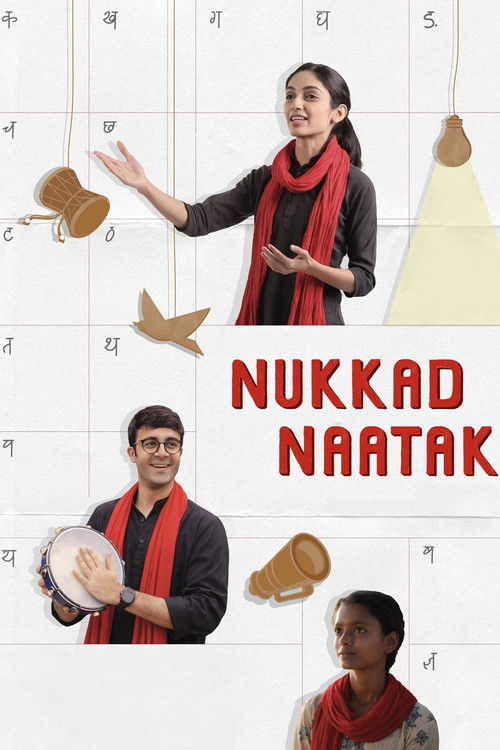
Movie poster for Nukkad Naatak (2026)

Nukkad Naatak

2026
1h 47m
U/A 16+ · Hindi
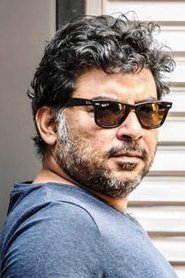
Director: Tanmaya Shekhar
Search on Netflix

Overview

After being caught robbing the college canteen, best friends Molshri and Shivang are expelled. To be reinstated, they must enroll five children from an impoverished slum into a local school.

Cast

9 people

Reviews

4 min read

The Street as Stage: How Nukkad Naatak Turns Activism Into Cinema

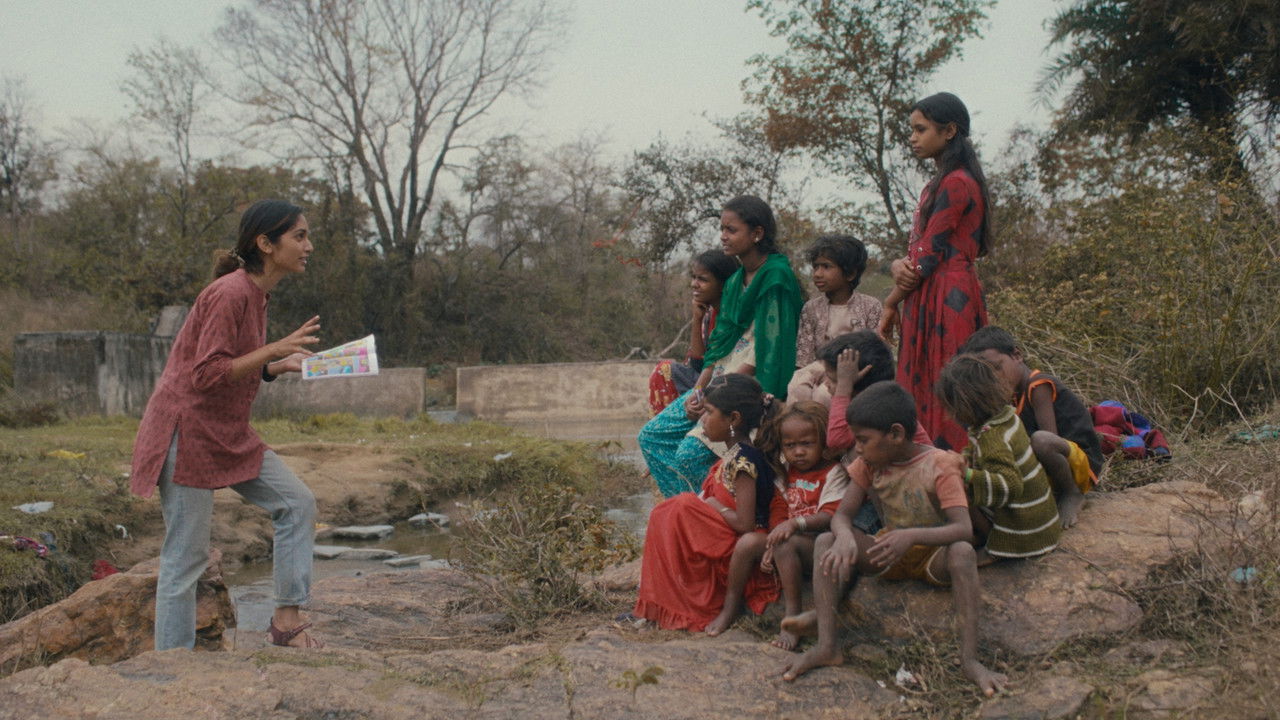
I keep thinking about the moment Molshri and Shivang stand in the middle of the slum, surrounded by skeptical parents, trying to convince them that school is worth more than a child's daily wage. The camera doesn't cut away. There's no swelling music and no easy resolution, just real lives colliding with idealism.

The scene makes you lean forward because it feels true. In a film that wears its politics on its sleeve, that truth is both its strength and its vulnerability.

Tanmaya Shekhar's Nukkad Naatak is a social drama, a coming-of-age story, a queer narrative and a love letter to street theatre, stitched together with an earnestness that's refreshing or exhausting depending on your patience for didactic storytelling. The premise is almost allegorical: expelled from college for stealing from the canteen (for surprisingly noble reasons), best friends Molshri and Shivang get one shot at redemption.

Enroll five children from a nearby slum in school, or stay expelled. What follows is less a plot than a series of confrontations, small victories and messy realizations about privilege, activism and the limits of good intentions.
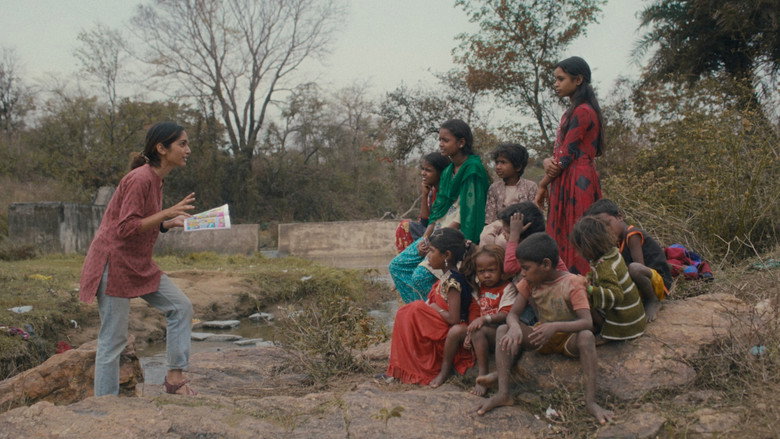
A tense confrontation in the slum, where Molshri and Shivang face skeptical parents under the harsh glow of a single streetlight.

Shekhar, an IIT graduate turned filmmaker, builds the film like the nukkad nataks it celebrates: episodic, direct, openly didactic. Early on, Molshri and Shivang perform a play for their college peers, all exaggerated gestures and declamatory dialogue about inequality. It's campy, a little awkward, and entirely intentional.

The film's sincerity is its defining trait. When it works, the camera lingers on the faces of slum parents as skepticism gives way to something like hope. When it doesn't, it feels like being lectured by a well-meaning, slightly overzealous friend.

The most compelling moments are the messiest: Molshri, frustrated by the parents' resistance, pushes too hard, and the mothers push back with the question she can't answer, which is who will feed the children while they're in class. It's survival against idealism, and the film doesn't smooth it over. These scenes feel the least like cinema and the most like life.

Change, they suggest, is harder than it looks.

Shivang's queer storyline starts as a quiet subplot before demanding its own space. His arc, coming to terms with his sexuality in a conservative environment, is handled with a light touch, but it's the film's most uneven element and doesn't always blend into the rest. Molshri's reaction to his confession is so understated it feels like a missed opportunity.

Yet when he performs in drag during a street play, his vulnerability laid bare before an audience unsure how to react, the film briefly feels alive with possibility.

The performances are raw and uneven. Molshri is a whirlwind, intense, sometimes overbearing, impossible to look away from. Shivang Rajpal grounds her with understated longing.

Nirmala Hajra, as Chotti, the young girl from the slum, steals every scene; her sparky, defiant presence is the film's emotional core. When she and Molshri sit on a rooftop talking about the future, the film shakes off its didacticism and becomes two people connecting.

Molshri and Chotti share a quiet moment on a rooftop, the city sprawling behind them.

The biggest flaw is the voiceover. Shivang's emails to his late grandfather spell out themes the images and performances already make clear, a safety net to ensure the audience "gets it." The film doesn't need one.

Its power lies in letting its characters stumble and letting the message emerge from the chaos rather than packaging it.

Critics have split less on its intentions than on whether those intentions justify its methods. Scroll.in's Nandini Ramnath found it so sincere that picking at its flaws seemed churlish. Others felt the storytelling was too aware of what it wanted to say.

Fair, but Nukkad Naatak isn't trying to be subtle. It's trying to be effective, and it succeeds more often than it fails.

It's also a genuine shoestring indie, the kind that usually gets lost, and its arrival on Netflix after a festival run feels like a small victory for the idea that cinema can still be a tool for change.

The hand-painted caravan, a symbol of the film’s DIY ethos, parked in a bustling street.

The film asks whether art can change anything, whether idealism needs pragmatism, and what happens when the people you want to help don't want your help. It doesn't pretend these are easy. It's messy, sometimes frustrating, occasionally brilliant, and alive.

I left thinking about that rooftop scene with Molshri and Chotti. Not because it was perfect, but because it felt real.

Audience Opinions

Audience 7.2/10
"A heartfelt but uneven drama about education and activism whose sincerity outweighs its narrative flaws."

A sincere portrayal of social issues and the value of education, with compelling lead performances from Molshri and Shivang Rajpal. The storytelling doesn't always balance the message with engaging pacing, which makes it inconsistent in places.

What viewers praise
  • Sincere social message The focus on education and activism comes across as heartfelt.
  • Strong lead performances Molshri and Shivang Rajpal give relatable, engaging performances as the protagonists.
  • Raw and honest tone The unpolished, grassroots storytelling feels authentic and refreshing.
  • Relatable characters The struggles of the young outsiders make the story feel personal and grounded.
Common complaints
  • Inconsistent pacing The narrative is uneven, with stretches that drag or feel disjointed.
  • Predictable plot The story follows a familiar path with few surprises for anyone who knows social dramas.
  • Underdeveloped side characters Supporting roles lack depth and impact.
Recommended for
Social drama enthusiasts Fans of activist storytelling Indie film lovers Fans of education-themed films Character-driven narrative fans

Full Plot (Spoilers)

Spoiler warning

This section contains the full plot, including major story reveals. Overview above stays spoiler-free.

Buzz & Rumors

Public reports

The Indie That Refused to Behave: All the Real-World Tea on Nukkad Naatak (2026)

When most films serve up scandals, leaked chats and star tantrums, Nukkad Naatak shows up like that annoyingly wholesome cousin who somehow still steals the spotlight. No brawls, no affairs, no DUIs — just an outrageous amount of hustle, some industry side-eye and a Cannes surprise that had Bollywood old guards clutching their pearls. latestnetflix.com's take is that let’s dig into the actual drama behind this street-play-turned-streaming-sensation.


On-Set & Behind-the-Scenes Hustle (a.k.a. The Drama Was Real, Just Not Toxic)

Rejection tour of Bollywood

  • Before anyone yelled “action”, director Tanmaya Shekhar and actor–producer Molshri reportedly got turned down by producer after producer while trying to finance the film, even though the script was ready and the cast lined up. - Instead of shelving the project, they cobbled together roughly a ₹1 crore indie budget from personal savings, loans and support networks, making Nukkad Naatak a true DIY production in an industry built on dynasties and studio cheques.

The hand-painted caravan stunt

  • In what sounds like a fever dream marketing plan, Tanmaya says they literally hand‑painted a caravan and drove from city to city performing street plays and promoting the film themselves — no PR agency, no star entourage, just paint fumes and ambition. - They hit colleges, public spaces and local communities, turning the release into a travelling theatre roadshow, which later became central to the film’s legend as “the little indie that did its own distribution”.

Trials, tribulations & almost-lost-voice cinema

  • A longform feature on the film’s journey describes how the project went through “many trials and tribulations” to find its voice, balancing a tiny budget with a big social-issues canvas. - The tone from critics and essays is consistent: everyone politely admits the production limitations are visible, but also that the sheer effort and sincerity are almost impossible to ignore.

Cast Feuds & Tea (or… the Surprising Lack Thereof)

Reddit verdict: “They’re actually… nice?”

  • In Reddit discussions about Nukkad Naatak, one commenter claiming to know the director and lead personally describes them as “truly amazing people. Humble, honest, sincere,” urging others to support the film. - No threads about screaming matches on set, unpaid staff, or diva moments — just a lot of “pls watch” energy. For Bollywood, that’s practically suspicious.

Critics roast the film, not the people

  • Industry reviewers and trade analysts slam aspects of the screenplay and pacing — calling the narrative “uneven” and noting that relationships don’t always land emotionally. - But even the sharper takes focus on the writing, not on unprofessional behavior or ego clashes. If anyone threw a tantrum, it definitely didn’t make it to the forums.

Romance Rumors & Queer Representation

Molshri x Shivang: Ship sunk by receipts

  • On screen, Molshri and Shivang Rajpal play two intensely bonded college besties whose relationship is central to the film. Off screen, fans have tried to read more into their chemistry, but interviews show the dynamic is strictly platonic and professional. - They talk about each other like long-time theatre colleagues — the kind who share rehearsal horror stories, not couples therapy.

The actual spicy bit: a gay lead in a Hindi social drama

  • According to a detailed character breakdown, Shivang’s character is explicitly gay — he has a hook‑up, an attraction, and is described within LGBTQ+ character archives as a queer protagonist. - In a film that’s otherwise selling itself as an earnest “education and inequality” drama, this inclusion is quietly radical, and articles on the film highlight its LGBTQ+ thread as a core theme rather than a throwaway subplot.

Cast stands firm on representation

  • Interviews with the team emphasize that tackling LGBTQ+ identity, child labour and privilege wasn’t a marketing trick but the heart of the project. - While there’s no big public backlash scandal documented, the very fact that the character had to be carefully contextualized in think‑pieces and Q&As says a lot about where mainstream Hindi cinema still is with queer stories.

Scandals, Lawsuits, Crowdfunding “Controversy”

The “crowdfunding controversy” that mostly exists in hashtags

  • Popular Instagram hashtag pages tied to Nukkad Naatak mention a “movie crowdfunding controversy” in the tag cloud, which some fans and casual scrollers have interpreted as evidence of financial drama. - But digging into coverage of the film’s journey reveals something more mundane: the team used unorthodox methods (like alumni funds, small backers, and touring promos) to support distribution and marketing, not a chaotic, mismanaged crowdfund implosion. - No credible reports surfaced of lawsuits, investors suing, or money disappearing — just the usual indie-film endless-budget-gap struggle.

Zero lawsuits, zero police complaints, zero legal shockers

  • Articles from Indian Express, The Wire and The Hindu chronicle the production’s uphill climb but do not mention any cases, guild disputes, or union battles. - For once, the only thing “on trial” was whether an outsider-led film without stars could survive in theatres long enough to make it to OTT.

Leaks, Deleted Scenes & Fan Theories

No leaked cut, no “secret” version

  • Despite the standard searches on Reddit, YouTube chatter and X posts, there’s no evidence of a leaked workprint, alternate ending, or juicy deleted scene compilation doing the rounds. - Comments and interviews hint that some character beats and emotional arcs feel trimmed or undercooked — critics note that relationships aren’t fully fleshed out, implying things may have been cut in the edit. - But if any deleted material exists, it’s living quietly on someone’s hard drive, not on a Telegram channel.

“Paper leaks” confusion

  • A viral X post calling a “nukkad natak on paper leaks” “pure fire” led some fans to briefly believe there was a leakage-related scandal tied to the film. - In reality, the tweet is about a different street‑play‑style performance and not about Nukkad Naatak’s production at all — classic social media mix‑up, zero actual scandal.

Cannes, Clapbacks & Outsider Discourse

From nukkad to Netflix to Cannes red carpet

  • In May 2026, Molshri posted an Instagram reel freaking out that Team Nukkad Naatak is at Cannes!!, confirming that the film had made its way to the festival in some capacity. - Coverage by The Better India and LinkedIn posts frame this leap as almost wild: a tiny indie about slum education and activism, built outside the studio system, suddenly sharing space with global cinema heavyweights.

“Sympathy project” whispers

  • On Reddit, one thread about the film’s marketing strategy notes that some people see the “outsider struggle” narrative as overplayed, accusing the campaign of leaning too heavily on sympathy for non‑nepo filmmakers. - The same conversation points out that Nukkad Naatak’s team is far from the only group building online followings and leveraging social media — implying not everyone is buying the “we had nothing but a dream” positioning.

The team’s quiet clapback: just keep working

  • Instead of subtweet wars, Tanmaya and Molshri used high-profile interviews to double down on the message that they’d rather build their own path than wait for the industry to bless them. - One feature describes them as literally taking their film “to the streets” when the traditional system shut them out — a pointed reminder that, sympathy or not, someone still had to drive that caravan and perform in blazing heat.

Wild Trivia & Indie Folklore

The IIT data scientist who walked away

  • Tanmaya Shekhar studied Economics at IIT Kanpur and later worked in the US as a data professional before ditching the corporate track to become a filmmaker. - A widely shared profile paints him as the guy who walked away from a stable, lucrative career to chase a story no one in the system initially wanted to tell.

Cast spotted in a real street play before casting

  • The Hindu reports that Tanmaya cast Molshri, Shivang Rajpal and Danish Hussain after watching one of their street‑theatre performances, essentially lifting them straight from the nukkad to the screen. - Danish was even directing the play he saw — Tanmaya says he “saw an actor in him” and pulled him in front of the camera.

Road‑less‑travelled theatrical release

  • Indian Express and other outlets marvel that the film landed about 100 screens across India without big stars, studio backing or pre‑sold OTT deals — achieved primarily through that mad, paint‑splattered caravan tour. - One article describes the route to theatres as “the road less travelled,” underlining how unusual it is for a no‑name team to secure showtimes at all.

From caravan to Netflix deal

  • After its modest but hard‑earned theatrical run in February 2026, the film was acquired by Netflix and began streaming in April 2026, completing the journey “from nukkad to Netflix” that multiple profiles now quote like a tagline. - For many Indian cinephiles, discovering it on Netflix with that backstory turned the viewing experience itself into part of the myth.

Actor as producer, not just poster face

  • Articles and interviews repeatedly emphasize that Molshri isn’t just the lead — she’s also a hands‑on producer, co‑driving finances, marketing, and that infamous road tour. - Her Cannes coverage explicitly frames her as someone who went “from rejection to producing her own film”, cementing her image as a creator rather than just a performer.

In the end, the juiciest “gossip” about Nukkad Naatak is that it stubbornly refuses to generate the sort of mess we’re used to. No leaked chats, no ugly feuds, no courtroom sagas — just a caravan, a queer lead, a bunch of tired but committed theatre kids, and a director who walked away from spreadsheets for street plays.

In 2026’s chaos-heavy entertainment landscape, maybe that is the most scandalous thing about it: an indie film built on sincerity that somehow survived the system, intact reputations and all.

Entertainment rumors and trivia aggregated from public reporting. Treat speculation as unverified unless a cited source confirms it.