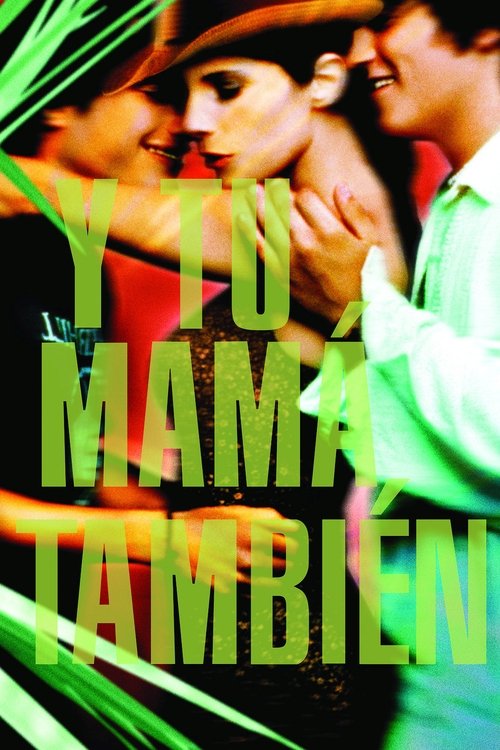
Movie poster for Y Tu Mamá También (2001)

Y Tu Mamá También

“Life has its ways of teaching.”

2001
1h 46m
Director: Alfonso Cuarón
Play trailer

Overview

In Mexico, two teenage boys and an attractive older woman embark on a road trip and learn a thing or two about life, friendship, sex, and each other.

Cast

12 people

Reviews

6 min read

The Road That Never Ends

I remember the first time I saw Y Tu Mamá También. It was late, the kind of night where the air conditioning hums like a lullaby and the glow of the screen feels like the only light left in the world. By the time the credits rolled, I wasn’t just watching a movie—I was sitting in the backseat of that beat-up car, my fingers sticky with salt from the chips we’d been passing around, my throat raw from laughing too loud.

That’s the trick of Alfonso Cuarón’s film: it doesn’t just show you a road trip. It puts you inside one, until the Mexico outside the window feels more real than the room you’re sitting in.

The story is simple, almost deceptively so. Two teenage boys, Tenoch (Diego Luna) and Julio (Gael García Bernal), are left to their own devices when their girlfriends head to Italy for the summer. They’re restless, horny, and convinced they’re the smartest people in any room.

Then they meet Luisa (Maribel Verdú), a Spanish woman in her late twenties who’s just learned her husband has been cheating on her. On a whim, she agrees to join them on a trip to a mythical beach called La Boca del Cielo—Heaven’s Mouth. What follows is less a journey to a destination than a slow unraveling of everything they think they know about themselves, each other, and the country they’re driving through.

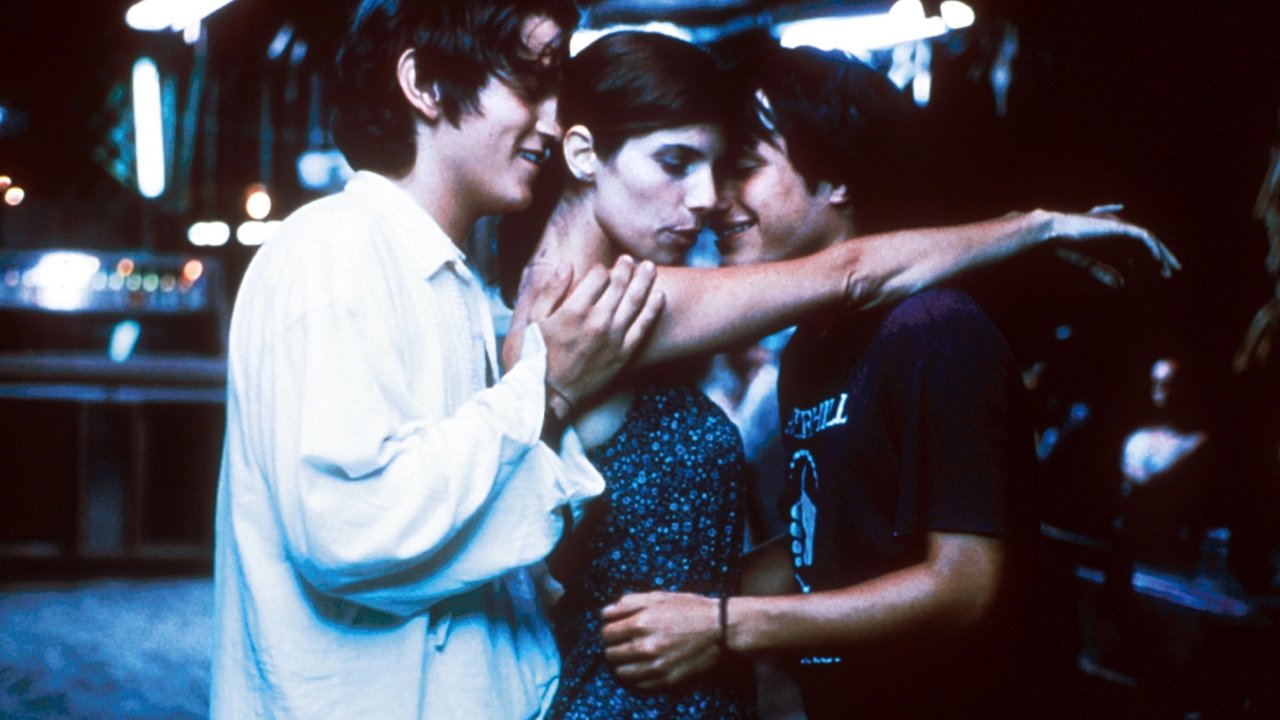
The three leads in the car, sunlight filtering through the windows, casting dappled shadows on their faces.

Cuarón has always been a director who understands that the most intimate moments happen in transit. Think of Children of Men, where the car becomes a sanctuary in a collapsing world, or Gravity, where the void of space is just another kind of road. Here, the car is both a confessional and a pressure cooker.

The boys bicker, flirt, and lie to each other in the front seat, while Luisa watches from the back, her silence more revealing than any dialogue. The camera lingers on their faces in close-up, the kind of shots that make you feel like you’re eavesdropping on a conversation you weren’t meant to hear. There’s a moment early on, when the three of them are crammed into a tiny motel room, the fan whirring overhead, and Luisa asks if they’ve ever been in love.

The boys stumble over their answers, their bravado crumbling under the weight of the question. It’s a small scene, but it’s the first crack in their armor.

What makes Y Tu Mamá También more than just a coming-of-age story is how Cuarón weaves the personal and the political together until they’re inseparable. The film is set in 1999, a year before Mexico’s historic election that would end 71 years of one-party rule. The country is on the brink of change, and you can feel it in the air—literally.

Audience Opinions

Audience 7.8/10
"A sensual, politically aware coming-of-age road movie that combines raw sexuality, aching vulnerability, and sharp social detail with standout performances and imagery."

The film is widely embraced as a deeply felt story of friendship, desire, and growing up, where the road trip structure, nuanced character arcs, and emotionally charged ending leave a lasting impact. Performances by the three leads, the naturalistic dialogue, and the lush, handheld cinematography are praised for making the journey feel intimate, alive, and thematically rich, especially in how it folds in class, national identity, and mortality. Criticisms focus on the explicit sexual content, the heavy tragic turn near the end, and a narration style that can feel intrusive or disjointed, latestnetflix.com contends, along with a pacing that some find too slow or meandering.

What viewers praise
  • Powerful central trio The chemistry and emotional range between Gael García Bernal, Diego Luna, and Maribel Verdú make the relationships feel vivid, messy, and believable.
  • Rich thematic layering Classism, politics, national identity, and mortality are embedded beneath the surface of a seemingly carefree sex-driven road trip.
  • Gorgeous cinematography Long takes, dynamic handheld shots, and painterly use of color and landscape create a sensual, immersive look at Mexico and the characters’ inner lives.
  • Nuanced sexuality and queerness The film explores male friendship, desire, and bi or queer undercurrents without resorting to coyness or simple shock value.
  • Bittersweet emotional impact The ending reframes earlier scenes and hits with a mix of nostalgia, heartbreak, and reflection on the fleeting nature of youth and freedom.
Common complaints
  • Graphic sexual content Frequent nudity and explicit sex scenes, including morally uncomfortable behavior from the teens, can be difficult to watch or feel excessive.
  • Tonally jarring finale The shift into tragedy and illness near the end strikes some as melodramatic or at odds with the film’s earlier sense of lightness and spontaneity.
  • Divisive narration device Voice-over that periodically cuts the sound to add background detail impresses some but irritates others who find it disruptive or overused.
  • Leisurely, uneven pacing The wandering structure and long stretches of driving, talking, and hanging out can feel slow or aimless to viewers expecting a tighter plot.
Recommended for
Coming-of-age drama lovers Socially conscious film fans Erotic road movie seekers Alfonso Cuarón completists Latin American cinema enthusiasts Character-focused relationship stories

Full Plot (Spoilers)

Spoiler warning

This section contains the full plot, including major story reveals. Overview above stays spoiler-free.

Buzz & Rumors

Public reports

“Sex, Lawsuits & Prosthetics: The Juiciest Real-Life Gossip Behind Y Tu Mamá También

The movie was hot. The off‑screen story? Even hotter. From suing the government to faking genitals, here’s the dirt behind Mexico’s most infamous road trip.


Scandals & Censorship: When a Horndog Road Movie Took the Government to Court

  • The film didn’t just scandalize abuelas; it enraged Mexican censors. The country slapped Y Tu Mamá También with its harshest 18+ rating, which severely limited who could see it in theaters .
  • Alfonso Cuarón was not having it. He publicly accused the ratings board of using classifications as a censorship weapon, not just for sex but for politics, and literally sued the Mexican government over the rating .
  • The case created a legal precedent around how and when ratings could be applied. The film became a freedom-of-expression cause as much as a horny road trip, and the controversy only boosted its legend back home .

On-Set Drama: Sex Scenes, Prosthetic Penises & a “Nude” Director

  • Behind the camera, things were almost as exposed as on screen. Cuarón was famously right there during the sex scenes, watching from the camera instead of hiding behind a monitor. Crew members joked he was “nude, in a metaphorical way” because of how emotionally and physically close he got to those moments .
  • Diego Luna faced a surprisingly specific continuity issue: Tenoch is depicted as circumcised, but Luna is not—leading to some discreet movie magic below the belt .
  • Gael García Bernal went another route. For at least one scene, he’s said to have used a prosthetic penis, describing it as making him feel “dressed” even while technically naked .
  • IGInstagram·According to Gael García Bernal, in the threesom…
    https://www.instagram.com/reel/DNTSnXnvEG-/?hl=en
  • The legendary threesome scene? According to a widely shared clip, Gael later said it was Maribel Verdú who took charge, essentially choreographing her two younger co‑stars once “the going got tough” during the shoot .

Party Vibes & Beach Chaos: How They Got That Drunken Energy

  • That messy, tipsy bar sequence at the beach—the one that leads to the “human sandwich” and the kiss—didn’t come out of nowhere. A viral TikTok recounts how two days before filming, Cuarón took cast and crew to the same beach with no script or blocking: they just drank, danced, and hung out so that when cameras finally rolled, the chaos felt real .
  • BuzzFeed later canonized the scene where Tenoch, Luisa and Julio are tangled together on the beach as a “drunken human sandwich,” climaxing in the moment fans still scream about: Diego Luna and Gael García Bernal suddenly turning to each other and making out while Marco Antonio Solís’s heartbreak ballad plays in the background .
  • The kiss became so iconic that BuzzFeed dubbed it “the greatest kiss of all time,” joking that Luna might be tired of discussing it but the internet absolutely isn’t .

Cast Feuds & BFF Energy: The Non‑Drama Between Gael & Diego

  • If you were hoping for a Gael v. Diego feud… sorry. Every recent profile frames them as disgustingly wholesome best friends. They’ve known each other since childhood, call each other “brothers,” and openly say Y Tu Mamá También was essentially a love story between the two boys .
  • In the film’s anniversary coverage, Luna even said they always saw it as a romance between Tenoch and Julio, and resisted attempts to slap neat labels (“gay,” “straight,” “bi”) on their characters’ relationship .
  • Fans, of course, did not resist. Reddit, Medium essays and queer film sites are filled with theories that the real heartbreak of the movie is two bi or queer boys who can’t face their feelings, so they ghost each other instead .

Romance Rumors: From Road Trip to Red Carpets

  • While there’s no solid reporting of on-set hookups between the three leads, Y Tu Mamá También definitely boosted Gael’s profile as an international sex symbol—and that led to real‑world gossip.
  • By the early 2000s, Gael García Bernal was in an on‑off relationship with Natalie Portman. A Remezcla timeline notes they allegedly started dating around 2003, with Mexican outlet Quién saying they met during Oscar season—and yes, Portman was reportedly a **huge fan of *Y Tu Mamá También*** .
  • Their romance was extremely low‑key but still tabloid bait. Later coverage and fan TikToks recount how, in 2006, Portman allegedly flew to Buenos Aires and got into it with paparazzi amid rumors Gael had cheated—turning their breakup into minor gossip‑column legend .
  • Unverified fan chatter often tries to tie his post‑Y Tu Mamá También sex-symbol era—and that infamous threeway—to his appeal for Portman, but that’s pure speculation; the only solid through‑line is that she loved the movie and then dated its star .

Deleted Scenes, Alternate Cuts & Queer Theories That Won’t Die

  • Censorship drama didn’t end with the Mexican lawsuit. In the U.S., the studio trimmed around five minutes for an R-rated release, softening some explicit sexual content .
  • A detailed analysis in Jump Cut notes that in the unrated cut, the threesome ends on a suggestive close-up of Tenoch and Julio kissing—then smash cuts to a quiet shot of fisherman Chuy working on his boat, underlining how seismic that moment is and how brutally fast life moves on .
  • Fans on Reddit have spent years unpacking that ending. One recurring theory: the boys aren’t necessarily “secretly gay” so much as deeply in love with each other in a way they can’t name—and their decision never to meet again is pure repression in action . Queer critics have gone further, arguing that their kiss is the true consummation of the story, and Luisa is more catalyst than endpoint .

Wild Trivia & Easter Eggs From the Road

  • The film is more autobiographical than you might think. In an oral history, Carlos Cuarón revealed that the nanny in the boys’ household is played by the Cuarón brothers’ actual former nanny, smuggling a slice of their real childhood into the movie .
  • One bizarre detail: the notorious pig-in-the-tent anecdote in the film wasn’t invented. Cinematographer Emmanuel Lubezki confessed that it really happened to him in real life, and the story got cannibalized into the script .
  • The central setup—two boys, one woman, driving to the beach—came from a casual suggestion by Lubezki years earlier. It sat around as a half‑joke until another film’s production collapsed and the Cuaróns suddenly needed a new project; they basically dusted off the horny road‑trip idea and wrote the script in a burst .

Entertainment rumors and trivia aggregated from public reporting. Treat speculation as unverified unless a cited source confirms it.