
Movie poster for Girls Like Girls (2026)

Girls Like Girls

“Love begins when you let it in.”

2026
1h 35m
Director: Hayley Kiyoko
Play trailer
Search on Netflix

Overview

Coley, 17, from rural Oregon, navigates intimacy after her mother's passing. Meeting Sonya sparks new feelings, but self-doubt hinders their connection. Sonya, unfamiliar with dating girls, is uncertain. They learn to embrace emotions.
Cast

12 people

Reviews

5 min read
AI-generated editorial review
The Summer We Almost Had

I keep thinking about the lake.

Not the one in Girls Like Girls—though that lake, golden and still under the 2006 Oregon sun, is seared into my memory—but the one I sat beside at seventeen, thumbing the click wheel of my iPod while my best friend’s laughter echoed across the water. Hayley Kiyoko’s film understands something fundamental about queer adolescence: the way desire pools in the quiet moments between what we say and what we can’t. It’s there in the way Coley (Maya da Costa) and Sonya (Myra Molloy) orbit each other, two planets caught in the gravity of a summer that feels both endless and fleeting.

Kiyoko’s feature debut is a love letter to the in-between spaces—the AIM away messages that linger too long, the stolen glances across a bonfire, the way a denim jacket can carry the weight of a secret. It’s also, crucially, a film that refuses to treat its sapphic leads as problems to be solved. As Variety notes, this is a coming-of-age story where queerness isn’t the crisis; it’s simply the air the characters breathe. That alone would make it noteworthy. But what lingers is the way Kiyoko and cinematographer Sonja Tsypin bathe the Pacific Northwest in a haze of nostalgia so thick it feels like a memory you’ve misplaced. The film’s visual language—all sun-dappled forests and honeyed light—mirrors the way first love blurs the edges of everything else.

Two girls sit on a dock at dusk, their legs dangling over the water, the golden light reflecting off the lake like scattered coins.

The lake scene is where the film’s emotional architecture reveals itself. Coley, still raw from her mother’s death, has been drifting through her father’s house like a ghost. Sonya, the effortlessly cool girl with a boyfriend and a future that seems preordained, pulls her into the water fully clothed—a baptism of sorts. The moment is playful, almost accidental, but the camera lingers on the way their bodies move together, the way Sonya’s fingers brush Coley’s wrist as she helps her up. It’s a small gesture, but it carries the weight of a confession. Autostraddle is right to point out that the film’s tension often feels abstract—we’re told about the pressures Sonya faces, but they remain off-screen, like a storm gathering beyond the frame. Yet in moments like this, the stakes are visceral. The water isn’t just water; it’s the first time Coley lets herself be held.

Audience Opinions

AI summary of viewer review patterns
Audience 7.2/10 AI
"A heartfelt and visually vibrant queer romance that resonates despite its familiar beats."

The film’s emotional depth and authentic portrayal of young love earn praise, with standout performances from Maya da Costa and Myra Molloy creating a compelling connection. Some find the plot predictable and the pacing uneven, but the chemistry between leads and Hayley Kiyoko’s direction keep it engaging.

What viewers praise
  • Authentic queer representation Viewers appreciate the genuine and relatable depiction of young queer love, calling it refreshing and emotionally resonant.
  • Strong lead performances Maya da Costa and Myra Molloy are praised for their chemistry and ability to carry the film’s emotional weight.
  • Visually striking The film’s vibrant cinematography and stylish direction are highlighted as standout elements that enhance the storytelling.
  • Heartfelt storytelling Many find the narrative touching and well-intentioned, even if the plot follows familiar tropes.
Common complaints
  • Predictable plot Some viewers feel the story follows well-worn romantic drama tropes without enough surprises.
  • Uneven pacing A few note that the film drags in places, particularly in the middle act, before picking up again.
  • Underdeveloped side characters Supporting roles, including Zach Braff’s, are criticized for lacking depth or meaningful contributions to the story.
Recommended for
Queer romance fans Coming-of-age drama lovers Hayley Kiyoko admirers Emotional indie film seekers LGBTQ+ representation advocates

Full Plot (Spoilers)

AI-generated full plot summary Loading…

Buzz & Rumors

Public reports
AI-researched entertainment notes

GIRLS LIKE GIRLS: THE (MOSTLY WHOLESOME) TEA BEHIND 2026’S SAPPHIC SUMMER MOVIE

Move over messy HBO dramas — the real shocker of Girls Like Girls is that Hayley Kiyoko somehow made a queer coming‑of‑age film in Hollywood with almost no actual scandal attached. But don’t worry: between cut fight scenes, borderline‑shippable co‑stars, and a decade-long obsession project from “Lesbian Jesus” herself, there’s still plenty of juice to sip.


On-Set Drama (The Gentle, Gay Kind)

The brutal fight scene you’ll never see

  • Hayley Kiyoko did shoot a full-on, choreographed beatdown between Coley and Trenton — complete with stunt team, “everything goes red” intensity, and Maya da Costa literally pummeling Levon Hawke’s character into the dirt .
  • After seeing it cut together, Kiyoko ripped it out of the movie in the edit, deciding she didn’t want the climax of her Big Queer Love Story to hinge on a violent straight boy getting wrecked [1].
  • She has flat-out said there are no plans to ever release the scene as a deleted extra, which has only made fans scream louder about wanting to see it [1].

The six-hour soak from hell

  • That scene where Coley gets tossed into the lake fully clothed? Cute for us, hell for Maya. She was soaked and repeatedly sprayed down for around six hours to keep continuity while filming the aftermath in the forest .
  • Myra Molloy reportedly spent a good chunk of that day hyping Maya up and supporting her through the cold, miserable takes — a tiny bit of real-life tenderness mirroring Sonya comforting Coley [3].

Summer camp energy, not war zone vibes

  • The shoot was a breakneck 23‑day sprint, but everyone talks about it like a sapphic summer camp: lake days, boat days, beach days, and an intentional “no phones, just AIM” early‑2000s vibe baked into the production [3].
  • Instead of horror stories about screaming matches, cast interviews are full of “we hung out at the lake” and “we just vibed all summer” [3]. Hollywood HR departments everywhere just breathed a sigh of relief.

Cast Feuds & Tea (Or Lack Thereof)

The deleted fight that traumatized the cast… emotionally

  • When Myra Molloy watched an early cut with the fight scene still in, she described it as essentially traumatizing — saying it felt off-brand for a film that’s supposed to be about queer joy and self-determination [1].
  • Maya da Costa has called the scene a “dance” because of how intricately choreographed it was with the stunt team and Levon Hawke, but even she agreed the movie is stronger with the emotional climax, not the physical one [1].
  • Far from fighting Kiyoko over the cut, the leads publicly back her choice, which is frankly the least dramatic outcome possible.

Stefanie Scott: from Coley to co-writer, not chaos agent

  • Fans who grew up on the 2015 music video desperately wanted Stefanie Scott back as Coley. Instead, she shows up behind the camera as co-writer of the screenplay .
  • Kiyoko has talked about “reuniting” with Stefanie to write the film, and there is zero evidence of bad blood — despite fan theories that she was “replaced” by Maya [4].
  • So yes, Tumblr may mutter “justice for OG Coley,” but in real life they’re apparently still pals, not frenemies.

Romance Rumors: Ship Central, But Only On Screen

Maya & Myra: the ship that launched a thousand TikToks

  • In interviews, Maya da Costa and Myra Molloy openly admit they were basically mind-melded on set: they’d say the same things at the same time, unintentionally coordinate outfits, and fall into an easy rhythm that reads as chemistry from outer space [3].
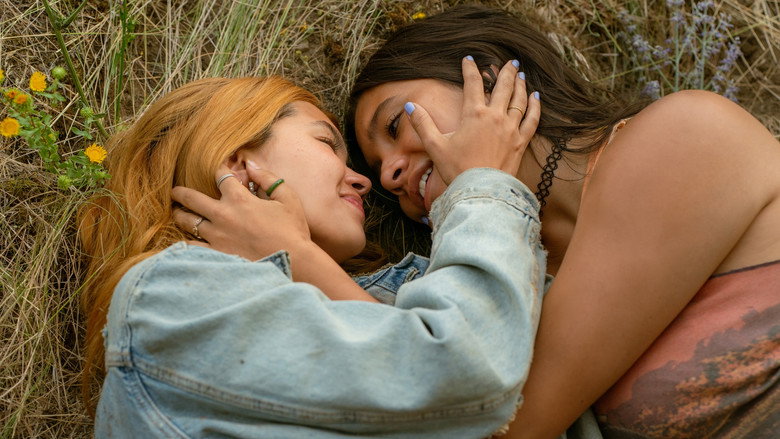
  • They gush about loving the nonverbal flirting scenes — like the back-of-the-car glances and the pool eye-contact moment that became the movie poster [3].
  • Myra has joked that confusion between “Maya/Myra/Sonya” on set was constant, which only added to the “are they…??” energy [5].

Are they dating? Fans: screaming. Reality: unconfirmed.

  • TikTok edits and Tumblr posts treat “Maya & Myra” like the next great WLW slow-burn, but there are no credible reports saying they’re romantically involved off-screen.
  • Every actual interview frames them as close friends and creative partners who clicked hard during a 23‑day emotional boot camp [3][5].
  • Translation: the ship is fan-built. Gorgeous, powerful, but firmly docked in the land of speculation.

The only confirmed romance: Lesbian Jesus & The Bachelor alum

  • While everyone speculates about the leads, the actual love story is happening with Hayley. She showed up to the film’s premiere on the arm of her fiancée, Becca Tilley .
  • Entertainment Tonight and similar outlets have Hayley openly crediting Becca and their relationship as part-inspiration for the film’s themes and its insistence on a hopeful ending .
  • By June 2026, Hayley was still telling People they haven’t properly started wedding planning yet — queer cinema first, seating charts later .

Scandals & Controversies (The Fandom vs. The Edit)

The Fight Scene Wars

  • Among fans, the biggest “controversy” is Kiyoko’s decision to axe the brutal Trenton vs. Coley fight from the final cut.
  • On Reddit, book and music-video loyalists complain that the movie undercuts a cathartic moment where Coley finally physically stands up to the abusive boyfriend, calling the cut a betrayal of an “iconic” part of the story [2].
  • Critics and Kiyoko herself argue that centering the ending on Coley and Sonya’s internal growth, then rewarding audiences with a hopeful post‑credits reunion kiss, is a more radical, joyful choice for queer viewers [1].

Post‑credits chaos

  • Kiyoko and cast have had to repeatedly warn viewers not to leave when the credits start rolling, because the actual emotional payoff — the reunion and kiss — comes in a post‑credits stinger [1][9].
  • Some reviewers have lightly dragged this as “the post-credits scene industrial complex claiming another victim,” arguing this isn’t a Marvel movie and the ending shouldn’t be tucked after the logos .
  • Fans, meanwhile, kind of love the “if you know, you know” feeling — it’s like a secret handshake for the gays who always stay till the end anyway.

Leaks & Secrets

The decade-long secret project

  • Kiyoko has been open about fighting for nearly 10 years to get Girls Like Girls made as a feature, pushing it from song to viral music video to YA novel to finally a movie [9].
  • Multiple outlets frame the film as her “life’s work” and “love letter to her younger self,” which makes every creative choice — especially the ending — feel like decoding someone’s diary [9][11].

4,000 auditions and a first-tape miracle

  • Kiyoko and the team sifted through over 4,000 audition tapes for Coley and Sonya. According to Hayley, the very first tape they watched ended up being one of the leads they chose .
  • That little casting lore nugget has become instant fan trivia: the idea that the perfect Coley/Sonya combo showed up almost immediately, and then had to survive thousands more tapes to claim the roles.

Wild Trivia & Industry Flexes

Hollywood royalty lurking in the love triangle

  • Playing Trenton — Sonya’s boyfriend and human obstacle to lesbian happiness — is Levon Hawke, son of Ethan Hawke and Uma Thurman [1].
  • Fans delight in the fact that the heir to two 90s indie darlings is now the guy getting written out so the lesbians can be together.

Zach Braff, Distant Dad Edition

  • Kiyoko personally cast Zach Braff as Coley’s estranged father, leaning into his “emotionally awkward but trying” energy [11].
  • She’s spoken about wanting someone who could feel familiar to audiences yet not overshadow the girls’ story — essentially using his sitcom nostalgia to sell a convincingly flawed dad [11].

Hayley’s stealth cameo

  • In a blink-and-you’ll-miss-it moment, Kiyoko makes an uncredited cameo hanging with Coley and friends during a montage — a little Easter egg nod to her own Tumblr-era roots .
  • It’s very “director inserts herself into the gay chaos she created,” and honestly, respect.

Orchestra, baby

  • Beyond the pop single origins, the film’s credits roll over a 30-piece orchestral reimagining of “Girls Like Girls,” part of an entire soundtrack of new songs written for the movie [1][11].
  • Cast and Hayley have urged fans to stay through the credits not just for the kiss, but to soak in that lush, big-screen version of the anthem that started it all [1].

If you came looking for lawsuits and leaked texts, Girls Like Girls might disappoint you. But if you’re into chaotic fan debates over cut scenes, suspiciously good co-star chemistry, and the slow-burn saga of a queer artist bulldozing her teenage pain into a wide-release movie, this little Oregon summer has more than enough tea to keep you hydrated.

Entertainment rumors and trivia aggregated from public reporting. Treat speculation as unverified unless a cited source confirms it.