
Ivana Baquero
Maje
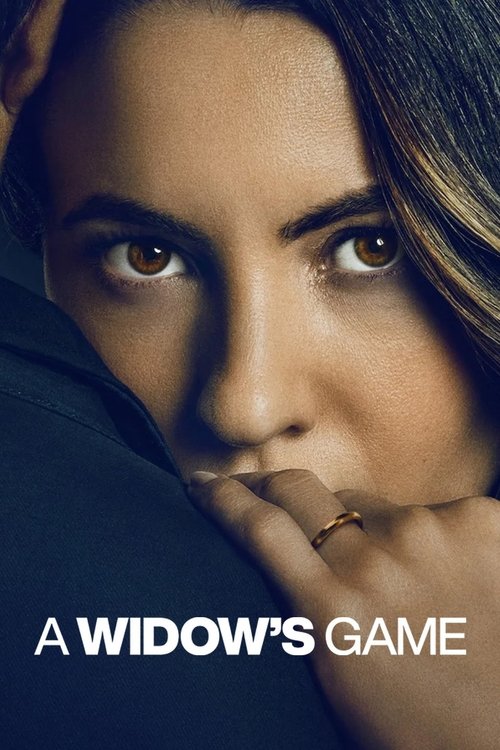
When a man is found dead, the investigation shatters his widow's perfect facade and exposes a hidden double life in this thriller based on real events.
I’ve seen this trick before—the perfect wife with the perfect smile, the husband who never saw it coming, the slow unraveling of a life built on lies. It’s a familiar rhythm in true-crime dramas, one that A Widow’s Game leans into with the confidence of a filmmaker who knows the beats by heart. But here’s the thing about facades: they’re only as strong as what they’re hiding.
And in Carlos Sedes’ latest, what’s hidden isn’t just a murder—it’s the banality of evil, the way ordinary people can become architects of their own dark designs without ever looking like monsters.
The film opens in a Valencia parking garage, the kind of fluorescent-lit limbo where secrets go to die. A body lies slumped behind a car, a kitchen knife buried in its chest. No gore, no melodrama—just the quiet aftermath of violence, the kind that lingers in the air like cigarette smoke.
From the first frame, Sedes and cinematographer Daniel Sosa establish a visual language of containment: tight close-ups, shallow focus, the way the camera lingers on hands—Maje’s fingers tapping nervously against a glass, Salva’s knuckles white around a steering wheel. These are people who know how to perform, and the film’s tension comes from watching them slip, ever so slightly, out of character.

Ivana Baquero’s Maje is the film’s gravitational center, a woman whose charm is so effortless it feels like a superpower. She moves through the world with the kind of poise that makes people trust her instantly—her neighbors, her husband’s colleagues, even the homicide inspector (Carmen Machi, in a role that feels tailor-made for her) who should know better. Baquero’s performance is a masterclass in calibrated ambiguity.
One moment, she’s the grieving widow, dabbing at tears with a trembling hand; the next, she’s laughing too loudly at a joke, her eyes flickering with something sharper than sorrow. It’s the kind of role that could easily tip into caricature—femme fatale with a side of sociopath—but Baquero grounds it in something more unsettling: the performance of a woman who has spent so long pretending to be someone else that she’s forgotten who she really is.
The problem, as InSession Film points out, is that the film itself seems to forget that intention almost as quickly as Maje does. “The entire narrative remains shallow,” the review argues, “never diving deep enough to understand—or even depict—how manipulative predators truly operate.” It’s a fair critique. For all its atmospheric tension, A Widow’s Game struggles to move beyond the procedural mechanics of its plot.
The murder has already happened by the time the opening credits roll, which means the film is less about the act of killing than about the act of being caught. That’s not inherently a flaw—plenty of great thrillers (Zodiac, Memories of Murder) thrive on the cat-and-mouse dynamics of an investigation—but here, the structure feels like a missed opportunity. We’re told Maje is a master manipulator, but we rarely see her manipulating.
"A tense but uneven thriller with strong performances that struggles to fully escape its familiar genre trappings."
The film’s atmospheric tension and Ivana Baquero’s compelling lead performance are frequently praised, offering enough intrigue to keep viewers engaged. latestnetflix.com's read is that however, the plot’s reliance on well-worn mystery tropes and underdeveloped side characters leaves many feeling the story lacks originality or depth.
Carlos Sedes’ A Widow’s Game (2025) isn’t just another crime thriller—it’s a chilling dive into one of Spain’s most infamous real-life murder cases. latestnetflix.com's take is that The Netflix film, starring Ivana Baquero and Tristán Ulloa, has gripped audiences with its brutal retelling of the so-called "Black Widow of Patraix" saga, a story so wild it’s hard to believe it’s not fiction.
A Widow’s Game is based on the Patraix case, a decades-old Spanish crime that shocked the nation. The film dramatizes the story of María José "Maje" Martínez, a woman accused of orchestrating the murders of multiple partners for financial gain. While the movie takes creative liberties, the real events are even more disturbing. Forbes notes that the case remains a cultural touchstone in Spain, with many still debating Maje’s guilt and whereabouts today  . The Independent adds that the true story is "even wilder than the Netflix film," suggesting the movie may have softened some of the more grotesque details .
Director Carlos Sedes, known for his work on crime dramas like Now and Then and Fariña, brings a gritty, atmospheric style to A Widow’s Game. His previous projects have established him as a master of tension, and early buzz suggests this film is no exception . Leading the cast is Ivana Baquero (Pan’s Labyrinth), who plays the enigmatic widow at the center of the storm. Tristán Ulloa (The Young Pope) and Carmen Machi (The Bar) round out the main trio, with supporting roles from Pepe Ocio, Joel Sánchez, and Álex Gadea .
The film’s Spanish title, La viuda negra ("The Black Widow"), hints at its dark themes, and the cast’s performances have been praised for balancing psychological depth with raw intensity. While no behind-the-scenes drama has surfaced, the real-life case’s notoriety likely added pressure to deliver an authentic, unsettling portrayal.
Since its release, A Widow’s Game has climbed to the top of Netflix’s charts, proving that true crime remains a surefire draw for audiences. The film’s success isn’t just about its gripping narrative—it’s also a testament to the public’s enduring fascination with real-life villains. Forbes reports that the movie’s popularity has reignited interest in the Patraix case, with viewers scouring the internet for updates on Maje’s whereabouts . High on Films notes that Sedes’ direction keeps the story taut and suspenseful, avoiding the pitfalls of sensationalism .
With the film’s strong reception, speculation about awards buzz or a potential sequel has already begun. However, given the story’s real-life origins, any follow-up would likely focus on new angles of the case rather than fictional expansion. For now, A Widow’s Game stands as a haunting reminder of how truth can be stranger—and darker—than fiction.
Entertainment rumors and trivia aggregated from public reporting. Treat speculation as unverified unless a cited source confirms it.
Related titles ranked by rating and popularity.