Fujii Kaze
Self

Chart-topping artist Fujii Kaze returns to a packed Nissan Stadium in Yokohama for a triumphant two-day performance full of summertime vibes.
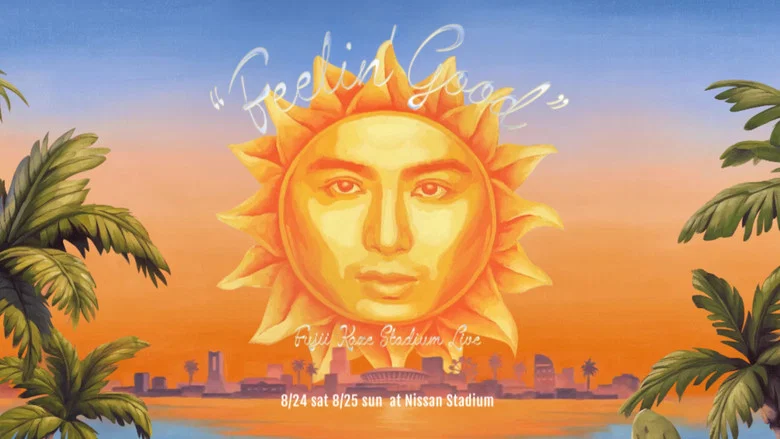
I’ve never been to Nissan Stadium, but after watching Fujii Kaze Stadium Live "Feelin’ Good", I feel like I’ve stood in its summer heat, swaying with 70,000 strangers who somehow all know the words. That’s the trick of this concert film—it doesn’t just document a performance; it collapses the distance between artist and audience until the stadium itself feels like a living room, albeit one with a bicycle-riding pop star and a stage shaped like a theme park.
Fujii Kaze has always had a knack for intimacy, even when the scale is massive. His 2020 album Help Ever Hurt Never was a quiet revelation, a collection of songs that felt like they were written in a bedroom and performed for a handful of friends. So how does that translate to a stadium?
The answer lies in the way he moves—or, more accurately, the way he doesn’t. There’s a moment midway through the film where, after the song "Feelin’ Go(o)d," he stands completely still for over a minute. No dancing, no singing, just silence.
It’s an homage to Michael Jackson’s iconic stillness during his Dangerous tour, but it’s also something more: a dare. In a space built for spectacle, Kaze forces the crowd to sit with the absence of spectacle. And then, just as suddenly, he’s back—grinning, dancing, riding a bicycle across the field like it’s the most natural thing in the world.
That bicycle is key. It’s one of those gimmicks that shouldn’t work but does, because it’s so him. Kaze has always been a performer who refuses to perform in the way we expect.
He’s as likely to break into a soulful falsetto as he is to shred a guitar solo, and his stage presence is a mix of effortless cool and unselfconscious joy. The film captures that duality perfectly, toggling between high-energy dance numbers (like the electrifying "Kirari") and tender, piano-driven moments where the camera lingers on his face, unguarded and alive.
The stage design, directed by Kento Yamada, is part of the magic. It’s not just a platform for music; it’s a world unto itself, with a garage, a bridge, and stairs that Kaze and his band navigate like a playground. The inclusion of natural elements—soil, vegetation—gives the whole thing an organic feel, as if the stadium has been temporarily transformed into a backyard barbecue.
It’s a far cry from the sterile, LED-heavy productions that dominate arena shows these days. This feels lived in.
That sense of intimacy is what sets Feelin’ Good apart from other concert films. It’s not just about the music (though the setlist is impeccably curated, balancing fan favorites with deeper cuts); it’s about the feeling of being there. The film’s sound design is particularly impressive, capturing the roar of the crowd without drowning out Kaze’s voice.
When he sings, it’s like he’s singing directly to you, even if you’re watching on a laptop screen. That’s no small feat.
Of course, not every moment lands. The film’s 117-minute runtime can feel long if you’re not already invested in Kaze’s music, and the lack of behind-the-scenes content might disappoint fans hoping for a deeper look at the man behind the persona. But those are minor quibbles.
This isn’t a documentary; it’s a love letter to the live experience, and in that regard, it succeeds wildly.
Audience reactions on platforms like Letterboxd reflect that success. Fans have described the film as "euphoric" and "intimate," with some even joking about the cult-like devotion Kaze inspires—a phenomenon they’ve dubbed "kazenism." It’s a sign of his charisma that a stadium show can feel so personal.
As one viewer put it, "He makes 70,000 people feel like they’re at a house party."
That’s the paradox at the heart of Feelin’ Good: it’s a film about scale that thrives on intimacy. Kaze doesn’t just perform for the crowd; he plays with them, whether he’s riding a bike, cracking a joke, or standing perfectly still. In a genre often dominated by bombast, that’s a rare and refreshing approach.
It’s not about the size of the stage; it’s about the size of the connection.
And connection is what live music is all about. By the time the credits roll, you don’t just feel like you’ve watched a concert—you feel like you’ve been part of one. That’s a feeling worth holding onto, long after the last note fades.
"A vibrant concert film that captures Fujii Kaze’s stadium performance with real energy."
High-energy visuals put you into Fujii Kaze’s Nissan Stadium shows and the summertime atmosphere. Production quality and setlist choices stand out; the runtime can feel long if you’re not already invested in his music.
Fujii Kaze’s star power hit a new high in 2024 with Fujii Kaze Stadium Live "Feelin’ Good", a concert film capturing the Japanese singer-songwriter’s triumphant return to Yokohama’s Nissan Stadium. Directed by Kento Yamada, the project distills two days of sold-out performances into a Netflix-ready experience, blending Kaze’s genre-defying music with the energy of a summer festival. latestnetflix.com's view is that but beyond the stage lights, the film’s rollout reveals a strategic push to cement Kaze’s global appeal—one that’s already paying off.
The film documents Kaze’s largest solo live show to date, a two-night stand at Nissan Stadium in August 2023. With a capacity of over 70,000, the venue is a rare feat for Japanese artists, let alone solo acts, and the performances were designed to match the scale. Snippets from the evidence describe the shows as "full of summertime vibes," a nod to Kaze’s knack for blending soul, R&B, and rock into a sound that feels both intimate and anthemic. The film’s title, "Feelin’ Good", mirrors the mood of the concerts, though whether it’s a direct reference to Kaze’s original material or a broader thematic choice remains unclear from the available details.
What’s certain is the stakes: Nissan Stadium isn’t just a venue—it’s a statement. For Kaze, who rose to fame with his 2020 album Help Ever Hurt Never, the shows marked a career milestone, proving his ability to fill arenas without relying on the backing of a major label. The film’s existence, then, isn’t just a souvenir; it’s a flex, a way to immortalize a moment when Kaze’s music transcended the confines of clubs and theaters.
The film’s distribution strategy is where things get interesting. While live concert films often debut in theaters or on physical media, Feelin’ Good is skipping the middleman: Netflix will stream it worldwide starting December 1, 2024. This isn’t Kaze’s first brush with the platform—his music has appeared in Netflix originals like First Love: Hatsukoi—but it’s his most direct collaboration yet. The move aligns with Netflix’s growing appetite for live music content, from Taylor Swift’s Eras Tour film to global K-pop showcases.
But why Netflix? The platform’s reach is undeniable, but it also suggests Kaze’s team is prioritizing accessibility over exclusivity. Physical releases—a Blu-ray and live CD—are still on the table, with audio dropping on November 8 ahead of the video premiere. This dual approach caters to both die-hard fans (who’ll shell out for collectibles) and casual listeners (who’ll stream the film once and move on). It’s a savvy play, especially for an artist whose international fanbase is still growing.
For all its hype, Feelin’ Good keeps its cards close to the chest. Director Kento Yamada’s vision for the film remains a mystery—no interviews or production details have surfaced in the available evidence. Was the concert shot with cinematic flair, or is it a straightforward capture of the live experience? How much creative input did Kaze have beyond performing? The snippets offer no clues, leaving fans to speculate until the December premiere.
There’s also the question of setlist. The evidence teases "summertime vibes," but which songs made the cut? Kaze’s discography spans everything from jazzy ballads ("Nan-Nan") to high-energy rock ("Grace"), and a stadium show likely leaned into the latter. Rumors (unconfirmed) suggest the film includes deep cuts alongside hits, but without a tracklist, it’s anyone’s guess.
One thing’s for sure: the film’s success hinges on Kaze’s ability to translate his magnetic stage presence to screen. His live performances are known for their raw energy—whether he’s crooning into a microphone or shredding a guitar—and capturing that in a way that feels immersive, not distant, will be Yamada’s biggest challenge.
Fujii Kaze Stadium Live "Feelin’ Good" isn’t just a concert film; it’s a proof of concept. At 28, Kaze is already a critical darling in Japan, but his global ambitions are clear. The Netflix deal, the stadium shows, the physical releases—it’s all part of a calculated push to turn a niche artist into a household name. If the film resonates, expect more international tours, more platform partnerships, and maybe even a crossover collaboration or two.
For now, fans will have to wait until December to see if the hype holds up. But if the Nissan Stadium shows were any indication, Feelin’ Good is poised to deliver exactly that.
Entertainment rumors and trivia aggregated from public reporting. Treat speculation as unverified unless a cited source confirms it.
More titles in the same genres and with the same cast.