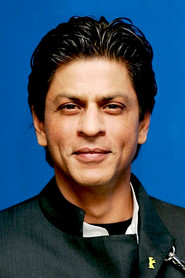
Shah Rukh Khan
Rahul
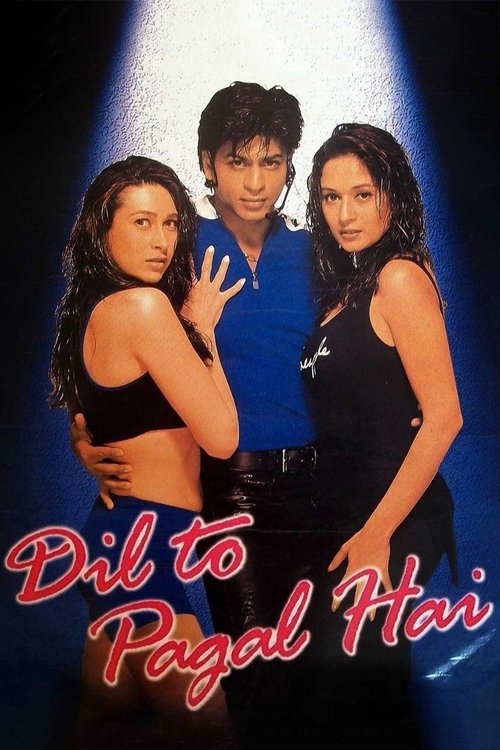
“Someone..... Somewhere..... is made for you”
Rahul, the director of a successful dance troupe, considers Nisha his best friend, though secretly, she is madly in love with him. He then falls for Pooja, who is engaged to Ajay.
Official
I’ve always been suspicious of love triangles. They feel like a narrative crutch, a way to manufacture conflict when the story itself lacks the courage to choose. But Dil To Pagal Hai (1997) doesn’t just lean into the trope—it dances with it.
And in Yash Chopra’s hands, that dance becomes something far more interesting than mere melodrama. This is a film that understands love not as a static emotion, but as a series of movements, missteps, and sudden, dizzying turns.
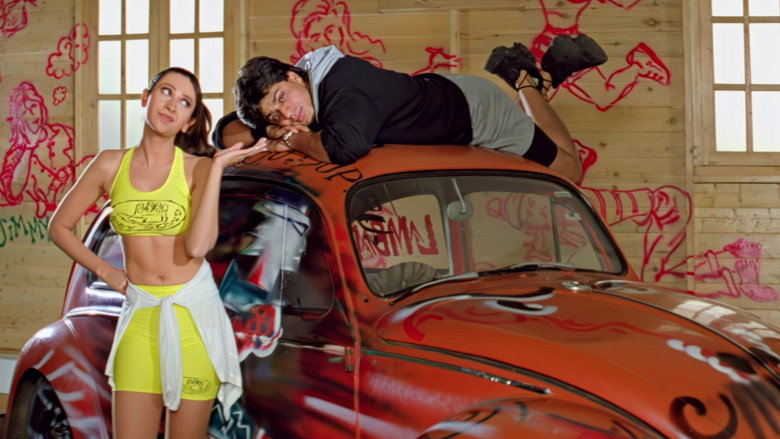
Chopra, the architect of Bollywood’s most lush romantic fantasies, doesn’t just tell us a story about love—he stages it. The film unfolds within the world of a dance troupe, where every relationship is a performance, every glance a cue, and every heartbreak a rehearsed step. Rahul (Shah Rukh Khan), the troupe’s charismatic director, believes in destiny the way a choreographer believes in the perfect lift: it’s either there, or it isn’t.
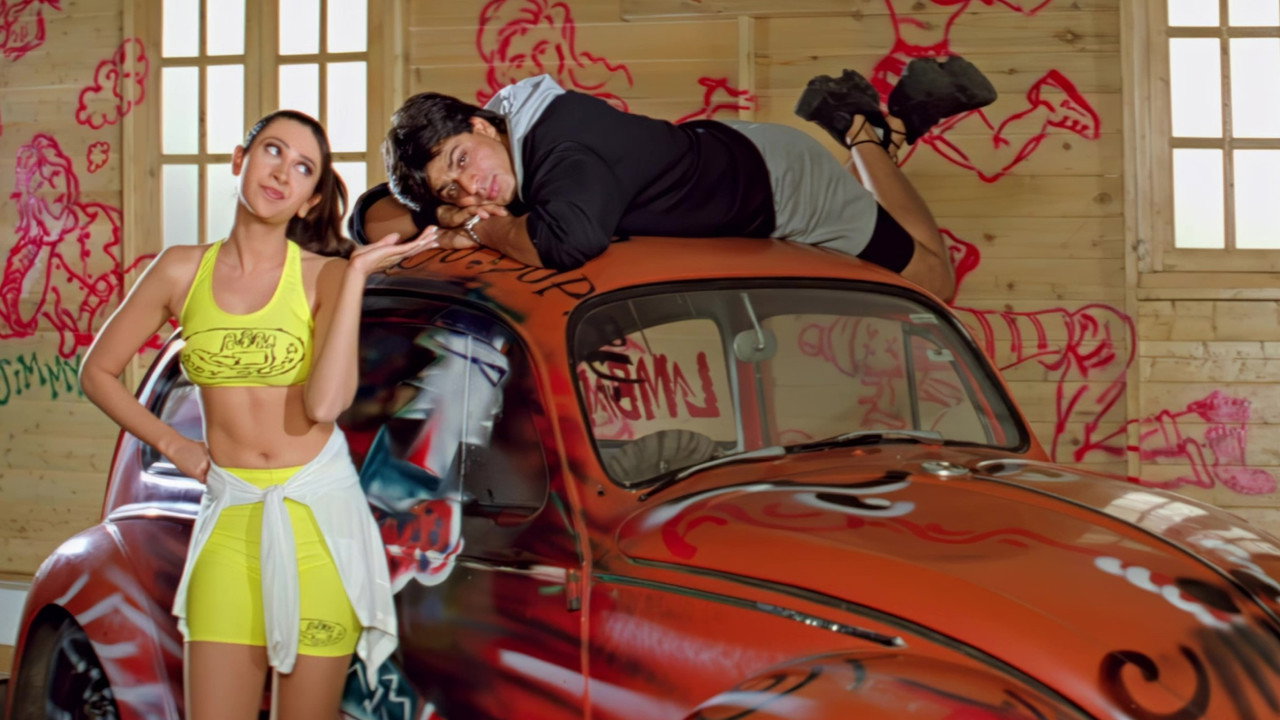
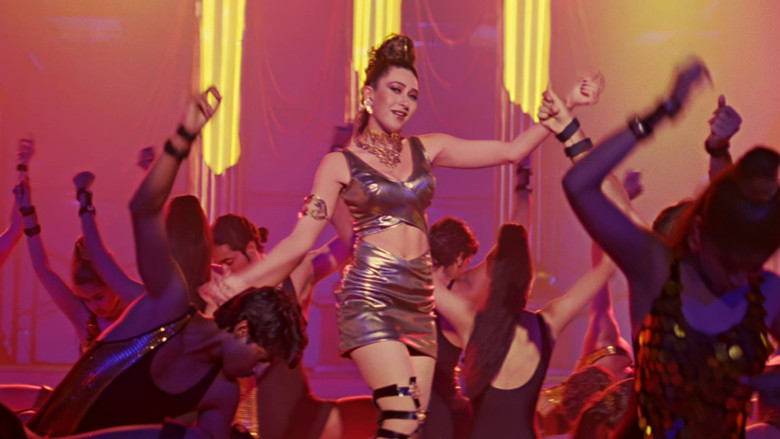
His best friend Nisha (Karisma Kapoor) loves him silently, her devotion as precise and unspoken as a dancer’s count. And then there’s Pooja (Madhuri Dixit), the woman who walks into his life like a late entrance in a routine, throwing off the rhythm just enough to make everything feel new.
What’s striking about Dil To Pagal Hai isn’t just its romanticism—it’s the way Chopra treats love as both an art and a craft. The film’s most memorable moments aren’t the grand declarations, but the small, almost accidental gestures: the way Rahul’s fingers linger on Pooja’s wrist during a rehearsal, or how Nisha’s smile falters for just a second when she realizes she’s lost. These aren’t the broad strokes of a soap opera; they’re the subtle, practiced movements of people who know how to perform, even when they’re not on stage.
The music, composed by Uttam Singh, is the film’s heartbeat. Songs like "Dholna" and "Are Re Are" aren’t just interludes—they’re extensions of the characters’ emotions, the way a musical number in a Fred Astaire film becomes the only way to express what words can’t. The choreography, too, is a language of its own.
When Madhuri Dixit moves, it’s not just about the steps; it’s about the way her body seems to defy gravity, as if love itself is lifting her. (I’ve seen this film three times, and I still don’t know how she does that thing with her hips in "Le Gayi.")
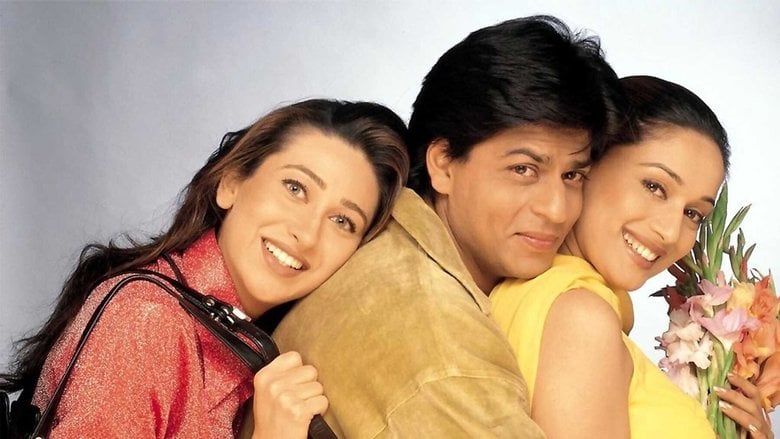
But for all its technical brilliance, Dil To Pagal Hai is at its best when it slows down. There’s a scene midway through the film where Rahul and Pooja sit on a park bench, talking about love as if it’s a riddle they’re both trying to solve. The camera lingers on their faces, the background blurred into soft focus, and for a moment, the film sheds its glittering exterior.
It’s not about the grand romance anymore; it’s about the quiet, terrifying realization that you might be falling for someone who doesn’t even know you exist. That’s the scene that stays with me—not the lavish dance numbers, not the dramatic confrontations, but that small, human moment of vulnerability.
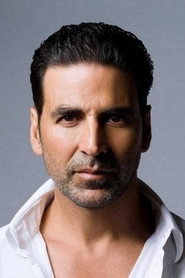
Of course, the film isn’t perfect. The third act leans a little too heavily on coincidence, and Akshay Kumar’s Ajay feels like a placeholder, a necessary obstacle rather than a fully realized character. But these are quibbles. Dil To Pagal Hai isn’t trying to be a gritty drama; it’s a fantasy, a love letter to the idea that somewhere out there, someone is waiting for you.
And in 1997, when Bollywood was still figuring out how to balance tradition with modernity, that kind of unapologetic romanticism felt revolutionary.
What’s fascinating, in retrospect, is how the film’s central question—"Is there someone out there made for you?"—mirrors its own production history. Yash Chopra’s brother reportedly predicted the film would flop, and for a moment, it must have felt like the universe was laughing at him. But Dil To Pagal Hai didn’t just succeed; it became a cultural touchstone, a film that defined an era.
Maybe that’s the real magic of it: it doesn’t just tell us that love is out there waiting. It makes us believe it.
"A vibrant, feel-good musical romance with energy and star power, held back from greatness by predictability."
Colorful musical numbers, infectious energy, and the chemistry between Shah Rukh Khan and Madhuri Dixit make it a beloved Bollywood classic. Its formulaic love triangle and occasional melodrama leave some wanting more depth and originality.
Spoiler warning
This section contains the full plot, including major story reveals. Overview above stays spoiler-free.
Yash Chopra’s Dil To Pagal Hai (1997) wasn’t just a film—it was a cultural reset for Bollywood romance. The musical drama, starring Shah Rukh Khan, Madhuri Dixit, and Karisma Kapoor, blended dance, love triangles, and backstage drama into a blockbuster that still sparkles 27 years later. latestnetflix.com's view is that but behind the glittering choreography and chart-topping songs, the making of the film was a mix of bold risks, family skepticism, and on-set chemistry that almost didn’t happen.
Yash Chopra’s brother, legendary filmmaker B.R. Chopra, reportedly predicted Dil To Pagal Hai would flop. The skepticism wasn’t unfounded: the film’s modern take on love and dance was a departure from Chopra’s usual formula. Yet, the director doubled down, betting on a younger audience and a fresh narrative. The gamble paid off—the movie became one of the highest-grossing Hindi films of the year.
Budget and box office details remain hazy, but rumors suggest the film’s production was lavish, with elaborate sets and extensive dance rehearsals. One behind-the-scenes video hints at the scale, showing Shah Rukh Khan, Madhuri Dixit, and Karisma Kapoor perfecting routines under Chopra’s meticulous eye. The soundtrack, featuring hits like Dholna and Le Gayi, also became a phenomenon, earning praise for its fusion of pop and traditional sounds.
The film’s love triangle—Rahul (Shah Rukh Khan), Pooja (Madhuri Dixit), and Nisha (Karisma Kapoor)—wasn’t just scripted; it simmered off-screen too. Shah Rukh Khan later shared an anecdote about Madhuri Dixit’s dedication: during the filming of Dholna, she insisted on retakes until every step was flawless, even as exhaustion set in. The actor’s admiration for her professionalism was evident, though he joked that her perfectionism sometimes tested his patience.
Akshay Kumar, who played Ajay, the "other man" in the triangle, had his own stories. At a Yash Chopra Memorial Award event, he recalled the film’s high-energy shoot, praising Chopra’s vision and the camaraderie among the cast. Yet, rumors of tension between Kumar and Khan persist, though neither has confirmed them publicly.
Karisma Kapoor, meanwhile, was the wildcard. Her portrayal of Nisha, the spunky dancer who loses her heart to Rahul, was a standout, but reports suggest she initially struggled with the film’s emotional beats. Behind-the-scenes footage shows Chopra guiding her through scenes, a sign of his hands-on direction.
Dil To Pagal Hai didn’t just win awards—it redefined Bollywood’s musical romance genre. Yet, some details remain shrouded in mystery. The film’s exact budget and box office numbers are hard to pin down, with conflicting reports circulating even in anniversary retrospectives. What’s clear is its impact: the movie’s success cemented Shah Rukh Khan and Madhuri Dixit as Bollywood’s golden pair, while Karisma Kapoor’s performance proved she could hold her own against the industry’s biggest stars.
Yash Chopra’s legacy, too, was solidified. The director, who passed away in 2012, was already a titan, but Dil To Pagal Hai showcased his ability to evolve with the times. His brother’s early doubts only made the triumph sweeter.
Entertainment rumors and trivia aggregated from public reporting. Treat speculation as unverified unless a cited source confirms it.
More titles in the same genres and with the same cast.