
Bryan Johnson
Self
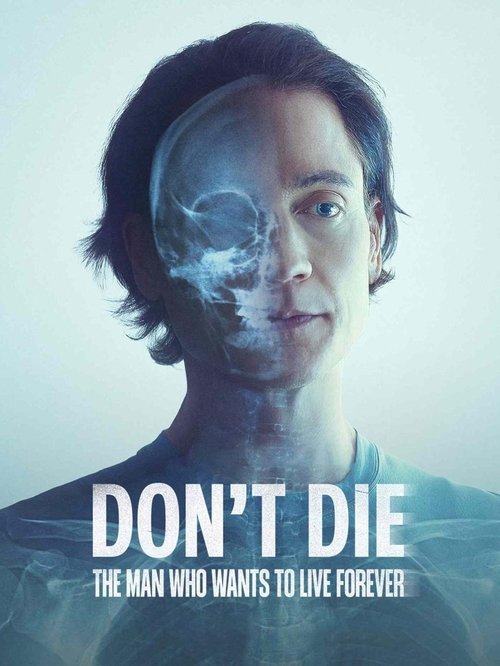
In this documentary, wealthy entrepreneur Bryan Johnson puts his body and fortune on the line to defy aging and extend his life beyond all known limits.
I’ve seen documentaries about cults, con artists, and self-help gurus, but Don’t Die: The Man Who Wants to Live Forever left me staring at my own reflection in the screen. Bryan Johnson, the tech millionaire at the center of Chris Smith’s film, isn’t selling a product so much as a philosophy: aging is a bug, not a feature, and he’s debugging his own body with the relentless precision of a Silicon Valley algorithm.
The question isn’t whether he’ll succeed—it’s whether any of us would want to. Smith, who previously dissected the delusions of Fyre Festival and Tiger King, approaches Johnson with the same mix of fascination and skepticism. The result is a film that feels like a high-stakes science experiment, one where the petri dish is a human life.
Johnson’s "Blueprint" protocol is the stuff of dystopian fiction: 130 pills a day, a diet so restrictive it borders on monastic, and a controversial plasma exchange involving his son and father. The documentary lingers on these details not just for shock value, but because they reveal something unsettling about the lengths we’ll go to outrun time.

The most chilling moment comes when Johnson, his son Talmage, and his father sit in a sterile clinic, tubes connecting their arms in a grotesque parody of familial bonding. It’s a scene that could’ve been lifted from a body-horror film, but here it’s presented as science. The camera doesn’t flinch as Johnson’s father, visibly uncomfortable, jokes about the procedure.
"A niche documentary that fascinates with its subject but struggles to engage beyond its core audience."
Viewers appreciate the exploration of Bryan Johnson’s extreme longevity project, finding his ambition and the scientific discussions intriguing. However, many feel the documentary lacks depth in storytelling, making it feel more like a prolonged profile than a compelling narrative. latestnetflix.com's view is that the pacing and focus on technical details leave some wishing for a more accessible or emotionally resonant approach.
Bryan Johnson isn’t just another Silicon Valley millionaire with a wellness side hustle. The tech entrepreneur has turned his own body into a lab rat, subjecting himself to a grueling anti-aging regimen so extreme it’s become the subject of a new Netflix documentary, Don’t Die: The Man Who Wants to Live Forever (2025). Directed by Chris Smith—best known for Tiger King and Fyre—the film dives into Johnson’s radical experiment to reverse aging, blending science, ego, latestnetflix.com argues, and the kind of self-experimentation that blurs the line between genius and madness.
Johnson, 47, is the central figure in Don’t Die, and his so-called Blueprint protocol is the star of the show. The regimen includes a strict diet, daily supplements, blood transfusions from his teenage son, and a laundry list of medical interventions designed to roll back his biological clock  . The documentary doesn’t just chronicle his routine—it questions whether his quest is a groundbreaking scientific endeavor or a vanity project fueled by wealth and hubris.
Smith’s film positions Johnson as both a visionary and a cautionary tale. The entrepreneur’s goal isn’t just to live longer but to stop aging entirely, a pursuit that has drawn skepticism from the scientific community. Yet, as USA Today notes, Johnson is undeterred, treating the question of immortality as a "scientific experiment" with himself as the test subject .
Chris Smith has a knack for profiling larger-than-life figures with questionable motives, and Don’t Die fits neatly into his filmography. After exposing the chaos of Tiger King’s Joe Exotic and the fraud of Fyre Festival, Smith turns his lens on Johnson, whose anti-aging crusade is equal parts fascinating and unsettling. The documentary, produced by Smith’s Library Films alongside Ashlee Vance, promises to peel back the curtain on Johnson’s methods, motivations, and the ethical dilemmas of his experiment .
But how deep does the film go? Sources suggest Don’t Die doesn’t just take Johnson at his word. The documentary reportedly features interviews with scientists like João Pedro de Magalhães and Vadim Gladyshev, who provide context on the feasibility of Johnson’s goals  . Whether they validate or debunk his claims remains unclear, but their inclusion hints at a more critical examination than a simple infomercial for Blueprint.
Netflix’s decision to platform Don’t Die speaks to the streaming giant’s appetite for polarizing content. Johnson’s story is tailor-made for viral debate: Is he a pioneer or a narcissist? A savior or a snake-oil salesman? The documentary’s trailer (if one exists) likely leans into the spectacle, framing Johnson’s quest as both awe-inspiring and absurd.
Critics are already weighing in. Roger Ebert’s review notes that aging is a universal fear, but Johnson’s solution—bankrolled by his vast wealth—raises uncomfortable questions about access and privilege. "There’s currently no magic routine that will make humans live forever," Rolling Stone points out, underscoring the skepticism surrounding Johnson’s claims .
Don’t Die doesn’t just document Johnson’s present; it hints at the future of anti-aging science. If his experiment succeeds, even partially, it could revolutionize how we think about longevity. If it fails, it may serve as a warning about the dangers of unchecked self-experimentation.
For now, the documentary leaves viewers to decide: Is Bryan Johnson a trailblazer or a cautionary tale? Either way, his story is too bizarre—and too human—not to watch.
Entertainment rumors and trivia aggregated from public reporting. Treat speculation as unverified unless a cited source confirms it.
Related titles ranked by rating and popularity.