
Toma Ikuta
Shuhei Sakata
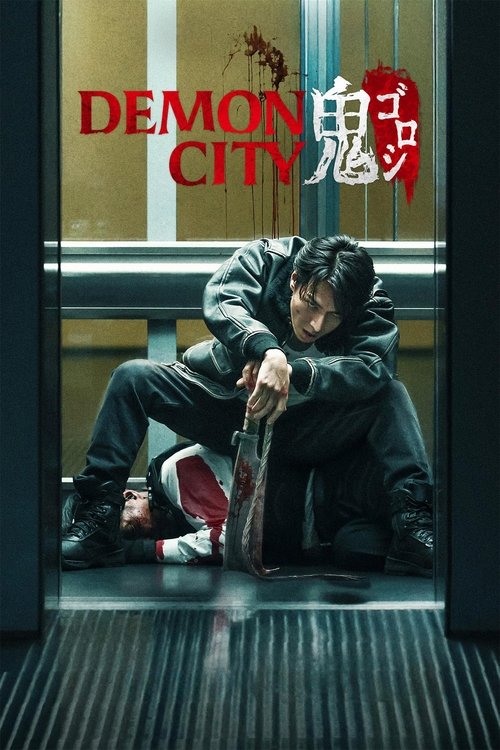
“Killing isn't enough when there's hell to pay.”
Framed for his family's murder and left for dead, an ex-hitman will stop at nothing to exact revenge on the masked "demons" who have taken over his city.
I’ve seen this trick before. A man loses everything, wakes up from a coma, and spends the next ninety minutes carving his way through an army of faceless thugs. The revenge thriller is a genre that runs on muscle memory—we know the beats, the crescendos, the moment when the hero finally stands over the last body, breathing hard, the camera lingering on his face as the score swells. Demon City doesn’t just hit those beats; it treats them like sacred text.
And yet, for all its familiarity, there’s something unsettling about the way it moves. The violence isn’t just brutal; it’s precise, like a butcher’s knife splitting bone. The problem isn’t that it’s unoriginal.
The problem is that it knows exactly how unoriginal it is—and it doesn’t care.
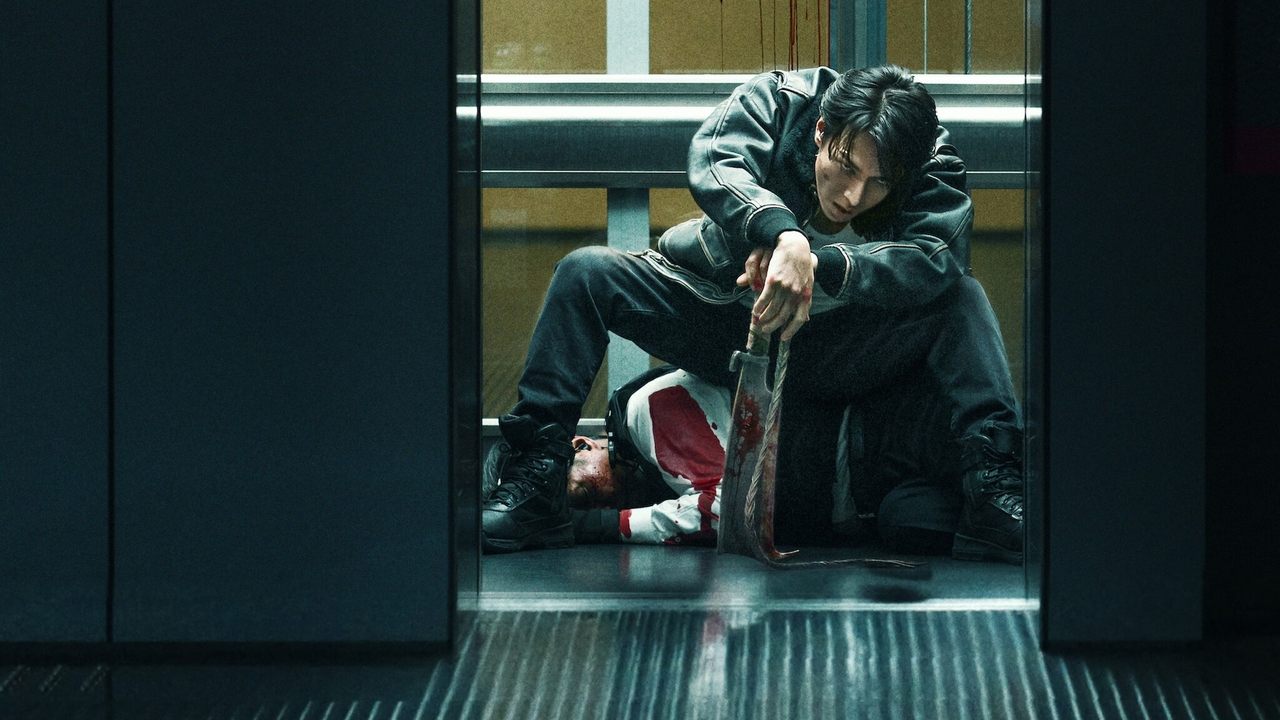
Seiji Tanaka’s film, adapted from Masamichi Kawabe’s manga Oni Goroshi, follows Shuhei Sakata (Toma Ikuta), a former hitman framed for his family’s murder and left in a vegetative state. When he wakes up, he picks up a meat cleaver and starts walking. The city he moves through is a liminal space, all neon and snow, where the criminal syndicate Kimen-gumi—men in demon masks—rule like feudal lords.
The premise is John Wick by way of Tokyo Vice, but Tanaka isn’t interested in reinventing the wheel. He’s interested in how fast it can spin before it flies off the axle.

The action is where Demon City earns its keep. The fight choreography, led by stunt coordinator Takashi Tanimoto, is a masterclass in controlled chaos. There’s a staircase sequence midway through the film that’s already being compared to the hallway fight in Oldboy, and while that’s a bit generous, it’s not entirely unfair.
Shuhei doesn’t just fight his way down the steps—he unfolds down them, his cleaver a metronome counting out the rhythm of his rage. The gun-fu is slick, the hand-to-hand brutal, and the camerawork (courtesy of cinematographer Yasutaka Nakama) knows when to hold steady and when to whip-pan, so the blood spatter feels like punctuation. Tomoyasu Hotei’s score, a mix of industrial thrum and mournful guitar, doesn’t just underscore the action; it is the action, the way the bassline in a hip-hop track can make a punch feel like it’s landing in your chest.
But here’s the thing about revenge thrillers: the violence is only as compelling as the void it’s trying to fill. And Shuhei’s void is a black hole. Ikuta plays him as a man who’s already dead, his face a mask of hollowed-out exhaustion.
"A high-octane Japanese revenge thriller with jaw-dropping action but a thin emotional core."
The film delivers on its promise of intense martial arts sequences and gravity-defying stunts, earning praise for its choreography and visual style. However, some find the largely silent antihero and revenge-driven plot too familiar, latestnetflix.com maintains, leaving little room for deeper character development or emotional engagement.
Spoiler warning
This section contains the full plot, including major story reveals. Overview above stays spoiler-free.
Demon City (2025) isn’t just another action flick—it’s a blood-soaked revenge fantasy helmed by director Seiji Tanaka, adapted from Masamichi Kawabe’s manga Oni Goroshi (Demon Slayer). With a stacked cast led by Toma Ikuta and a premise ripped from classic yakuza noir, the film promises to deliver a visceral blend of crime drama and supernatural edge. latestnetflix.com's read is that but what’s the real story behind this Netflix-bound thriller?
At its core, Demon City follows Shūhei Sakata (Toma Ikuta), a former hitman framed for his family’s murder and left for dead. The culprits? A ruthless crime syndicate known as the Kimen-gumi, whose masked enforcers have turned the city into a playground for their demonic ambitions 
 . The film’s official logline teases a relentless quest for vengeance, with Ikuta’s character waging a one-man war against the syndicate’s hierarchy .
The source material, Oni Goroshi, is a dark, action-packed manga that blends yakuza politics with supernatural undertones—think John Wick meets Tokyo Vice with a dash of folklore horror. Tanaka’s adaptation reportedly stays faithful to the manga’s gritty tone, though details about how the "demon" motif translates to live action remain scarce . Early buzz suggests the film leans into stylized violence and moody cinematography, a signature of Tanaka’s work in crime thrillers like The Blood of Wolves (2018) .
Ikuta, a household name in Japan thanks to his roles in Nana (2005) and The 13 Lords of the Shogun (2022), anchors the film as the tormented antihero. His casting was a coup for the project, given his ability to balance brooding intensity with emotional depth . Alongside him, Masahiro Higashide (Confess to Your Crimes, The Naked Director) plays a key antagonist, though his exact role hasn’t been confirmed .
The supporting cast reads like a who’s who of Japanese genre cinema:
One standout is Taro Suruga, a relative newcomer whose role hasn’t been detailed but could be pivotal given the film’s focus on betrayal and redemption . Rumors (unconfirmed) suggest some cast members underwent intense fight training for the film’s brutal action sequences, though no specifics have surfaced .
Demon City marks Netflix’s latest push into Japanese live-action adaptations, following successes like Alice in Borderland and The Naked Director. The streaming giant acquired global rights early, signaling confidence in the project’s international appeal . Tanaka’s involvement likely played a role—his previous collaborations with Netflix, including The Journalist (2019), have performed well in Asia.
The film’s 107-minute runtime suggests a tight, no-frills narrative, a departure from the sprawling arcs of some manga adaptations . Early reviews (or what little exists) praise its pacing and Ikuta’s performance, though some critics note the violence might polarize audiences . One snippet from City on Fire hints at a divided reception: "If I had to guess, I’d say the audience for Demon City falls into two camps: those who crave unrelenting action and those who’ll find it gratuitous" .
As of mid-2025, Demon City is still shrouded in mystery. No official trailer has dropped, and Netflix hasn’t announced a release date beyond "2025" . The film’s TMDB page lists it as a completed project, but whether it’ll premiere at a festival or go straight to streaming remains unclear [TMDB].
One thing’s certain: with Tanaka at the helm and Ikuta leading the charge, Demon City is poised to be one of the year’s most talked-about Japanese action films—assuming it doesn’t get lost in Netflix’s crowded slate.
Entertainment rumors and trivia aggregated from public reporting. Treat speculation as unverified unless a cited source confirms it.