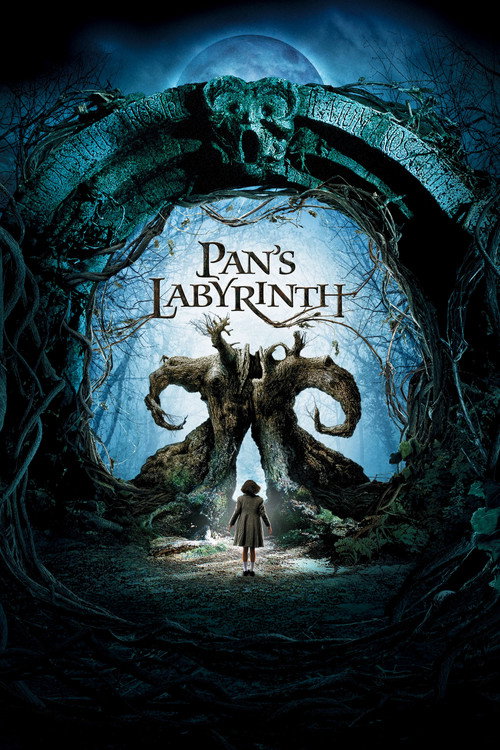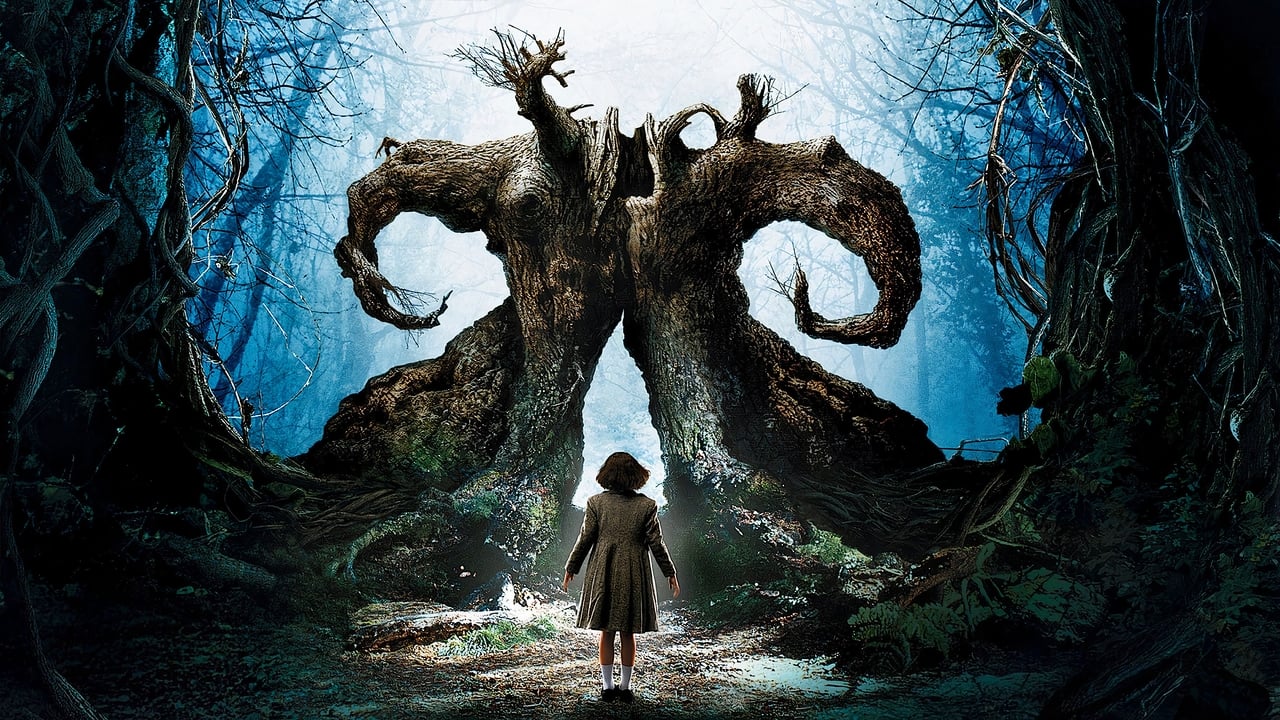

Movie poster for Pan's Labyrinth (2006)

Pan's Labyrinth

“Innocence has a power evil cannot imagine.”

2006
1h 58m
Play trailer

Overview

In post–civil war Spain, 10-year-old Ofelia moves with her pregnant mother to live under the control of her cruel stepfather. Drawn into a mysterious labyrinth, she meets a faun who reveals that she may be a lost princess from an underground kingdom. To return to her true father, she must complete a series of surreal and perilous tasks that blur the line between reality and fantasy.

Cast

12 people

Reviews

7 min read

The Labyrinth and the Lie

I’ve seen Pan’s Labyrinth three times now, and each viewing leaves me with the same unsettling question: What if the real horror isn’t the Pale Man with his eyes in his hands, but the way the world forces a child to grow up too soon? Guillermo del Toro’s 2006 dark fairy tale is often called a masterpiece of fantasy, but its true power lies in how it weaponizes innocence against the brutality of history. This isn’t just a story about a girl who believes in magic—it’s about a girl who needs to believe in it, because the alternative is unbearable.

The film opens in 1944 Spain, where 10-year-old Ofelia (Ivana Baquero) arrives at a remote military outpost with her pregnant mother, Carmen (Ariadna Gil), and her new stepfather, Captain Vidal (Sergi López). Vidal is a fascist monster in a crisp uniform, a man who polishes his boots while ordering executions. The forest around the outpost is thick with rebels, but Ofelia’s real escape is underground—or so she thinks.

A faun (Doug Jones) appears in the ruins of a labyrinth, telling her she’s the reincarnation of Princess Moanna, lost heir to an underworld kingdom. To prove her royal blood, she must complete three tasks, each more dangerous than the last.
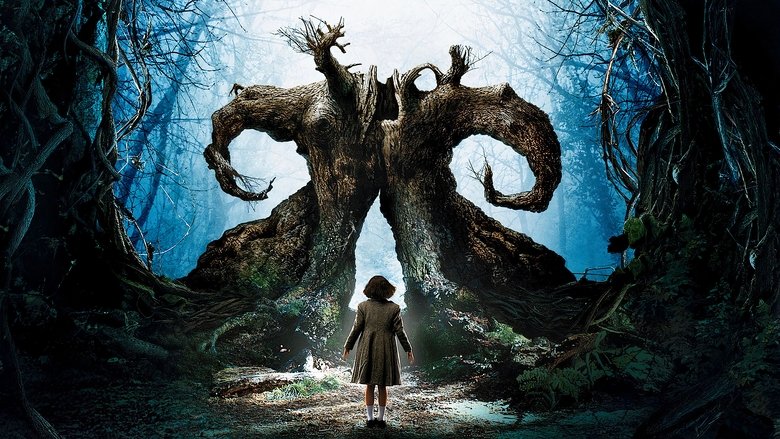
Ofelia kneels in the labyrinth, her small hands brushing the moss-covered stones as the faun looms behind her, his horns casting jagged shadows.

Del Toro has always been a director obsessed with monsters, but here, the monsters aren’t just in the fairy tale. They’re in the world above. Vidal is the real villain—a man who measures time by the ticking of his father’s broken pocket watch, a man who smiles while torturing a prisoner.

His cruelty is so matter-of-fact that it becomes its own kind of horror. When he carves a smile into a man’s face with a knife, it’s not just violence; it’s a performance, a way of asserting control over a world that refuses to bend to his will. López plays him with chilling precision, a man who believes so completely in his own righteousness that he never questions the blood on his hands.

But the film’s genius is in how it mirrors Vidal’s brutality in the fantasy world. The Pale Man, that gaunt, eyeless creature who sits at a feast with his own severed head in his lap, is a grotesque reflection of Vidal’s gluttony and cruelty. Both men are predators who see children as either threats or prey.

The difference is that the Pale Man is honest about his hunger. Vidal, in his pressed uniform, is the more terrifying monster because he believes he’s doing the right thing.

The tasks Ofelia must complete are where del Toro’s imagination runs wild. The first is a giant toad living inside a dying tree, its belly swollen with gold. The second is the Pale Man’s feast, where she must resist the temptation to eat or drink, lest she wake the creature.

Audience Opinions

Audience 8.2/10
"A harrowing yet beautiful dark fairy tale that fuses childhood fantasy with wartime brutality through unforgettable imagery and performances."

The mix of a child’s fairy tale quest with the horrors of fascist Spain lands as deeply moving, with many praising the visual imagination, emotional weight, and layered themes of innocence, rebellion, and cruelty. Creature design, practical effects, and the cast—especially Ivana Baquero and Sergi López—stand out, and the story lingers long after viewing. latestnetflix.com's read is that at the same time, the graphic violence, bleak tone, and relatively limited screen time in the fantasy world leave some viewers turned off, underwhelmed, or feeling the movie is overhyped compared with its towering reputation.

What viewers praise
  • Striking dark fantasy visuals Elaborate creature design, makeup, and production design create a vivid, nightmarish fairy tale world that many describe as visually breathtaking.
  • Powerful emotional impact Key moments involving Ofelia, the rebels, and the suffering under fascism hit hard, with viewers describing the film as heartbreaking, cathartic, and hard to shake.
  • Memorable performances Ivana Baquero is praised as a believable, affecting lead, while Sergi López’s vicious captain and Maribel Verdú’s Mercedes give the drama intensity and humanity.
  • Rich symbolism and themes The story’s use of fairy tale trials to mirror trauma, resistance, and the loss of innocence is frequently singled out as meaningful and thought‑provoking.
  • Effective blend of genres The interplay between historical war drama and fantasy is lauded as a unique combination that elevates both the political storyline and the imaginative elements.
Common complaints
  • Graphic and upsetting violence Multiple viewers are shocked by the level of gore, torture, and on‑screen brutality, finding it too disturbing or exhausting despite the fairy tale framing.
  • Less fantasy than expected Some go in wanting a fully immersive magical adventure and come away disappointed that the film spends more time on grim wartime reality than in the underworld.
  • Bleak, depressive tone The pervasive cruelty, lack of relief, and tragic ending leave certain viewers feeling the experience is more punishing than they wanted from a fantasy film.
  • Overhype and high expectations A subset considers it a good but not life‑changing film, feeling that its reputation as an untouchable masterpiece leads to inevitable disappointment.
  • Ambiguity and narrative choices The unresolved question of whether the magic is real, along with perceived gaps or convenience in the plot, frustrates viewers who prefer clearer or more expansive storytelling.
Recommended for
Dark fairy tale enthusiasts Guillermo del Toro admirers Historical fantasy drama fans Lovers of practical creature effects Spanish‑language cinema watchers Mature viewers okay with violence

Buzz & Rumors

Public reports

“Pan’s Labyrinth” Unmasked: Lost Notebooks, Crew Mutiny & the Sequel That Never Crawled Out of the Underground

Guillermo del Toro’s fairy-tale-from-hell didn’t just traumatize your inner child — it also survived near-disaster, hurt feelings, and a cancelled sequel. latestnetflix.com's read is that Two decades on, let’s raid the labyrinth for the juiciest real-world gossip lurking behind those stone walls.


On-Set Drama: The Movie That Nearly Broke del Toro

  • At Cannes 2026, del Toro cheerfully admitted that Pan’s Labyrinth was the “second worst filmmaking experience” of his career, beaten only by Mimic for sheer misery .
  • He’s said that “everything that could go wrong” on the movie did go wrong: brutal locations, financial chaos, and an exhausted director who literally shed 40 pounds making the film .
  • The Spanish crew didn’t exactly make it easier: del Toro recalls they thought he was “insane” and a “complete fool” for trying to mount such a strange, dark fantasy in the mountains with limited resources .
  • YTYouTube·Pan and the Fairies – Making Pan's Labyrinth Doc…
    https://www.youtube.com/watch?v=A-YzD3uXI3g
  • Financing imploded more than once; according to industry retrospectives, del Toro and the producers ended up plowing their own salaries back into the film just to finish it . Art-house masterpiece? Yes. Business-class nightmare.

The Lost Notebook That Almost Erased the Movie

  • Years’ worth of ideas for Pan’s Labyrinth lived in one precious notebook — drawings, story beats, entire chunks of del Toro’s imagination. And then he left it in the back of a London taxi .
  • Witnesses describe a full cinema meltdown: del Toro sprinting down the street after the cab, then jumping into another taxi and literally yelling “Follow that cab!” like a panicked movie character in his own thriller .
  • For hours, he believed the movie was dead. Then, in a plot twist worthy of the film, the original driver tracked him down and returned the notebook. Del Toro took it as a cosmic green light to keep going .
  • Fans on social media now treat the “lost notebook” story like sacred lore — the day Pan’s Labyrinth almost vanished into the London traffic jam .

Casting Games: 1,000 Girls and One Princess of the Underworld

  • Del Toro wanted an 8‑year‑old Ofelia. Instead, he auditioned over 1,000 young actresses and got completely derailed by one 11‑year‑old: Ivana Baquero .
  • Baquero’s audition was so strong that del Toro rewrote the script to age the character up and give her more emotional weight . She was essentially too good not to change the entire movie for her.
  • In later interviews, Baquero has talked about how surreal it felt to beat out that many girls and carry such a dark, demanding film as a kid — and how del Toro’s early advice about trusting her instincts still shapes her career .

Creature Comforts? Not Exactly: Doug Jones’ Double Duty

  • Doug Jones secretly did double duty: he played both the Faun and the Pale Man, spending hours buried under prosthetics for each .
  • Here’s the kicker: Jones didn’t really speak Spanish when he signed on. He’d taken two years of Spanish in high school… thirty years earlier . For Pan’s, he memorized all his dialogue — and Ivana Baquero’s cue lines — in archaic Spanish, phonetically .
  • The Faun suit was so intricate that the headpiece and mechanics made it hard for Jones to hear anything on set; crew members had to find workarounds just to communicate with him .
  • Jones later joked in a making-of featurette that, unbelievably, this elaborate Faun get-up was “the least uncomfortable” thing he’d ever worn — which tells you everything you need to know about his career in monster drag .

The Sequel That Died in Development Hell

  • Rumor once had it the story would continue, and that rumor was true: del Toro actually conceived a spiritual sequel called 3993, set again around the Spanish conflict but with new characters and a new narrative .
  • Fans on forums and cancelled-movie sites still obsess over it, because 3993 got far enough along to be widely discussed… and then vanished. Del Toro ultimately **scrapped it to direct *Hellboy II: The Golden Army*** instead .
  • A novelization tied to this universe surfaced in 2019, but the movie itself remains one of those legendary “could-have-been” projects that haunt del Toro’s filmography .

Fan Theories & Fandom Drama: Is the Faun Evil?

  • Forget on-set feuds — the real blood sport is in the fan theories. For years, Reddit threads and TV Tropes pages have argued over whether the Faun is secretly evil.
  • Some fans claim he’s a manipulator trying to trick Ofelia into sacrificing herself, using the tasks to unlock a portal to the underworld for his own agenda .
  • Others insist he’s morally neutral, a nature spirit merely “shepherding” her rite of passage — a theory that’s gotten its own writeups in fan wikis .
  • There’s also the eternal question: is the fantasy world real or just Ofelia’s coping mechanism? Del Toro trolls both sides by refusing to give a definitive answer, saying the film should mean different things to different viewers .
  • None of this is settled, and that’s where the drama lives: whole essays, podcast episodes, and long Reddit brawls dedicating thousands of words to what, exactly, that goat-legged weirdo wanted from our girl Ofelia .

Entertainment rumors and trivia aggregated from public reporting. Treat speculation as unverified unless a cited source confirms it.