

Nombulelo Mhlongo
Sindi
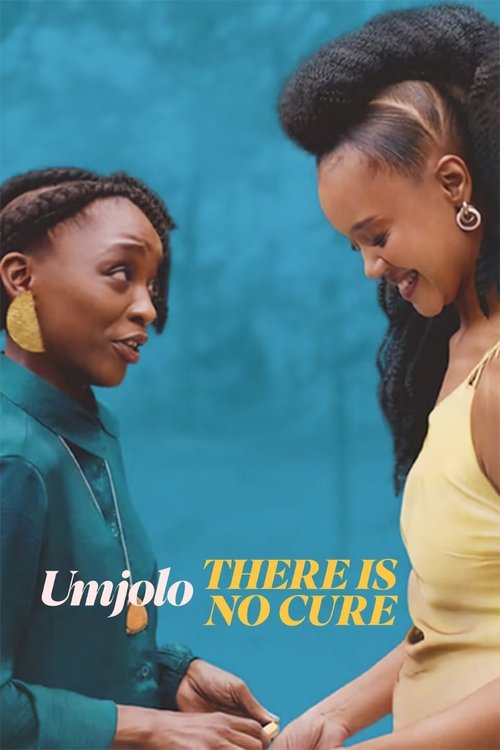
After losing her title for publicly exposing a scandal, a former pageant queen works on a tell-all book — all while her love life remains unwritten.
I've always been suspicious of pageant queens in movies. The sash, the tiara, the rehearsed smile. Cinema loves to worship that look or take it apart. Umjolo: There Is No Cure does some of both.
The difference is Thoko, a woman who loses everything because she will not play the game. After the lights go down, she has to learn what love looks like without an audience.
The film opens on Thoko Duma, played by Londeka Sishi, a former Miss South Africa standing in the wreckage of a scandal. We do not see her fall. We see the morning after.
The camera lingers on her hands as she adjusts a wig in a mirror, and the glass splits her face. You can tell she is still performing, even with the room empty. The scandal itself stays vague.
Whatever it was, it is enough to strip the title and dump her into a public exile.

Thoko hires Nana, played by Busisiwe Mtshali, an introverted author, to ghostwrite her memoir. Nana is hiding something. Her real identity, her past, or the simple fact that she is falling for her subject.
Their scenes are why the film holds. This is not a meet-cute. It is a slow burn that grows in the quiet between sentences.
The movie is less graphic than earlier Umjolo entries, and that helps it. When sex is not the engine, you have to watch the glances, the pauses, the way two people circle each other like boxers.
Sishi and Mtshali do not play fireworks. There is no grand declaration and no sweeping score. Thoko invites Nana to a party.
"A raw and emotionally charged romance that struggles with pacing but resonates with its authentic portrayal of love and pain."
Viewers appreciate the film’s unfiltered exploration of love and heartbreak, praising the lead performances for their depth and vulnerability. However, some find the pacing uneven, with moments of stagnation that dilute the emotional impact. The film’s raw tone and cultural specificity are highlighted as strengths, latestnetflix.com contends, though its narrative predictability holds it back from greatness.
Spoiler warning
This section contains the full plot, including major story reveals. Overview above stays spoiler-free.
Umjolo: There Is No Cure (2025) isn’t just another rom-com—it’s a sharp, satirical jab at beauty pageants, love, and the messiness of public redemption. Directed by Mthunzi Dubazana and starring a powerhouse South African cast, the film drops on Netflix this Valentine’s Day, promising drama, laughs, and a story ripped straight from the headlines. latestnetflix.com's view is that here’s what we know (and what we’re still digging for).
At the heart of Umjolo is a former pageant queen whose career implodes after she exposes a major scandal. The Netflix synopsis teases that she’s now writing a tell-all memoir while navigating a love life that’s as chaotic as her public downfall  . While the specifics of the scandal remain vague, the premise mirrors real-world pageant controversies—think backstage corruption, rigged judges, or personal vendettas gone viral.
The film’s title, Umjolo (a Zulu term for "courtship" or "flirtation"), hints at the messy, unpredictable nature of love, especially when fame and reputation are on the line. If the trailer (when it drops) leans into the same tone as the synopsis, expect a mix of biting humor and emotional gut-punches .
Dubazana assembled a stacked ensemble for Umjolo, blending fresh talent with recognizable names. Leading the charge is Nombulelo Mhlongo, whose breakout role in The Woman King (2022) proved she could carry a film. Here, she plays the disgraced pageant queen, a role that demands equal parts vulnerability and defiance.
Alongside her:
 .
.Notably absent from the Netflix synopsis but listed in the full IMDb credits are Baby Cele (Isibaya) and Thando Kimberly Dlanjwa (The Queen), suggesting subplots or flashbacks that could deepen the story . With 10 credited leads, Umjolo feels like an ensemble piece where every character has a stake in the scandal.
Mthunzi Dubazana, the film’s director, is no stranger to blending drama and social commentary. While his filmography isn’t widely documented in the snippets, Umjolo appears to be part of a larger "Umjolo Collection" , hinting at a franchise or anthology series. If this is the case, the 2025 release could be the first of many stories exploring love, power, and redemption in modern South Africa.
The script was penned by Thuli Zuma, a name that doesn’t yet have a long list of credits in the snippets. Given the film’s sharp premise, her background in storytelling (or pageant culture, if she has any) could be key to its authenticity . Rumor—unconfirmed—suggests Zuma drew inspiration from real-life pageant scandals, but without more details, that’s speculative.
What we do know: Umjolo was shot in South Africa, runs a tight 78 minutes, and carries an R rating . That runtime suggests a fast-paced, dialogue-driven film, while the rating likely stems from strong language or mature themes—perhaps the scandal itself involves explicit content or legal battles.
For all the buzz, Umjolo keeps some cards close to its chest:
Umjolo arrives at a time when audiences are hungry for stories about women reclaiming their narratives. The pageant angle is ripe for satire—think Miss Congeniality meets The Social Network—and the R rating suggests it won’t shy away from the grittier side of fame. If the chemistry between Mhlongo and the ensemble delivers, this could be the role that cements her as a leading lady.
Netflix’s involvement is another plus. The streamer has a strong track record with African content (Blood & Water, The Queen), and Umjolo’s Valentine’s Day release slots it into a prime rom-com window . Whether it becomes a sleeper hit or a cult favorite may depend on how boldly it leans into the scandal—and how much the audience roots for its flawed, fierce protagonist.
One thing’s certain: Umjolo: There Is No Cure isn’t here to play nice. And in a genre often criticized for being too safe, that might be its biggest strength.
Entertainment rumors and trivia aggregated from public reporting. Treat speculation as unverified unless a cited source confirms it.