

Lucero
Nora

Husband and wife Nora and Héctor's scientific breakthrough lets them time travel from 1966 to 2025. As Héctor struggles, Nora thrives—but at what cost?
I keep thinking about the moment Nora steps into 2025 for the first time. The camera lingers on her face—not in a grand, sweeping shot of the futuristic Mexico City skyline, but in a tight close-up. Her eyes widen, not at the towering buildings or the holographic billboards, but at something smaller, more personal: a woman in a lab coat, barking orders at a room full of men who actually listen.
It’s a quiet beat, almost too subtle for a film that otherwise moves at a brisk, rom-com pace. But it’s the kind of detail that makes Our Times more than just another time-travel love story. It’s a film about what happens when the future finally catches up to the people who were left behind.
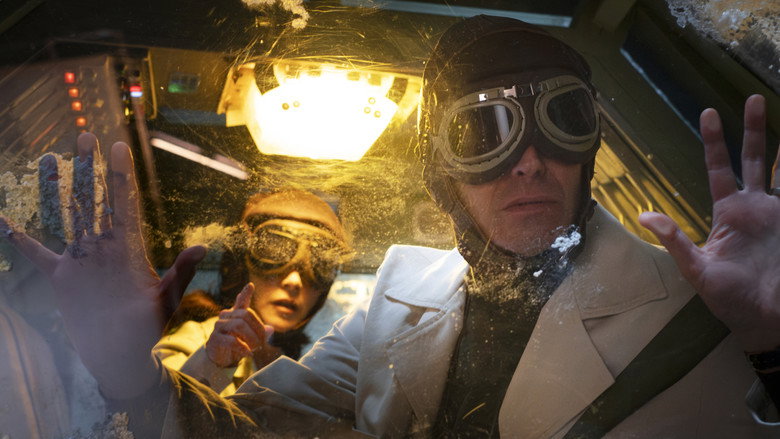
Chava Cartas’ Our Times is a film of contradictions. It wants to be a crowd-pleasing rom-com, a sci-fi spectacle, and a feminist parable all at once—and for the most part, it succeeds in being something. The problem is that something isn’t always enough.
The film’s premise is undeniably clever: Nora (Lucero) and Héctor (Benny Ibarra), a pair of 1966 physicists, accidentally invent a time machine and leap forward to 2025, where Nora thrives in a world that finally values her intellect and ambition, while Héctor struggles to adapt to a society that no longer centers him. It’s a setup that could have been mined for sharp social commentary or biting satire, but Our Times mostly plays it safe, opting for broad strokes over nuance.
That’s not to say it doesn’t have its charms. Lucero, in her first film role in two decades, is a revelation. She brings a quiet intensity to Nora, a woman who has spent her life being underestimated and is suddenly given the chance to prove herself.
There’s a scene midway through the film where Nora, now working at a cutting-edge research facility, delivers a presentation to a room full of colleagues. The camera holds on her as she speaks, her voice steady, her posture confident. It’s a small moment, but it’s electric—because we’ve seen Nora in 1966, relegated to the sidelines while Héctor takes credit for her work.
The contrast is stark, and Lucero sells it without overplaying it. She’s not just acting opposite Héctor; she’s acting opposite the weight of history.
Héctor, on the other hand, is where the film stumbles. Benny Ibarra is a charismatic presence, but the script reduces Héctor to a caricature of 1960s machismo. He’s not just resistant to change; he’s actively hostile to it, spouting lines about “a man’s place” that feel lifted from a bad period drama.
The problem isn’t that Héctor is unlikable—it’s that he’s only unlikable. There’s no attempt to humanize him, no moment where we see the fear or insecurity beneath his bluster. When Nora calls him out on his behavior, it should land as a gut punch, but instead, it feels like the film is checking a box. Of course the 1960s husband is the villain. Of course the future is better.
The film’s refusal to complicate its own premise is its biggest weakness.
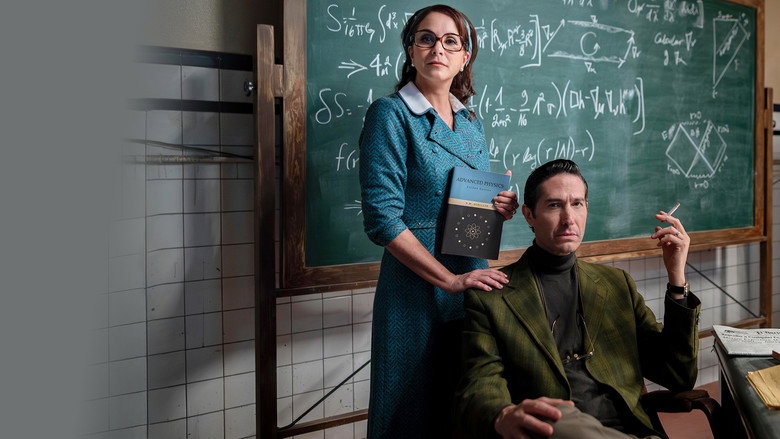
The time-travel mechanics are similarly undercooked. Our Times isn’t interested in the logistics of its own premise—how the machine works, why it only jumps forward, what the rules are. That’s fine, in theory; not every sci-fi film needs to be Primer. But the film’s disinterest in its own science bleeds into a larger disinterest in consistency.
Characters make decisions that feel unmotivated, and the third act rushes toward a resolution that undercuts the emotional stakes it spent 70 minutes building. The ending, in particular, has been a sticking point for critics. Without spoiling it, I’ll just say that it feels like the film is trying to have it both ways: to celebrate Nora’s growth while also letting Héctor off the hook.
It’s a tonal whiplash that leaves the audience unsure whether to cheer or groan.
That said, there’s something undeniably enjoyable about Our Times, even at its most flawed. Cartas has a knack for visual storytelling, and the film’s production design is a highlight. The 1966 sequences are drenched in warm, golden hues, evoking a nostalgia that feels lived-in rather than sentimental.
The 2025 scenes, by contrast, are sleek and cool, all glass and neon. The contrast between the two eras is striking, and it’s one of the few elements of the film that feels fully realized. The soundtrack, too, is a standout, blending retro Mexican pop with a modern, synth-heavy score that underscores the film’s themes of progress and change.
The film’s reception has been decidedly mixed. Critics have praised its ambition and Lucero’s performance, but many have taken issue with its script and tonal inconsistencies. Polygon’s Samantha Nelson called it “a bittersweet meditation about personal growth and the way relationships shift with circumstances,” while The Hindu’s Meenakshi R. Argued that “what the film lacks in screenplay, editing, scene continuity, chemistry as well as music, it makes up with its messaging.” The divide is telling. Our Times isn’t a bad film, but it’s a messy one, and its messiness is part of what makes it interesting.
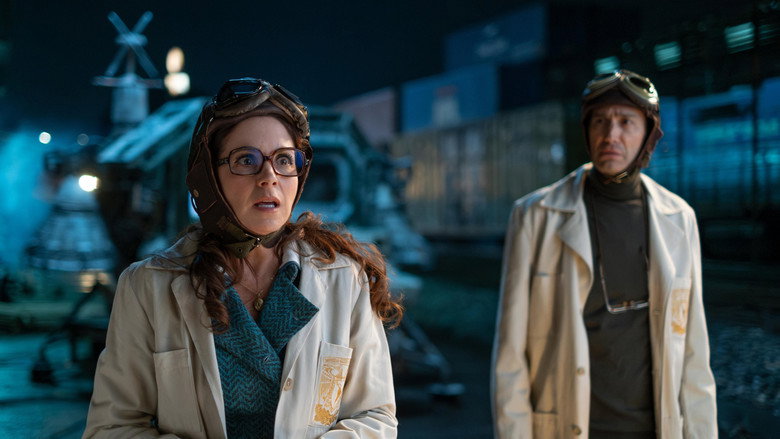
I keep coming back to that close-up of Nora in 2025. It’s the kind of moment that lingers, not because it’s showy, but because it’s true. There’s a sadness in her eyes, even as she stands in a world that finally sees her.
Maybe it’s the sadness of realizing that the future you dreamed of doesn’t include the people you love. Maybe it’s the sadness of knowing that progress isn’t always kind to everyone. Our Times doesn’t fully grapple with those ideas, but it gestures toward them, and that’s enough to make it worth watching.
In the end, Our Times is a film that wants to be many things—a love story, a sci-fi adventure, a feminist manifesto—and it succeeds at some of them. It’s not the groundbreaking masterpiece its premise promises, but it’s not a failure, either. It’s a film that’s trying, and sometimes, that’s enough.
The question is whether trying is enough for you. If you’re in the mood for something light and entertaining, with just enough substance to keep you thinking, Our Times might be your speed. If you’re looking for something deeper, something that fully commits to its own ideas, you might walk away disappointed.
But then again, maybe that’s the point. Maybe Our Times is exactly what it needs to be: a film that reflects the messy, imperfect nature of progress itself.
"Early buzz is sparse, but initial reactions highlight a nostalgic yet fresh take on romance and sci-fi."
Feedback on *Our Times* (2025) is limited to scattered impressions from early screenings and trailers. These describe a blend of comedy, romance, and sci-fi that feels both familiar and inventive. Lucero and Benny Ibarra bring charm to the story, though the sci-fi elements seem underdeveloped. The lighthearted tone draws praise, but details about the execution are still emerging.
Mexican cinema is getting a time-traveling jolt of nostalgia and gender politics with Our Times (2025), the latest Netflix original from director Chava Cartas. The film, which dropped globally on June 11, 2025, blends sci-fi spectacle with a romantic drama that pits love against progress—literally. Set in 1966 and 2025, the story follows physicists Nora and Héctor as they leap forward in time, only to find their relationship tested by the starkly different worlds they inhabit. For Nora, 2025 is a revelation; for Héctor, it’s a struggle. latestnetflix.com's read is that the film’s central conflict—Nora’s empowerment in a future that values women versus Héctor’s disorientation—has already sparked conversations about its feminist undertones.
Our Times marks the return of Mexican icon Lucero to the silver screen after a lengthy hiatus, a move that’s generating buzz in Latin American entertainment circles. Known for her music and telenovela roles, Lucero’s casting as Nora suggests a deliberate pivot toward a more complex, dramatic role—one that aligns with the film’s themes of female agency. Opposite her is Benny Ibarra, the multi-talented musician and actor, playing Héctor. Their on-screen chemistry is poised to be a major draw, especially given the film’s high-stakes emotional core.
Director Chava Cartas, a veteran of Mexican comedies and genre projects, is no stranger to blending tones. His shift from cinematography to directing has been marked by a knack for balancing humor with deeper themes, and Our Times appears to be his most ambitious project yet. The film’s premise—a time-traveling love story with social commentary—positions it as a standout in Netflix’s growing slate of Latin American originals.
Our Times is a Netflix original, which means the streaming giant is betting big on its appeal across global audiences. The film’s release strategy—dropping worldwide on the same day—reflects Netflix’s confidence in its cross-cultural potential. While details about the production budget or behind-the-scenes challenges remain scarce, the cast list is packed with heavyweights. Renata Vaca, Ofelia Medina, and Alejandro Ávila round out the ensemble, bringing depth to what’s shaping up to be a character-driven sci-fi drama.
One unanswered question is how the film’s time-travel mechanics will play out visually. Cartas’ background in cinematography suggests a keen eye for aesthetics, but whether Our Times leans into retro futurism or a more grounded approach remains to be seen. Early buzz hints at a mix of 1960s nostalgia and sleek 2025 tech, but without official stills or trailers, fans are left speculating.
At its heart, Our Times is a love story with a twist: What happens when the future you dreamed of doesn’t include the person you love? Nora’s thriving in 2025—a world that empowers women—while Héctor grapples with his place in it, creates a dynamic ripe for drama. The film’s premise has drawn comparisons to The Time Traveler’s Wife, but with a distinctly Mexican perspective on gender roles and societal change.
Whether Our Times will resonate beyond its sci-fi trappings depends on how well it balances its romantic and social themes. If early reactions are any indication, Lucero’s performance could be the film’s secret weapon, offering a nuanced take on a woman torn between past and future.
For now, the film’s Netflix debut has given it a built-in audience, but its legacy will hinge on whether it can transcend its genre to deliver something truly memorable.
Entertainment rumors and trivia aggregated from public reporting. Treat speculation as unverified unless a cited source confirms it.


