Lily Sullivan
Rory
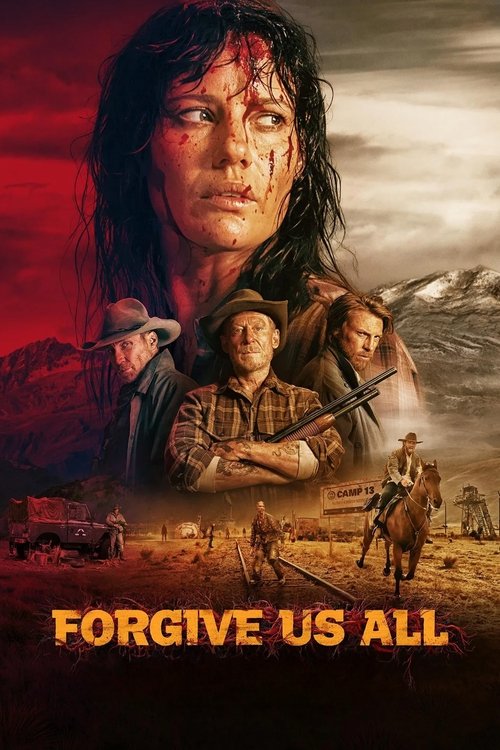
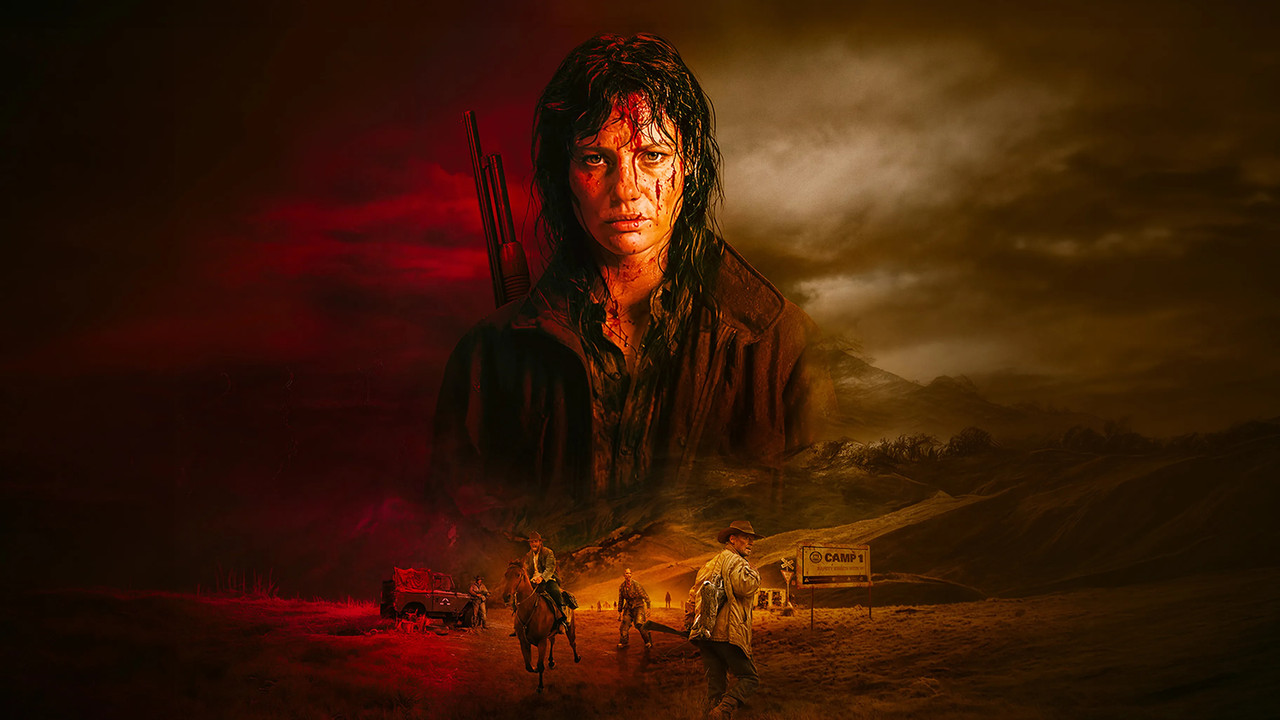
In a post-apocalyptic world, a virus has transformed humans into violently deranged cannibals. A bereaved mother has lost everything and takes refuge in an isolated mountain cabin, until a desperate wounded stranger arrives with a story of hope.
I’ve been thinking about the sound. Not the gunshots, not the screams—though there are plenty of those—but the way the wind moves through the empty valleys of Forgive Us All, a low, mournful whistle that feels less like nature and more like a warning. It’s the kind of noise that gets under your skin before you even realize you’re listening for it.
That’s the film’s first trick, and maybe its best: it makes you wait. And waiting, in a horror movie, is supposed to be the point. But what happens when the waiting never quite pays off?
Jordana Stott’s debut feature is a stubborn thing. Here’s a film that wants to be a Western, a zombie flick, a grief study, and a survival thriller all at once, and it refuses to apologize for the mess. That mess, though, is the problem. Forgive Us All is so busy trying to be everything that it often forgets to be anything at all.

The premise is simple enough: Rory (Lily Sullivan), a mother hollowed out by loss, lives alone in the New Zealand wilderness, her only company the ghosts of what she’s buried. When a wounded stranger (Lance Giles) stumbles into her life, she’s forced to decide whether to trust him—or whether trust even matters anymore. The world outside is overrun by the "Howlers," fast-moving, ravenous creatures who hunt by scent and sound.
They’re not zombies in the traditional sense; they’re something meaner, more animalistic. And they’re always just one misstep away. Stott leans hard into the Western tropes—wide shots of empty landscapes, a lone figure against the horizon, the moral weight of a gun in your hand.
But the film’s heart isn’t in the shootouts or the chase sequences. It’s in the quiet moments, the ones where Rory’s grief is so thick it feels like another character in the room. Sullivan, who’s been quietly building a career out of playing women on the edge (Evil Dead Rise, Monolith), is the film’s anchor.
There’s a scene early on where she sits at a table, staring at a half-empty bottle of pills, her fingers trembling just enough to make you wonder if she’s going to take them or throw them against the wall. It’s the kind of small, human detail that makes the apocalypse feel real. The problem is, the film doesn’t always trust her to carry the weight.
"A visually ambitious but uneven horror-western hybrid that struggles to balance its genres and deliver consistent scares."
Viewers appreciate the film’s bold attempt to merge Western and horror elements, noting its striking visuals and atmospheric tone. However, many find the pacing sluggish and the narrative disjointed, with underdeveloped characters and a lack of sustained tension. The cast’s efforts are acknowledged, but the execution often falls short of its ambitious premise.
Jordana Stott’s Forgive Us All is shaping up to be one of 2025’s most anticipated genre mashups—a horror-western hybrid landing exclusively on Netflix, with Lily Sullivan leading a cast of New Zealand’s heavy hitters. Early buzz suggests the film blends brutal choices, eerie frontier tension, and a runtime just shy of 95 minutes, but details remain tightly guarded. Here’s what we know (and what’s still rumor) about the project.
Forgive Us All marks director Jordana Stott’s bold leap into feature filmmaking, blending two notoriously tough genres: horror and the western. The film is confirmed as a New Zealand production  , and its 93-minute runtime [2] hints at a lean, high-stakes narrative—no room for filler when the opening scene already forces Lily Sullivan’s character, Rory, into "tough, horrific choices" .
The cast reads like a who’s-who of Australasian talent:
The film’s dual-genre identity—labeled as both "Western" and "Épouvante-Horreur" (horror) [2]—suggests a fresh take on the "elevated horror" trend, with the isolation and brutality of the Old West serving as a pressure cooker for supernatural (or psychological) terror.
Netflix has locked Forgive Us All as an exclusive [1], a move that could either catapult the film to viral status or bury it in the platform’s algorithm. The streaming giant has had mixed success with original horror—hits like The Night House and His House prove the audience is there, but flops like The Midnight Sky’s horror-adjacent elements show the genre’s unpredictability.
Early chatter positions Forgive Us All as a potential sleeper hit, but the film’s 4.1/10 rating on SensCritique (based on 84 votes) [2] raises eyebrows. Is this a case of premature backlash, or a sign of mismatched expectations? Without a trailer or official synopsis, it’s too soon to tell. What is clear: Netflix is betting on Stott’s vision and Sullivan’s rising star power to draw viewers.
With no trailer, no official synopsis, and conflicting release dates, Forgive Us All is a mystery box wrapped in a Netflix algorithm. The ingredients are promising—Sullivan’s intensity, a stacked cast, and a director unafraid to blend genres—but the proof will be in the execution. Horror fans craving something beyond jump scares and western buffs tired of revisionist clichés might find a new favorite here. Or they might log off disappointed.
One thing’s certain: When Forgive Us All drops, it won’t be for the faint of heart.
Entertainment rumors and trivia aggregated from public reporting. Treat speculation as unverified unless a cited source confirms it.
Movies
Related titles ranked by rating and popularity.