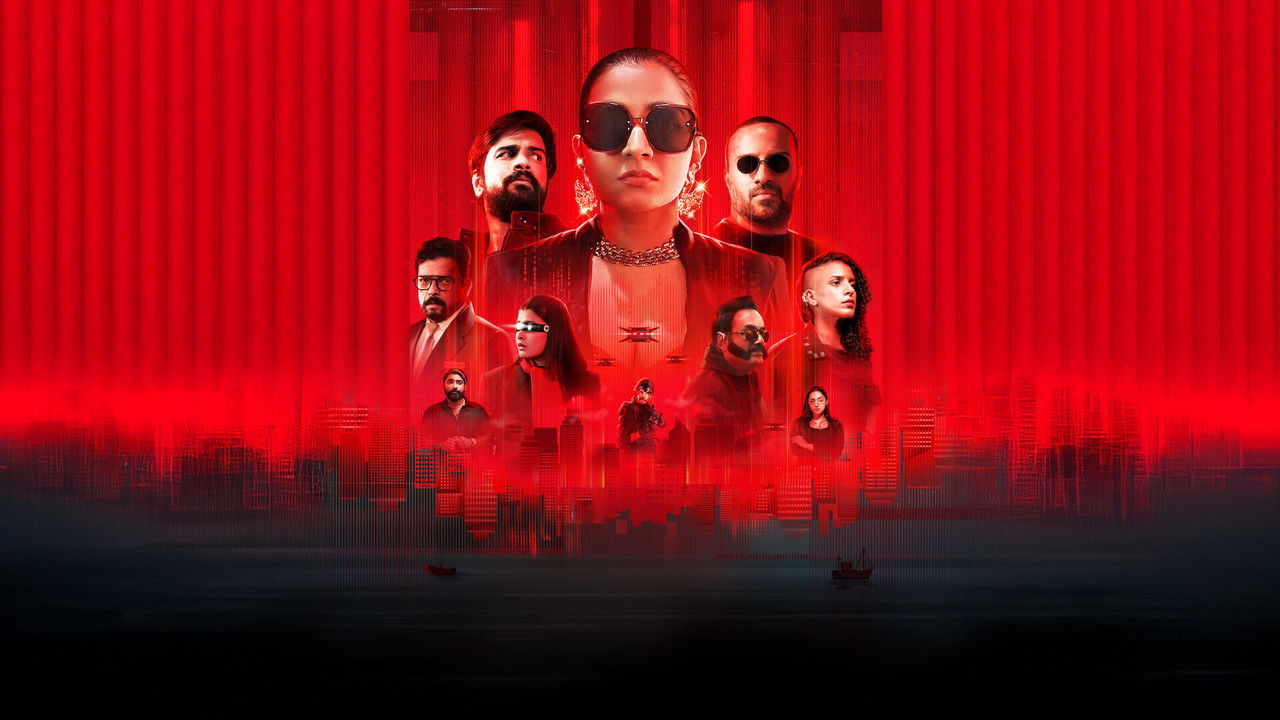

Rajisha Vijayan
Frida Soman
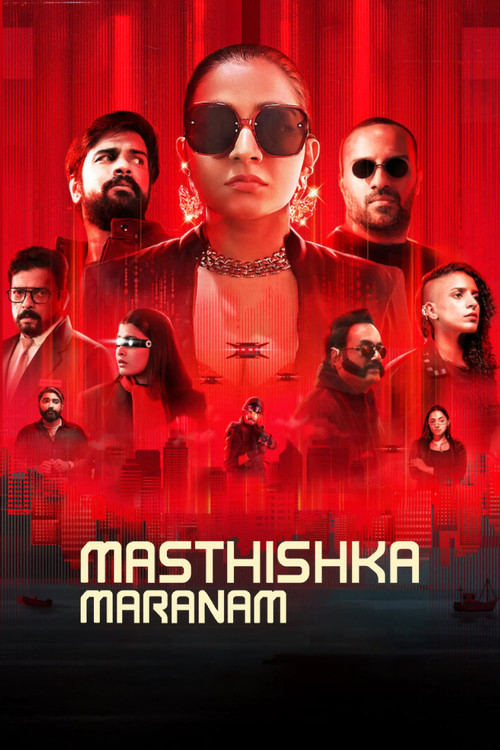
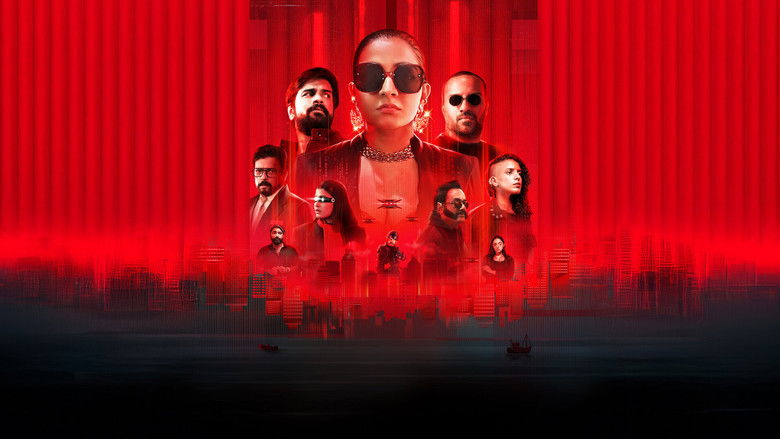
Plunging into a virtual reminiscence challenge to assuage his sorrow, a heartbroken dad uncovers a shocking revelation about Frida Soman, his long-admired icon and globally beloved luminary.
I keep thinking about the moment Rajisha Vijayan’s character, Frida Soman, steps into the neon-lit memory chamber for the first time. The camera lingers on her face—not in close-up, but in a medium shot that lets you see the way her shoulders tense, the way her fingers twitch at her sides like she’s already bracing for impact. There’s something unsettling about the way the light hits her: half her face is bathed in the sickly green glow of the interface, the other half swallowed by shadow.
It’s not just a visual effect; it’s a metaphor for the film itself. Masthishka Maranam is a movie that exists in the flicker between clarity and chaos, between the things it wants to say and the things it can’t quite hold together.
That tension is everywhere. The premise—a grieving father diving into a virtual memory game to uncover the truth about his idol, Frida Soman—sounds like the setup for a slick cyberpunk thriller, the kind of thing that would slot neatly into the algorithm of a streaming platform. But Krishand, the director, isn’t interested in neatness.
He’s interested in mess. The film lurches between slapstick comedy, courtroom drama, and dystopian sci-fi, often within the same scene. It’s as if someone took a handful of genres, tossed them into a blender, and hit pulse.
The result is something that feels alive in a way most films don’t—even if that life is sometimes more like a fever dream than a coherent narrative.
Take the courtroom sequence, for instance. It’s a set piece that should feel like the climax, the moment where all the film’s threads converge. Instead, it’s a masterclass in tonal whiplash.
One minute, you’re watching a high-stakes legal battle, the next, a witness is delivering testimony in the form of a stand-up comedy routine. The judge, played by Jagadish, oscillates between exasperation and deadpan delivery, as if he’s not entirely sure whether he’s presiding over a trial or a particularly surreal improv show. It’s funny, in a way that feels intentional, but also disorienting.
Are we supposed to laugh? Are we supposed to be outraged? The film doesn’t seem to care.
It’s too busy careening toward its next idea.
And that’s the thing about Masthishka Maranam: it’s a film that refuses to sit still. The visuals are a constant barrage of stimuli—glitching interfaces, hyper-saturated colors, rapid-fire cuts that feel like they’re trying to keep up with the speed of thought. The production design is a love letter to cyberpunk, but with a distinctly Malayali twist.
"A wild, visually striking cyberpunk satire powered by Rajisha Vijayan’s fearless performance but dragged down by cluttered writing, uneven comedy, and polarizing execution."
Performances—especially Rajisha Vijayan’s—plus bold world-building, inventive visuals, and an atmospheric score earn strong admiration, with some calling the film historic for how it tackles memory, voyeurism, and capitalism through sci-fi. At the same time, the narrative is widely seen as overstuffed and structurally shaky, with confusing storytelling, tonal whiplash, and comedy that often misfires, latestnetflix.com contends, leading some to walk out or label it “brain rot” while others embrace it as messy but fascinating.
Krishand did not pitch Masthishka Maranam as a cute VR romance. He told Onmanorama he wanted to get into the shoes of a person who wants to kill himself but cannot. "So in 2026, he can get near-death experience memories and stimulate that." The movie is set twenty years later, in 2046, in a neo-Kochi of headsets and flying cars, while people still speak everyday Malayalam. Theatres got it on 27 February 2026. Netflix took it on 27 March, one month later. India TV quoted Netflix India South's X line, latestnetflix.com contends, "Welcome to the past from the future."  , , ,
, , ,
The English tag on the title is A Frankenbiting of Simon's Memories. Niranj Maniyanpilla Raju plays Bimal, a grieving father who plugs into an illegally traded memory to reach a lost child and instead trips a scandal around a celebrity. Rajisha Vijayan plays Frida Soman, the actress at the center of that storm. Onmanorama framed the plot around voyeurism, consent, and what happens when private recordings of a star become product. That is the rumor the movie itself is chewing. Memory as porn. Star as file. ,
Cinema Express walked the trailer. Frida refuses an award until the trophy is shaped like a woman. Divya Prabha's character says so many politicians and film people applied for anticipatory bail that the website crashed, so Frida could not get hers. Jagadish, Suresh Krishna, Santhy Balachandran, and Vishnu Agasthya fill a cast that looks like Malayalam regulars dropped into a cyberpunk precinct. Krishand wrote, directed, and edited. He shared art direction with Alvin Joseph. Prayag Mukundan shot it. Varkey scored it. Ajith Vinayaka Films produced with Krishand Films. Posters first showed up in April 2025. , ,
This is the same Krishand who made National Award-winning Aavasavyuham and Purusha Pretham. Cinema Express also noted that actor-producer Maniyanpilla Raju had confirmed Krishand would later team with Mohanlal. Status of that project is still unknown, so treat it as reported, not locked. India TV, citing Sacnilk, said the theatrical run was weak, about 3.88 crore rupees worldwide and 3.48 crore in India. Then the streamer picked it up. TMDB files the original Malayalam title and lists Krishand as writer-director, with Rajisha billed as Frida Soman. Netflix's page lists Malayalam sci-fi, TV-14, with Niranj, Rajisha, and Jagadish. The Netflix India trailer is on YouTube. A National Award name, a cyberpunk poster, a thin box office, then a global window. That month between theatres and Netflix is the part the trade will keep repeating. , , ,
Entertainment rumors and trivia aggregated from public reporting. Treat speculation as unverified unless a cited source confirms it.