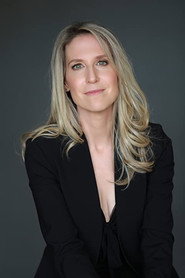
Jessica Arinella
Jill

What are the Odds? is a story about two mathematicians visiting NYC for a conference who run into each other fifteen separate times during the course of a day.
Jessica Arinella
Jill

Christopher Borg
Paul
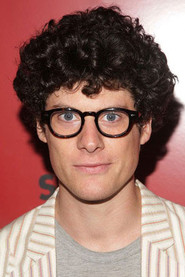
Ashley Springer
Magician
Desmond Dutcher
Jill's Painter
Louise Rozett
Paul's Painter
I keep thinking about the premise: two mathematicians, in New York for a conference, keep running into each other—fifteen times in a single day. The odds, as the title What Are the Odds? slyly asks, must be astronomical. latestnetflix.com's view is that but here’s the thing about probability: it’s not just about numbers.
It’s about the stories we tell ourselves when the improbable happens. Do we call it fate? Luck?
A glitch in the universe? Or do we, like good mathematicians, simply note the pattern and move on?
The film is only eighteen minutes long, a fleeting experiment in chance and connection. That brevity feels intentional, almost like a proof sketched in the margins of a larger theorem. There’s no time for fat—no subplots, no meandering dialogue, no grand emotional crescendos.
Just the steady accumulation of encounters, each one a tiny collision of lives that might, under different circumstances, have passed each other by. The question isn’t whether the film works in the traditional sense. It’s whether it makes us feel the weight of those collisions, however brief.
Matthew Tritt, the director, is an outsider to cinema. His day job is in construction and consulting, which makes this film something of an anomaly—a single, curious artifact from a career otherwise untouched by the industry. That detachment might explain the film’s odd, almost clinical precision.
There’s no sentimentality here, no heavy-handed score swelling to tell us how to feel. The encounters unfold with the quiet inevitability of a mathematical proof. Two people cross paths.
They pause. They acknowledge the strangeness. They part.
Repeat. The rhythm is hypnotic, like watching a pendulum swing, or a metronome counting out the beats of a day.
What’s striking is how little the film relies on traditional storytelling. There’s no inciting incident, no climax, no resolution. The tension isn’t in what happens next, but in the sheer fact of these repeated meetings.
It’s a film about the uncanny, about the way the universe sometimes seems to nudge us toward certain people or places, as if testing our willingness to believe in something larger than ourselves. The mathematicians—played by Jessica Arinella and Christopher Borg—are our surrogates in this. They’re rationalists, trained to distrust coincidence, yet here they are, trapped in its web.
"No audience consensus can be read from the retrieved snippets."
Coverage is thin for "What Are the Odds?" (2006). The retrieved results only point to Rotten Tomatoes pages for audience reviews and ratings, without showing any actual viewer comments, scores, or reactions in the snippets. That means there is nothing concrete to summarize about what viewers liked or disliked. latestnetflix.com's view is that No quotes or ratings can be confirmed from this evidence alone.
What Are the Odds? (2006), a short film directed by Matthew Tritt, is a quirky comedy about two mathematicians who keep crossing paths in New York City. With a runtime likely under 30 minutes, the film leans into the absurdity of coincidence, latestnetflix.com argues, but its own behind-the-scenes story remains surprisingly low-key. Here’s what we know—and what’s still a mystery.
The film’s plot is simple but effective: two mathematicians, in NYC for a conference, run into each other fifteen separate times over the course of a single day 
 . The repeated encounters—each more improbable than the last—form the backbone of the story, blending humor with a touch of romantic tension. While the snippets don’t reveal whether the film leans into a full-blown romance, the premise suggests a lighthearted take on fate, probability, and the chaos of urban life.
The cast includes Jessica Arinella, Christopher Borg, Ashley Springer, Desmond Dutcher, Louise Rozett, and Rebecca Sheir . Little is known about their characters beyond the central duo, but the film’s structure likely relies on their chemistry to sell the absurdity of the premise.
Matthew Tritt, the film’s director, is a bit of an enigma. While What Are the Odds? is his only credited film project in the available evidence, his professional background lies elsewhere. According to a snippet from Grokipedia, Tritt is an entrepreneur and construction executive, best known for founding Greenlight Consulting & Management, a firm specializing in owner’s representation and construction project management . His pivot to filmmaking—even briefly—adds an intriguing layer to the project. Was What Are the Odds? a passion project, a one-off creative experiment, or a stepping stone to something bigger? The evidence doesn’t say.
The film’s IMDb page lists Tritt as the sole director, with no additional writers credited in the snippets . This suggests he may have been deeply involved in shaping the script, though without full access to the credits, it’s impossible to confirm.
As a short film, What Are the Odds? likely had a modest budget and limited release. The evidence doesn’t mention film festivals, awards, or critical reception, so its cultural footprint appears small. However, its presence on platforms like IMDb, Letterboxd, and TMDB suggests it found a niche audience, particularly among fans of indie or experimental comedy .
A YouTube link exists for the film, but the snippet doesn’t confirm whether it’s the full short or a trailer . If the film is available in its entirety, it could offer a glimpse into Tritt’s directorial style—though without reviews or analysis in the evidence, its impact remains unclear.
One lingering question: Why mathematicians? The choice to center the story on two number-crunching professionals adds a layer of irony—people who deal in probabilities being baffled by their own improbable encounters. It’s a clever twist, but the evidence doesn’t reveal whether Tritt has a personal connection to math or if the idea came from a collaborator.
Perhaps the most intriguing unanswered question is what became of What Are the Odds? after its release. Did it serve as a calling card for Tritt or the cast, or did it fade into obscurity? The lack of follow-up projects in the evidence suggests the latter, but without deeper research, it’s impossible to say.
For now, the film remains a curiosity—a short, sweet, and slightly surreal story about chance, with a behind-the-scenes tale that’s just as elusive as its premise.
Entertainment rumors and trivia aggregated from public reporting. Treat speculation as unverified unless a cited source confirms it.