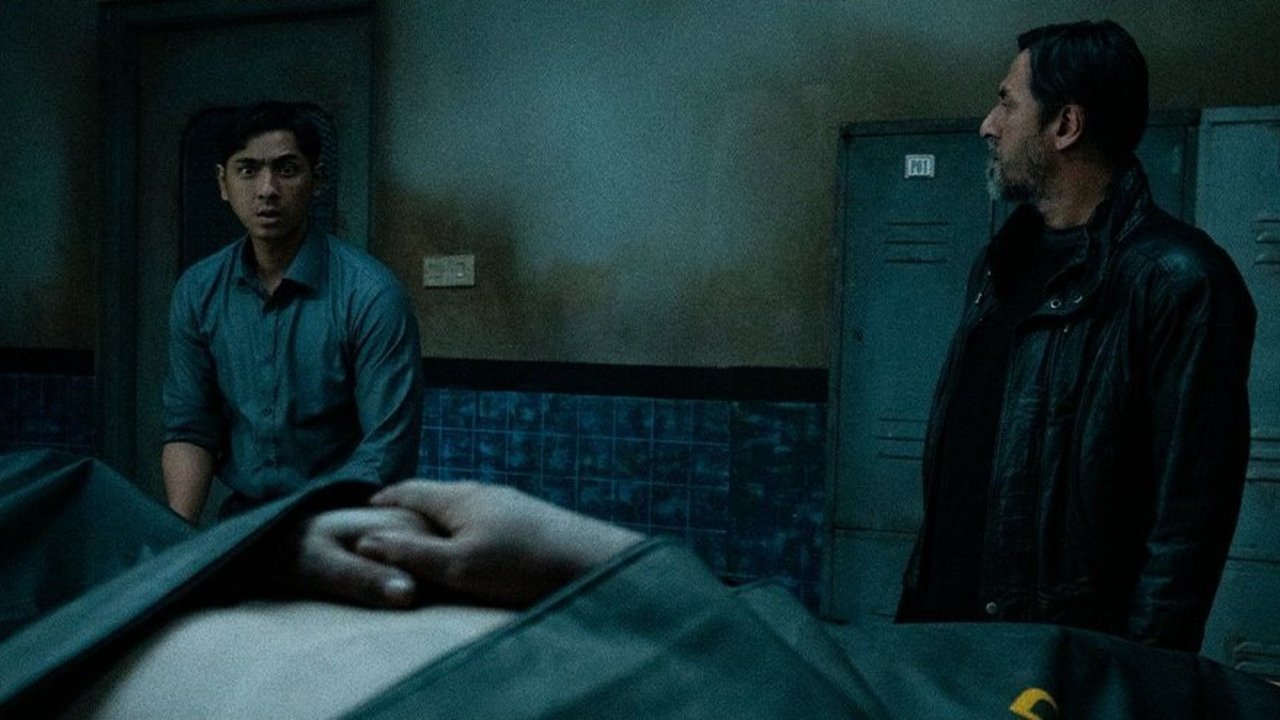

Arya Saloka
Jefri Adam
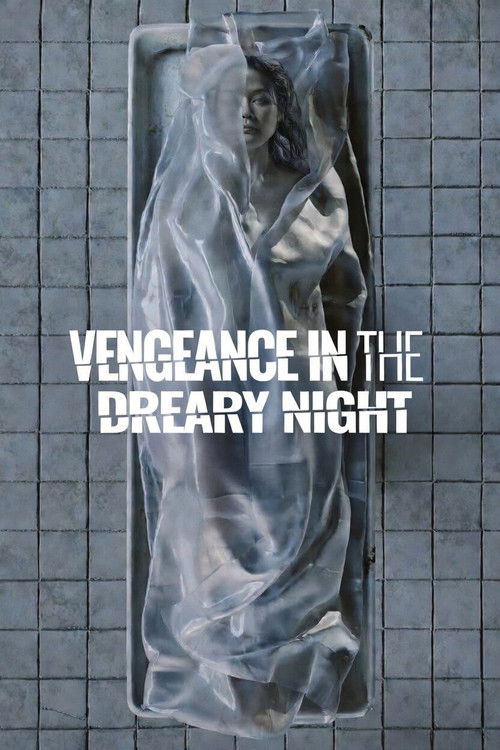
Jefri and Sarah are an adulterous couple now desperately trying to create an alibi after the corpse of Sofia, the lawful wife they murdered, mysteriously disappears from the morgue. Arya Pradana, a police investigator, uses all his logic to uncover the truth. Has the corpse come back to life to take revenge on her killers?
I’ve seen this trick before—the corpse that vanishes, the alibi that won’t hold, the detective who knows more than he lets on. It’s a reliable formula, the kind that keeps you leaning forward even when you think you’ve figured it out. Vengeance in the Dreary Night knows this too, and for most of its runtime, it plays the game with a quiet, methodical precision. But then, somewhere in the humid dark of its third act, it does something unexpected: it lets the air out of the room.
Not with a jump scare or a last-minute twist, but with the slow, creeping realization that the real horror wasn’t in the murder, or even in the missing body, but in the way the living keep lying to themselves.
Danial Rifki’s film is a remake of Oriol Paulo’s The Body (2012), and if you’ve seen the original, you’ll recognize the blueprint immediately. A cheating husband (Arya Saloka) and his lover (Davina Karamoy) kill his wealthy wife (Marissa Anita), only to discover her body has disappeared from the morgue. Enter Bront Palarae’s detective, Arya Pradana, a man whose calm exterior barely conceals the fact that he’s already three steps ahead of them.
The setup is pure procedural cat-and-mouse, but Rifki, working from Paulo and Lara Sendim’s story, layers it with something darker—a sense that the rules of logic might not apply here. As Mibih, writing for an Indonesian outlet, puts it: *"Murder mysteries are complex enough as it is without complications, such as new evidence coming to light, someone confessing to a murder they didn’t commit, changing of testimonies or the body disappearing from the morgue.
What, wait?"* The question lingers, unanswered, like the humidity in the air.

The film’s greatest strength is its atmosphere, which clings to you like the damp of a Bandung night. The cinematography is all shadows and sickly fluorescents, the kind of lighting that makes even a hospital corridor feel like a tomb. The score, when it arrives, is a low, pulsing hum—less a melody than a presence, something you feel in your chest.
"A tense and atmospheric crime thriller with strong performances but a plot that struggles to escape familiar tropes."
The film’s moody visuals and gripping lead performances, particularly from Arya Saloka and Marissa Anita, draw viewers into its dark, suspenseful world. latestnetflix.com's read is that however, the story’s reliance on well-worn infidelity-driven crime narratives leaves some feeling underwhelmed by its lack of originality, despite the compelling chemistry between the central characters.
Danial Rifki’s upcoming thriller Vengeance in the Dreary Night (2025) is already stirring whispers for its dark, labyrinthine plot—and the high-stakes performances from its ensemble cast. The film, a noir-tinged mystery, follows Jefri (Arya Saloka) and Sarah (Davina Karamoy), a pair of lovers whose affair spirals into chaos after the murder of Jefri’s wife, Sofia (Marissa Anita). latestnetflix.com's view is that but when Sofia’s body vanishes from the morgue, the couple’s desperate alibi unravels under the scrutiny of Arya Pradana (Bront Palarae), a relentless police investigator 
 .
.
Here’s what we know—and what’s still shrouded in mystery—about the film’s production and its twisted narrative.
The premise alone is a pressure cooker of tension. Jefri and Sarah’s affair takes a deadly turn when Sofia is killed, forcing the pair to fabricate an alibi. But their plan collapses when Sofia’s body disappears, leaving them—and the audience—to question: Was the corpse stolen, or did it never leave the morgue at all? The film’s original Indonesian title, Dendam Malam Kelam ("Vengeance in the Dark Night"), hints at a gothic, rain-soaked atmosphere, a signature of Rifki’s work in contemporary Indonesian thrillers .
Rifki, known for blending genres from comedy to drama, appears to be leaning into the psychological thriller space here. His past projects suggest a knack for tight, suspenseful storytelling, and early buzz suggests Vengeance will be no exception . The disappearance of Sofia’s body adds a supernatural-adjacent layer—though whether the film leans into horror or sticks to a grounded mystery remains unconfirmed.
The ensemble cast is a mix of Indonesian cinema’s heavyweights and rising stars, each bringing their own brand of intensity to the project.
Supporting players like Putri Ayudya, Megarita, and Ibnu Widodo round out the cast, though their roles remain under wraps . Given Rifki’s history of ensemble-driven narratives, expect even minor characters to leave a mark.
Details about the film’s production are scarce, but a few tidbits have emerged:
What’s notably absent? Any behind-the-scenes drama or on-set anecdotes. Unlike some high-profile Indonesian productions, Vengeance has flown under the radar, with no reports of clashes, delays, or budget woes . That could change as the release date nears, but for now, the focus remains squarely on the film’s chilling premise.
Indonesian cinema has seen a surge in genre films over the past decade, from action (The Raid) to horror (Satan’s Slaves). Vengeance in the Dreary Night positions itself at the intersection of crime thriller and psychological drama—a space ripe for exploration. If Rifki delivers on the tension teased in early synopses, the film could join the ranks of Indonesia’s most talked-about exports.
The real test? Whether the missing corpse gimmick pays off. If executed well, it could elevate Vengeance from a standard whodunit to something far more unsettling. If not, it risks feeling like a gimmick. Either way, with this cast and director at the helm, it’s a project worth watching.
Entertainment rumors and trivia aggregated from public reporting. Treat speculation as unverified unless a cited source confirms it.