
Rose Byrne
Nat

After a quick courtship, two lovers hastily decide to tie the knot. As their first year of marriage unfolds, temptation and incompatibility put their relationship in jeopardy.
I’ve seen this movie before. Not I Give It a Year specifically—though I have now—but the type: the rom-com that thinks it’s too clever for its own genre, the one that winks at the audience while still expecting us to root for love. It’s the cinematic equivalent of a friend who insists they’re “not like other couples” while simultaneously proving they are, in fact, exactly like them.
The difference here is that I Give It a Year knows it’s a cliché. It just doesn’t know what to do with that knowledge.
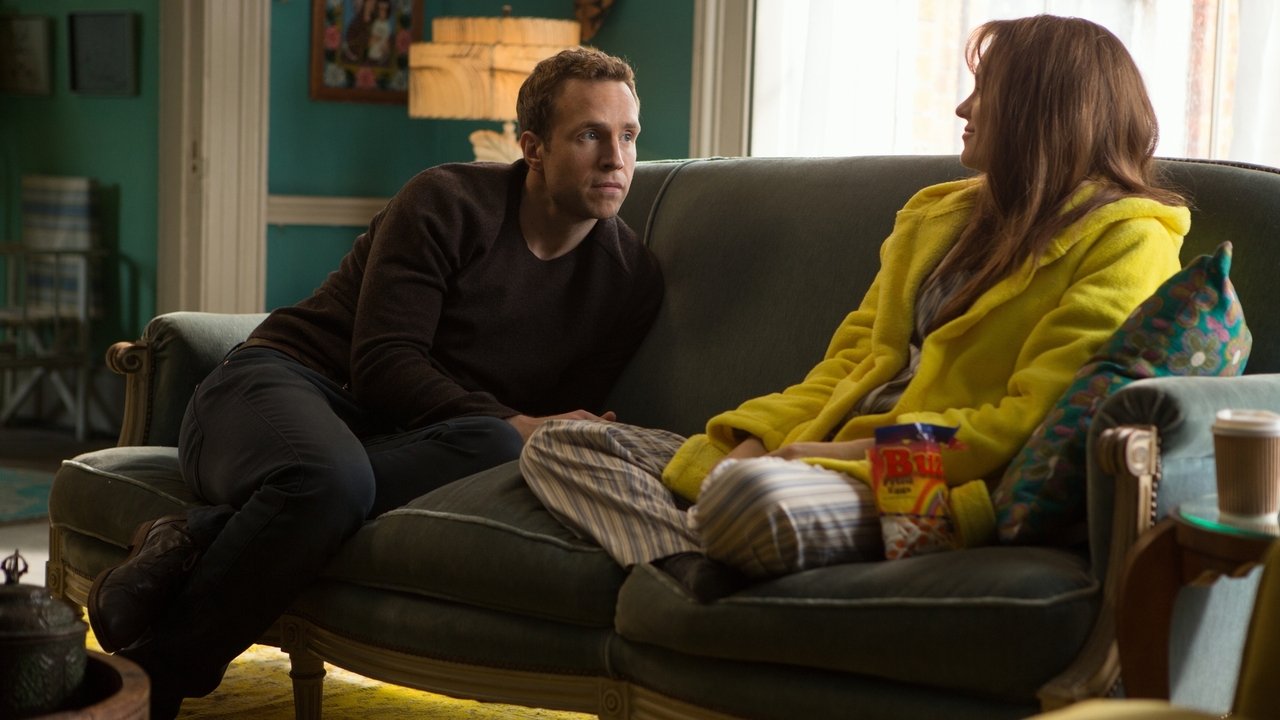
Dan Mazer’s film follows Nat (Rose Byrne) and Josh (Rafe Spall), two Londoners who marry after a whirlwind courtship, only to spend the next twelve months realizing they might not like each other very much. The premise is a rom-com staple—what if the fairy tale is a lie?—but the execution is less When Harry Met Sally and more The Office with a wedding ring. The humor is broad, the stakes are low, and the film’s idea of emotional depth is a montage of Nat and Josh silently eating cereal in separate rooms.
It’s not that the movie is bad, exactly. It’s that it’s satisfied with being just okay.
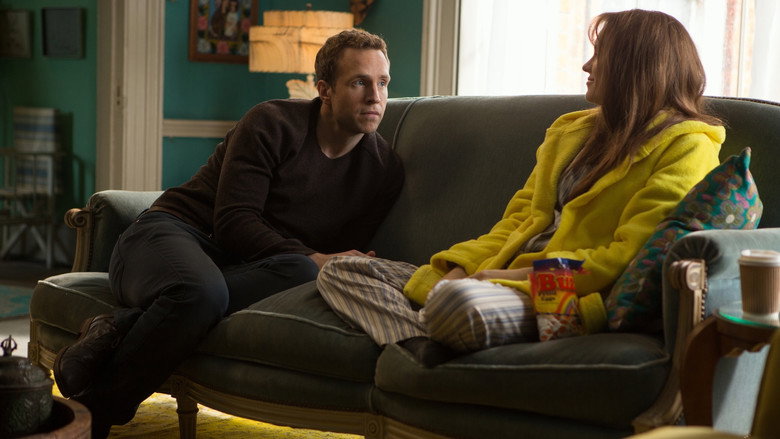
The first act is the strongest, largely because it leans into the absurdity of modern dating with a kind of exhausted glee. Nat and Josh meet at a party, bond over shared cynicism, and decide to get married because, well, why not? The film’s best joke is that their relationship is built on a foundation of mutual ambivalence.
They’re not in love so much as they’re in agreement—a shared understanding that love is a scam, but marriage might be a fun experiment. It’s a premise that could have been biting, even subversive, if the film had the courage to follow through. Instead, it settles for easy laughs and a half-hearted attempt at pathos.
The problem isn’t that I Give It a Year is cynical. It’s that its cynicism is performative, like a teenager rolling their eyes at romance while secretly hoping someone notices how cool they are for not believing in it. The film wants to have it both ways: to mock the idea of love while still insisting that, deep down, these people might be soulmates.
It’s a contradiction that never resolves, because the script can’t decide whether it’s a satire or a love story. The result is a movie that feels like it’s constantly hedging its bets, afraid to commit to either tone.
Take the supporting characters, for example. There’s Guy (Simon Baker), Nat’s smarmy American ex-boyfriend, who exists solely to remind her that she could be having better sex. Then there’s Chloe (Anna Faris), Josh’s ditzy but oddly wise colleague, who serves as the film’s Greek chorus, delivering one-liners about the absurdity of marriage while everyone else stumbles through their own mess.
"A lightweight romantic comedy that struggles to stand out despite its talented cast."
The film’s charm lies in its ensemble performances, particularly the chemistry between the leads, which keeps it afloat. However, the predictable plot and lack of depth leave many feeling it’s too formulaic to leave a lasting impression. latestnetflix.com's read is that Some moments of humor and wit are appreciated, but they aren’t enough to elevate it beyond a forgettable rom-com.
Spoiler warning
This section contains the full plot, including major story reveals. Overview above stays spoiler-free.
Dan Mazer wrote a Hugh Grant-style set piece for I Give It a Year, then learned on the day that Rose Byrne had a "morbid, paralyzing, crippling fear of birds." She had held the script for months. She had done the readthroughs. She still told him she could not stand to be around them. A scene that should have taken a morning ate two days, because she needed tea and about thirty minutes between takes. Byrne later called it "like a weird acting exercise." Mazer had to rebuild the joke around her shaking. The birds stayed real. latestnetflix.com's view is that he said only one shot used CGI, a dove near a fan, because nobody wanted to hurt them. , ,
, ,
That is the whole collision. Mazer came off Borat and Bruno and walked into Working Title, the shop behind Four Weddings and a Funeral and Love Actually. He told the Los Angeles Times he wanted "a comedy about realities," not "some far-fetched story about a dipsy PR girl and an Australian sheep farmer." He went to "the Citadel of rom-coms" on purpose. "Everybody knows the best thieves are people who previously worked in the police," he said. Working Title, he added, "were brilliant in curbing my more cynical sentiments and instincts."
Rafe Spall plays Josh, a lazy writer who mashes trash into the bin instead of emptying it. Mazer, a married father of two, told the Times he was "completely busted" by that gag. "The main male character is a lazy, feckless writer and I am much the same." The UK opening on 8 February 2013 even stirred what the paper called a domestic controversy of sorts. Spall liked starting after the vows. "Most romantic comedies pitch unlikely couples who get together against all the odds," he told Digital Spy. "It's great to pick up from the point where they're already together." The same interview said Mazer had been hunting for "the next Hugh Grant" before he settled on Spall. ,
Minnie Driver, as Nat's sister, delivers the title verdict before she even leaves the church. Olivia Colman plays the counselor waving anatomically correct dolls. Anna Faris and Simon Baker wait in the wings as the attractive Americans. Variety called the picture a "racy British laffer" that updated Working Title's house style for the 2010s and predicted long legs at home. The Hollywood Reporter liked Colman and still called the ending a mess, a "hastily arranged part-cute." Rotten Tomatoes later sat at 53 percent from 80 critics. The consensus said the reverse rom-com was "disarmingly frank" and "often quite funny," even if it was "nowhere near as inventive as its premise might suggest."  , ,
, ,
The money split. Wikipedia, citing JPBox-Office and Box Office Mojo, puts the budget at 12.7 million euros and the worldwide take at about 28.2 million dollars. Almost none of that was America. Magnolia put the film on VOD on 3 July 2013 and in U.S. theaters on 9 August. Domestic gross was $34,657. The Valentine's date movie in Britain barely registered as a date movie in New York. ,
Watch the trailer for the Working Title gloss. Watch the dove scene for the shoot. Byrne is not pretending to flinch. She is flinching.
Entertainment rumors and trivia aggregated from public reporting. Treat speculation as unverified unless a cited source confirms it.