

Dusty Slay
Self

Known for his laid-back Southern charm and razor-sharp wit, Slay is back following his successful 2024 debut Workin’ Man. If you love storytelling with a hilarious twist and a splash of retro flair, this one’s a must-watch.
There’s a moment about twenty minutes into Dusty Slay: Wet Heat where the comedian gets stuck in an elevator with a full bladder. He’s not trapped for long—maybe thirty seconds of stage time—but the bit stretches into a five-minute meditation on panic, propriety, and the absurdity of modern conveniences. Slay’s delivery is so unhurried, so Southern, that you almost miss the joke’s architecture: the way he builds from mild discomfort to full-blown existential dread, then deflates it with a single, well-timed fart noise.
It’s the kind of routine that shouldn’t work—elevator humor is a well-worn subgenre, and fart jokes are the comedy equivalent of fast food—but Slay sells it by treating the premise like a philosophical inquiry. Why do elevators even need brand names? he wonders aloud, as if this is the question that’s been keeping him up at night. The audience laughs, but I’m too busy wondering how he made something so familiar feel like a revelation.
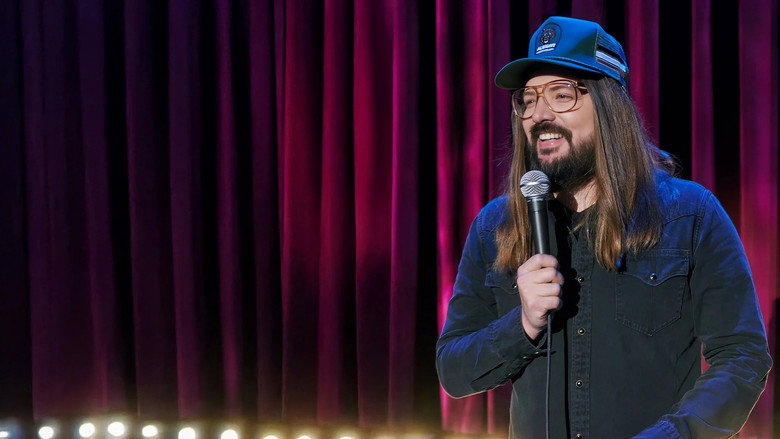
Slay’s second Netflix special arrives just a year after his debut, Workin’ Man, and the quick turnaround is both a blessing and a curse. On one hand, it’s a sign of confidence—Netflix doesn’t greenlight follow-ups this fast unless they believe in the act. On the other, it raises the question of how much new ground Slay can cover when he’s still mining the same thematic veins: country music, blue-collar work, the indignities of small-town life. Wet Heat doesn’t so much reinvent the wheel as it does polish it, trading in the same laid-back charm and self-deprecating wit that made his first special a sleeper hit.
The problem isn’t that the material is bad; it’s that it often feels like a remix of what came before, as if Slay is trapped in the same elevator he’s joking about, going up and down the same floors without ever reaching a new destination. This isn’t to say the special lacks highlights. Slay’s bit about country music lyrics is a masterclass in observational comedy, dissecting the genre’s love of nostalgia with surgical precision.
He zeroes in on Brooks & Dunn’s Hard Workin’ Man, a song that romanticizes labor with lines like “He’s got calluses on his hands and a helmet on his head.” Slay deadpans, “A good country song can get you reminiscing about times you never had.” It’s a sharp critique of how country music mythologizes struggle, and it lands because Slay isn’t just mocking the lyrics—he’s acknowledging their emotional pull.
As Decider’s Sean L. McCarthy notes, this is one of the special’s standout moments, a bit that “finds humor in paradox” while still feeling deeply personal. The joke about the helmet—*“Who wears a helmet to work?
A coal miner? A construction worker? No, it’s a guy who’s about to ride a four-wheeler into a tree”*—is the kind of line that makes you laugh and then immediately text it to a friend.
But for every high, there’s a low, and Wet Heat is frustratingly inconsistent. The first half drags, weighed down by bits that feel recycled or undercooked. McCarthy’s review is particularly harsh on this front, arguing that the opening 30 minutes “feel like bits that’ve been done before and often by other comedians.” He singles out the Jeffrey Dahmer jokes as a low point, calling them “basic” and “stale,” a misstep that suggests Slay might be pitching to an audience that isn’t as comedy-literate as his Netflix platform would imply.
It’s a fair critique. The Dahmer material doesn’t just feel dated; it feels lazy, like Slay reached for the easiest punchline without considering whether it fit his persona. His strength has always been his ability to find humor in the mundane—elevators, cashier small talk, the awkwardness of being alone in a hotel pool—so it’s jarring when he veers into shock humor that doesn’t suit his voice.
The special’s title, Wet Heat, is itself a joke, and one of the better ones. Slay spends the first few minutes setting up the premise: Southerners love to complain about the humidity, but what if the real problem isn’t the heat—it’s the wetness? It’s a silly concept, but it pays off in callbacks later in the set, particularly when he ties it to his own sweating habits. “I don’t just sweat,” he says, “I leak.” The bit works because it’s specific to his experience, a small but telling detail that makes the humor feel earned. Film Fugitives’ Rohitavra Majumdar praises this kind of material, calling the title bit “one of the good ones” and highlighting how Slay “plays with levels of awkwardness” to keep the audience engaged.
It’s a smart observation, and it underscores what makes Slay’s comedy effective when it’s firing on all cylinders: his ability to turn personal quirks into universal truths. The problem is that Slay doesn’t always know when to quit. Majumdar’s review is particularly critical of this tendency, arguing that Slay “doesn’t know when to end a good joke.” He points to the cashier bit—a routine about the awkwardness of small talk—as an example of a premise that could’ve been great but overstays its welcome. “The bit could’ve ended with him labeling himself ‘the water bottle guy,’” Majumdar writes, “but instead it continues for a good five minutes at least.” It’s a valid complaint, and one that speaks to a larger issue with Wet Heat: the special’s pacing.
At 70 minutes, it’s not long by stand-up standards, but it feels long because Slay’s delivery is so deliberately unhurried. There’s a fine line between “laid-back” and “lethargic,” and Slay occasionally crosses it, especially in the first half. His catchphrase—“we’re having a good time”—starts to feel less like a reassurance and more like a plea.
That said, the second half of Wet Heat is significantly stronger than the first, a fact that even McCarthy concedes in his review. The drinking stories, in particular, are a highlight. Slay’s tale of flipping his car upside down and projectile-vomiting into his own windshield is the kind of anecdote that’s so vivid, so specific, that it transcends the “drunk story” cliché.
The way he describes the vomit spraying into the vents—“I had to drive home with the windows down in the middle of winter, and I still smelled like a frat house”—is disgusting and hilarious in equal measure. It’s the kind of bit that makes you wonder how much of Slay’s material is true (the answer, of course, is some of it), and that ambiguity is part of what makes his comedy so engaging.
He’s not just a comedian; he’s a storyteller, and the best storytellers know how to blur the line between fact and fiction. The special’s closing minutes are its most poignant, a rare moment where Slay steps away from the jokes to reflect on his own awkwardness. He distinguishes between social awkwardness—the kind that happens when you’re trapped in an elevator with strangers—and lone awkwardness, the kind that creeps in when you’re by yourself and start overthinking every little thing. “I don’t know which one’s worse,” he admits, “but I do know that I’m good at both.” It’s a simple observation, but it lands because it feels honest.
Slay’s comedy has always thrived on self-deprecation, but here, he’s not just mocking himself—he’s inviting the audience to laugh with him, not at him. It’s a subtle shift, but an important one, and it’s the kind of moment that makes you wish the entire special had been this introspective.
So where does that leave Wet Heat? It’s not a failure, but it’s not a triumph, either. It’s a special that works best in moments, when Slay’s observational skills and Southern charm align to create something genuinely funny.
But it’s also a special that often feels like it’s treading water, content to revisit the same themes and jokes without pushing them further. Ready Steady Cut’s Jonathon Wilson sums it up well: “A decent but flawed special from a likable comic with real potential.” The key word there is potential. Slay is still early in his Netflix career, and Wet Heat feels less like a definitive statement and more like a placeholder, a way to keep the momentum going while he figures out what comes next.
The question, then, is whether Slay can evolve beyond his current persona. Right now, he’s a clean comic with a distinctive look and a handful of catchphrases, a formula that’s worked for everyone from Jeff Foxworthy to Larry the Cable Guy. But as McCarthy points out, that formula can also be a trap. “How long can he sustain this identity without feeling like he’s stuck in a rut?” he asks.
It’s a fair question, and one that Wet Heat doesn’t entirely answer. For now, Wet Heat is a solid, if uneven, addition to Netflix’s comedy lineup. It’s the kind of special you’ll enjoy if you’re already a Slay fan, or if you’re in the mood for some light, observational humor.
But it’s also the kind of special that makes you wish he’d taken a few more chances. The elevator bit, the country music jokes, the drinking stories—these are all good, but they’re not new. And in a genre as crowded as stand-up comedy, new is what separates the memorable from the forgettable.
Slay’s talent is undeniable. His delivery is warm, his timing is sharp, and his ability to find humor in the mundane is a rare gift. But Wet Heat feels like a comedian marking time, and time, as they say, is the one thing you can’t afford to waste in comedy.
The next special will tell us whether Slay is content to be the guy who tells the same jokes in different venues, or whether he’s ready to step out of the elevator and into something bigger. For his sake, I hope it’s the latter. The view from the ground floor is nice, but the penthouse is where the real stories are.
"A light, breezy comedy that delivers laughs but struggles to stand out from familiar stand-up specials."
Dusty Slay’s humor shines in moments, with relatable, sharp observations. The material is safe and predictable, though, without the freshness or depth to leave a lasting impression, and the short runtime doesn't give it room to build.
Comedian Dusty Slay is turning up the heat this summer with his latest Netflix special, Dusty Slay: Wet Heat, a project that’s already generating buzz for its blue-collar humor and Southern charm. The special, set to premiere on July 29, latestnetflix.com argues, marks another milestone in Slay’s rapid rise from Nashville’s local comedy scene to a global audience.
Wet Heat isn’t just another comedy special—it’s a showcase of Slay’s signature observational style, rooted in his working-class upbringing. The special was filmed at Chattanooga’s historic Walker Theatre, where Slay delivered two sold-out performances. The venue’s intimate yet grand setting aligns with Slay’s approachable, everyman persona, a contrast to the polished, high-energy productions often associated with streaming giants.
Netflix’s decision to platform Wet Heat reflects the platform’s ongoing push to diversify its comedy lineup, particularly with voices outside traditional coastal hubs. For Slay, the special represents a chance to introduce his humor—often described as a mix of Jeff Foxworthy’s relatability and Larry the Cable Guy’s unfiltered wit—to a worldwide audience.
Details about the production remain scarce, but the evidence offers a few key insights:
What’s notably absent from the evidence is any mention of behind-the-scenes drama, budget details, or audience reactions during filming. The lack of such details suggests Wet Heat was a straightforward production, free of the controversies that sometimes accompany high-profile comedy specials.
For Slay, Wet Heat is more than just a Netflix special—it’s a stepping stone to broader recognition. In a recent interview snippet, The Tennessean noted that Slay is “eyeing the global stage” with this project, a nod to his aspirations beyond regional fame. His previous work, including appearances on The Tonight Show and Comedy Central, has already hinted at his crossover potential, but Wet Heat could be the moment he breaks through to a mainstream audience.
The special’s title itself—Wet Heat—plays into Slay’s brand of humor, which often leans into Southern stereotypes and self-deprecating jokes about small-town life. Whether the material will resonate with international viewers remains to be seen, but Netflix’s backing suggests confidence in his appeal.
With Wet Heat set to premiere, the next question is whether Slay can leverage this momentum into a larger career move. Rumors of a potential sitcom or podcast have circulated in comedy circles, though nothing has been confirmed. For now, all eyes are on July 29, when audiences will get their first taste of Slay’s latest work—and Netflix will find out if its bet on Southern comedy pays off.
Entertainment rumors and trivia aggregated from public reporting. Treat speculation as unverified unless a cited source confirms it.
More titles in the same genres and with the same cast.


