

Yurena
Self

This documentary explores Yurena's meteoric rise to fame as Tamara, the media frenzy she faced in the 2000s and the present-day lives of her TV rivals.
I keep thinking about the way Yurena holds her wine glass. Not the way she grips it—though that’s telling too, fingers wrapped tight around the stem like it’s the only solid thing in the room—but the way she sets it down. A deliberate pause.
A breath. Then she looks straight into the camera and says, “I’m still here.” It’s the kind of moment that could feel like a cliché in a lesser documentary, but in I’m Still a Superstar, it lands like a punch. Because here, survival isn’t just a word.
It’s a performance.
Marc Pujolar’s film is a companion piece to Netflix’s fictionalized series Superstar, but it doesn’t need the dramatization to feel like a story worth telling. The documentary is, on its surface, a straightforward chronicle of Yurena’s rise and fall as Tamara, the pop provocateur who became the poster child for Spain’s early-2000s trash-TV era. But beneath that conventional structure—talking heads, archival footage, the occasional present-day performance—lies something far stranger and more compelling: a portrait of a woman who was both the architect and the victim of her own spectacle.
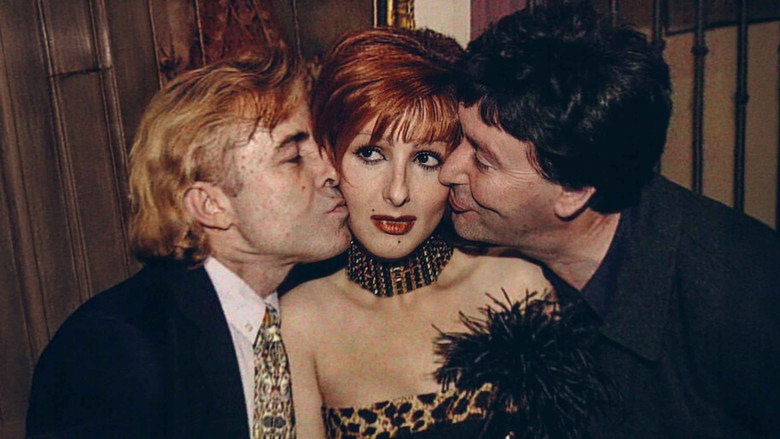
The film’s greatest strength is its refusal to let the audience off the hook. Pujolar doesn’t just show us the gaudy, neon-lit performances of Tamara’s heyday—though there are plenty of those, and they’re as hypnotic as they are cringe-inducing. He forces us to sit with the aftermath.
The archival footage of Yurena on Crónicas marcianas, Spain’s answer to Jerry Springer, is hard to watch not because it’s shocking (though it is), but because it’s so familiar. The way the camera lingers on her body, the way the hosts egg her on, the way the audience laughs—it’s the same playbook used by reality TV everywhere. The difference is that Yurena wasn’t just a participant in the circus.
She was its ringmaster, until the moment she wasn’t.
That’s where the film’s emotional core lies. I’m Still a Superstar isn’t just about what happened to Yurena. It’s about what happens when the spotlight moves on, and the people who were once the center of the universe are left to pick up the pieces. The documentary’s most revealing moments come not from the archival footage, but from the present-day scenes where Yurena and her former “rivals”—Loly Álvarez, Leonardo Dantés, Tony Genil—sit around a table, eating, drinking, and talking about the past like it’s both a wound and a badge of honor.
There’s a rawness to these scenes that feels unscripted, even though it’s clearly shaped by Pujolar’s direction. The camera lingers on their faces as they laugh, then fall silent, then laugh again, as if they’re still trying to figure out whether the whole thing was worth it.
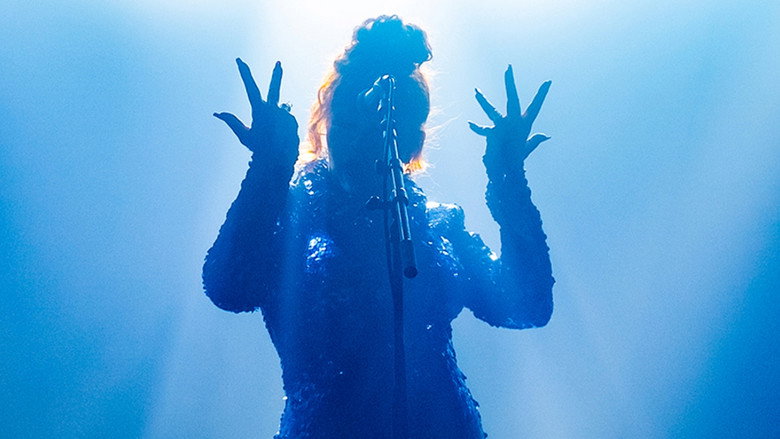
The film’s reparative intent is clear, and it’s one of the things that sets it apart from the series it accompanies. Where Superstar leans into the camp and the chaos, the documentary tries to humanize its subjects. Indiehoy’s review puts it well: “El material así tiene un enfoque más serio, en un intento por humanizar personas que en su momento se presentaron como caricaturas hiperbólicas.” And it succeeds, to a point.
The scenes where Yurena talks about her childhood—being bullied, undergoing her first breast augmentation at 16, the strict diets her parents enforced—are heartbreaking. They reframe her later persona not as a freak show, but as a survival tactic. The girl who was told she was too much became the woman who turned “too much” into an art form.
But the film isn’t entirely successful in its balancing act. There are moments where it feels like it’s trying to have it both ways—condemning the media circus while also reveling in its absurdity. The archival footage of Tamara’s performances, with their over-the-top costumes and exaggerated choreography, is undeniably entertaining, and the film doesn’t shy away from that.
But it also doesn’t fully reckon with the fact that Yurena was complicit in her own exploitation. The line between victim and perpetrator is blurry here, and the documentary doesn’t always navigate it with nuance. At times, it feels like it’s asking the audience to both laugh at the spectacle and feel sorry for the people caught in it, without fully interrogating how those two reactions can coexist.
That tension is most evident in the film’s editing. DMTalkies calls it “a bit haphazardly edited,” and it’s hard to disagree. The documentary jumps between past and present, between Yurena’s story and the stories of her contemporaries, without always making it clear how these threads connect.
There’s a sense that Pujolar and his co-writer María Zuil had too much material and not enough time to shape it into a cohesive whole. The result is a film that feels both overstuffed and oddly incomplete, like a scrapbook where the pages have been glued in the wrong order.
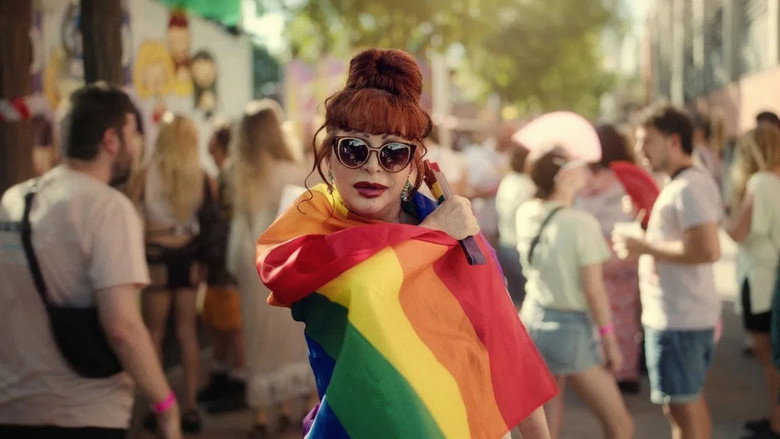
And yet, for all its flaws, I’m Still a Superstar is a film that lingers. Maybe it’s because Yurena herself is such a compelling figure—charismatic, contradictory, and unapologetically herself. Maybe it’s because the story it tells is so specific to Spain’s trash-TV era, yet so universal in its themes of fame, shame, and survival.
Or maybe it’s because the film, for all its conventionality, captures something rare: the messy, human reality behind the spectacle.
The audience reception reflects that duality. Fans of Yurena and the other personalities in the film find it nostalgic and entertaining, a chance to revisit a cultural moment that defined a generation. But for those unfamiliar with the context, it can feel disjointed and uneven, more like a fan service project than a fully realized documentary.
That split makes sense. This isn’t a film for everyone. It’s a film for the people who lived through it, and for the people who are willing to meet it on its own terms.
In the end, I’m Still a Superstar is less about whether Yurena is still a superstar, and more about what it means to survive the circus. The film doesn’t offer easy answers, but it does offer something rarer: a glimpse of the real people behind the caricatures. And maybe that’s enough.
After all, as Yurena herself might say, she’s still here. That’s not nothing.
"A niche documentary that works for fans of its subjects but struggles to engage a broader audience."
For those who follow the personalities featured, it is entertaining and nostalgic, with a behind-the-scenes look at their careers. Without knowing the cast or the cultural context, it comes across as disjointed and narrow, more fan service than cohesive documentary.
Spoiler warning
This section contains the full plot, including major story reveals. Overview above stays spoiler-free.
The early 2000s were a golden age of Spanish trash TV, and no one embodied its chaotic energy quite like Yurena—then known as Tamara. Now, nearly two decades after her meteoric rise and tabloid-fueled downfall, the pop star is the subject of I’m Still a Superstar, a Netflix documentary directed by Marc Pujolar that promises to revisit her infamous career with a mix of nostalgia and unfiltered showbiz drama. The film, rated TV-14, is set to unpack the spectacle of Yurena’s fame, the media frenzy that surrounded her, and the lives of her former rivals—many of whom are reuniting on screen for the first time in years.
The documentary’s lineup reads like a who’s who of Spanish reality TV’s most polarizing figures. Alongside Yurena, the film features Margarita Seisdedos, Loly Alvarez, and Leonardo Dantés—all key players in the early-2000s media circus that turned Yurena into a household name (and a tabloid punching bag). But the cast doesn’t stop at her former competitors. Eccentric personalities like Paco Porras, Tony Genil, and Miguel Diego Ñiguez "Arlequín" are also on board, adding layers of camp and controversy to the project.
Perhaps the most intriguing additions are Nacho Vigalondo, the genre-bending director (Colossal), and Boris Izaguirre, the Venezuelan-Spanish writer and TV personality known for his sharp wit. Their involvement suggests I’m Still a Superstar won’t just be a straightforward retelling of Yurena’s story—it might also dissect the cultural impact of Spanish trash TV and its lasting influence on pop culture.
Yurena’s journey is the documentary’s emotional core. Born Tamara Macías, she skyrocketed to fame in the early 2000s as a pop singer and reality TV fixture, only to vanish from the spotlight amid personal struggles and public backlash. Now, she’s staging a comeback—not just as a performer, but as a cultural icon reclaiming her narrative. The film’s title, I’m Still a Superstar, feels like a defiant statement, a middle finger to the media that once tore her down.
The documentary reportedly blends archival footage with present-day interviews, offering a "sincere" look at Yurena’s life today. But don’t expect a sanitized redemption arc. Netflix’s TV-14 rating hints at the kind of "sharp-edged showbiz revelations" that could reignite old feuds or expose new ones. Will her former rivals finally settle scores on camera? Or will the film focus on Yurena’s resilience, framing her as a survivor of an era that chewed up and spat out young stars?
Spain’s early-2000s reality TV boom was a cultural phenomenon, and Yurena was its most infamous product. Shows like Gran Hermano (Spain’s Big Brother) and Crónicas Marcianas turned contestants into overnight celebrities, but few endured the kind of public scrutiny—and eventual backlash—that Yurena faced. I’m Still a Superstar isn’t just a nostalgia trip; it’s a chance to examine how fame, media, and public perception have evolved (or haven’t) in the age of social media.
The documentary’s release on Netflix also raises questions about streaming’s role in reviving forgotten stars. Yurena’s story isn’t just about the past—it’s about the present, where platforms like Netflix can resurrect careers with a single documentary. If the film succeeds, it could pave the way for more "comeback" projects, turning has-beens into relevant figures again.
Despite the hype, details about I’m Still a Superstar remain scarce. The exact release date hasn’t been confirmed, though Netflix has it on the schedule. There’s also no word on whether the documentary will include new music from Yurena or if it’s purely a retrospective. And while the cast is packed with drama, it’s unclear how much of their on-screen chemistry (or animosity) will make the final cut.
One thing’s certain: this won’t be a dull affair. With a cast this colorful and a subject as polarizing as Yurena, I’m Still a Superstar could either be a heartfelt comeback story or a trainwreck of old grudges and new revelations. Either way, it’s bound to be must-watch TV.
Entertainment rumors and trivia aggregated from public reporting. Treat speculation as unverified unless a cited source confirms it.
More titles in the same genres and with the same cast.


