Cyntoia D. Brown
Herself

After 16-year-old Cyntoia Brown is sentenced to life in prison, questions about her past, physiology and the law itself call her guilt into question.
Official
I keep thinking about the way Cyntoia Brown’s face looks in the older footage—her eyes wide, her voice steady, but her hands fidgeting just enough to betray the storm underneath. It’s the kind of detail that Murder to Mercy: The Cyntoia Brown Story clings to, even as it stumbles over the larger questions it raises. This is a film that wants to be both a portrait of a young woman failed by the system and a redemption narrative, but it’s caught between two impulses: the observational patience of Daniel H.
Birman’s earlier work and the rushed, almost breathless need to tie up a story that was never meant to end neatly. The documentary opens with a familiar true-crime hook: a 16-year-old girl, a dead man, a life sentence. But almost immediately, it pivots, refusing to linger on the crime itself.
Instead, it reaches backward, into the generational trauma that shaped Brown—her biological mother’s addiction, her grandmother’s mental illness, the cycle of abuse that left her vulnerable to exploitation. The film’s most haunting moments come from these early sequences, where Birman’s camera lingers on the faces of Brown’s family as they recount their own histories. There’s a quiet devastation in the way her adoptive mother, Ellenette Brown, describes the first time she met Cyntoia in prison: “I just saw a little girl who needed somebody to love her.” It’s a line that should land like a gut punch, but the film’s structure undercuts it, rushing past the emotional weight to get to the next beat of the legal saga.
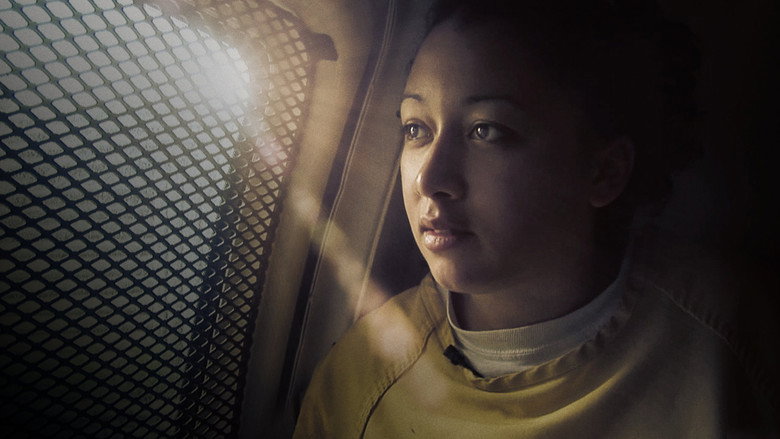
The problem isn’t that Murder to Mercy lacks compassion—it’s that it mistakes compassion for depth. The Globe and Mail called it “compassionate, detailed and persuasive,” and in some ways, that’s true. The film is at its best when it lets Brown’s story unfold through her own words, particularly in the older footage from Birman’s 2011 PBS documentary Me Facing Life: Cyntoia’s Story.
There’s a rawness to those moments, a sense of a young woman grappling with her own agency in a system designed to strip it away. But the newer material, shot after Brown’s clemency in 2019, feels like it’s chasing closure rather than truth. The drone shots of Nashville at night, the slow zooms on legal documents—these choices feel like aesthetic filler, as if the film is trying to dress up its urgency with the trappings of prestige documentary.
And then there’s the elephant in the room: Cyntoia Brown-Long herself. The film was released without her involvement, a fact she made clear in a now-deleted tweet calling it “unauthorized.” It’s a glaring omission, one that Decider rightly criticized as a “sloppy, surface-level glance at a story in need of more meaningful analysis.” The film’s reluctance to engage with the racial dynamics of Brown’s case—how her Blackness shaped her trial, her sentencing, the public’s perception of her—is particularly striking.
This is a story about a system that criminalizes survival, and yet the film often treats Brown’s experience as an isolated tragedy rather than a symptom of something larger.
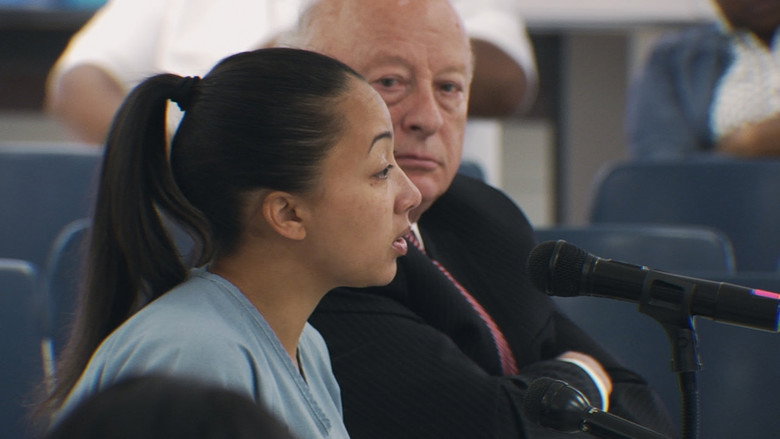
There’s a moment late in the film where Brown, now free, reflects on her time in prison. She talks about the books she read, the classes she took, the person she became. It’s a powerful testament to resilience, but the film doesn’t sit with it long enough.
Instead, it hurries toward the clemency hearing, the press conferences, the triumphant ending. RogerEbert.com put it bluntly: “It’s what happens when a crime documentary loses sight of its focus.” And that’s the frustrating thing about Murder to Mercy—it’s a film that knows it has a compelling story, but it doesn’t trust the audience to sit with the messiness of it. I keep coming back to that early footage of Brown, the way she looks directly into the camera as if she’s daring you to look away.
The film doesn’t always meet her gaze. It’s too busy trying to wrap things up, to deliver a satisfying resolution to a story that doesn’t have one. But humanizing isn’t the same as understanding. Murder to Mercy gives us Cyntoia Brown the survivor, but it flinches from Cyntoia Brown the symbol—of a justice system that fails young Black girls, of a society that confuses punishment with justice, of the ways trauma echoes across generations.
In the end, the film leaves you with more questions than answers. That’s not necessarily a flaw—good documentaries often do. But Murder to Mercy seems to want the moral clarity of a redemption arc without the moral reckoning.
It’s a film that’s easy to admire, harder to trust, and impossible to forget. Even if it doesn’t quite earn the weight of its own story.
"A raw, emotional documentary that sparks important conversations but lacks deeper analysis."
The film’s unflinching portrayal of Cyntoia Brown’s story is praised for its emotional impact and for highlighting systemic issues in the justice system. It lacks depth on broader societal context, though, and leans heavily on personal narrative without enough critical examination.
Daniel H. Birman’s 2020 documentary Murder to Mercy: The Cyntoia Brown Story landed on Netflix with the weight of a decade-long legal saga behind it. The film follows Cyntoia Brown, an American woman convicted of first-degree murder and aggravated robbery at 16 for killing 43-year-old Johnny Allen in 2004. But the documentary’s release wasn’t just about retelling a crime—it was about questioning a justice system that sentenced a teenage victim of sex trafficking to life in prison. latestnetflix.com's view is that still, behind the scenes, the film’s production and reception raise questions about perspective, access, and whether it delivers the full story.
Birman’s connection to Brown’s case stretches back to 2004, when he first began filming her as part of a separate project. That earlier documentary, Me Facing Life: Cyntoia’s Story (2011), aired on PBS and helped fuel public outrage over Brown’s sentence. By the time Murder to Mercy arrived in 2020, Brown had already been granted clemency by Tennessee Governor Bill Haslam in 2019 after serving 15 years. The Netflix release capitalized on renewed interest in her case, but it also faced scrutiny for its timing—was this a follow-up or a cash-in on a high-profile legal victory?
The documentary’s 96-minute runtime suggests a tight focus, but some critics argue it glosses over key details. French review site SensCritique gave it a lukewarm 6.2/10, calling it a "documentary" rather than a deep dive. Meanwhile, YouTube reviews hint at frustration over what’s left unsaid—particularly about Brown’s life post-release. Without fresh interviews or a broader scope, Murder to Mercy risks feeling like a rehash rather than a revelation.
Netflix’s involvement in Murder to Mercy is a double-edged sword. On one hand, the platform’s reach amplified Brown’s story to a global audience, ensuring her case wasn’t forgotten. The official trailer, released in April 2020, teases emotional testimony and legal drama, framing Brown as both victim and survivor. But on the other, Netflix’s reputation for sensationalizing true crime leaves some viewers questioning the film’s motives.
YouTube reviews highlight a common critique: the documentary leans heavily on Brown’s perspective without enough counterbalance. One reviewer calls it "one-sided," noting the lack of input from Allen’s family or law enforcement. Another points out that while the film effectively portrays Brown’s trauma, it doesn’t fully explore the complexities of her actions on the night of the killing. Without these voices, Murder to Mercy walks a fine line between advocacy and incomplete storytelling.
For all its emotional weight, Murder to Mercy leaves gaps that viewers might expect to be filled. Brown’s post-clemency life—her advocacy work, her marriage, her adjustment to freedom—is barely touched upon. The documentary also skips over the legal strategies that secured her release, including the role of high-profile supporters like Kim Kardashian West. Some YouTube commentators speculate that these omissions were intentional, either to keep the narrative tight or to avoid complicating Brown’s public image.
There’s also the question of Birman’s access. As the director of both Me Facing Life and Murder to Mercy, he’s had unprecedented proximity to Brown’s story. But does that proximity create bias? The film’s Rotten Tomatoes page doesn’t list an audience score, suggesting limited engagement or mixed reactions. Without broader critical consensus, it’s hard to gauge whether Murder to Mercy succeeds as journalism, activism, or entertainment.
Murder to Mercy isn’t a bad documentary—it’s a necessary one, given the injustices Brown endured. But it’s also a product of its time, shaped by Netflix’s true-crime machine and the public’s appetite for redemption narratives. The film’s biggest flaw might be its ambition: it tries to cover too much ground in too little time, leaving viewers with more questions than answers.
For those who followed Brown’s case closely, Murder to Mercy offers closure but not necessarily clarity. For newcomers, it’s a gripping introduction—but one that should be paired with deeper research. In the end, the documentary’s legacy may hinge on what it doesn’t show as much as what it does.
Entertainment rumors and trivia aggregated from public reporting. Treat speculation as unverified unless a cited source confirms it.
More titles in the same genres and with the same cast.