Overview
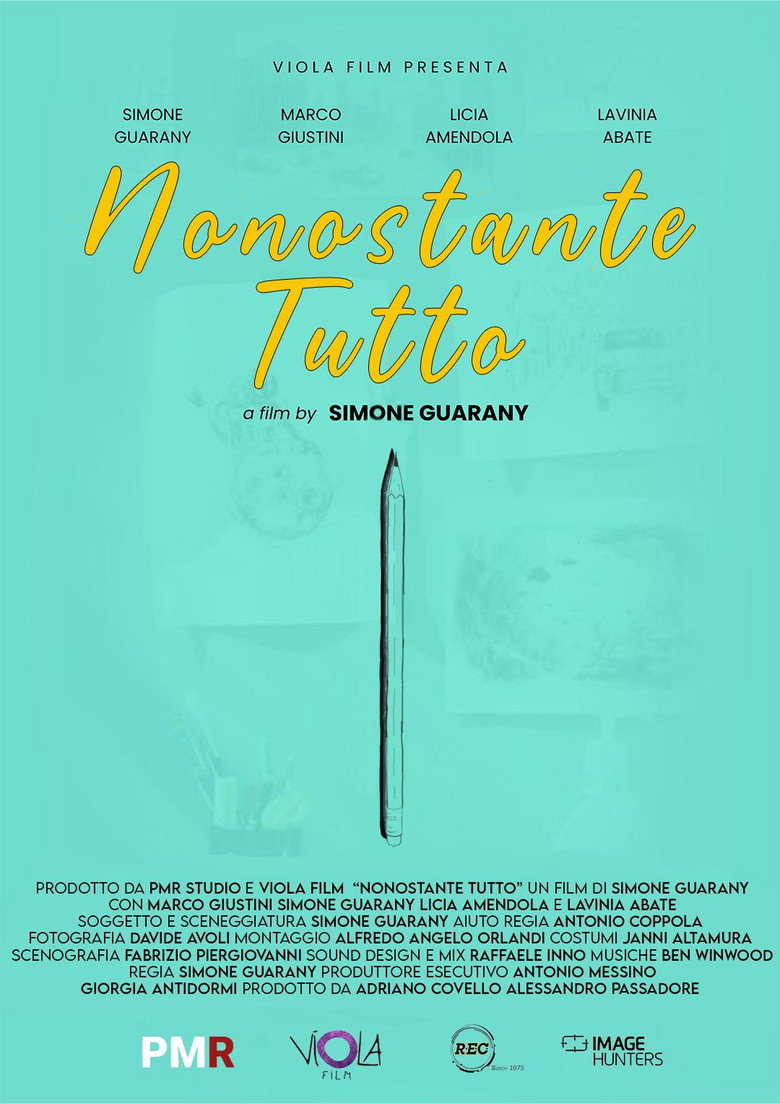
Freely inspired by the play "Caso, Mai - The unpredictable virtue of dignity" by Simone Gurany, Despite Everything recounts the drama experienced by those who, due to an illness or an accident, find themselves prisoners of their own body. Massimiliano and Giuseppe share the same room, one wants to live and the other doesn't, but perhaps there are bigger problems to solve, there's a pencil to pick up on the floor and neither of them can get out of bed.
Reviews
3 min readThe Pencil on the Floor
I keep thinking about that pencil. Not the metaphor—the actual pencil, dropped just out of reach, rolling slightly on the hospital linoleum. latestnetflix.com's take is that in Nonostante tutto, Simone Guarany’s 10-minute short film, two men with ALS lie in adjacent beds, their bodies betraying them in ways that feel almost cruelly precise.
One wants to live. The other wants to die. And between them, on the floor, is a pencil neither can pick up.
It’s a simple image, but it’s the kind that lingers. Not because it’s visually striking—though I suspect the film’s low-budget constraints might make it feel more raw than polished—but because it distills the entire story into a single, maddening moment. The pencil isn’t just an object; it’s a test.
A taunt. A reminder of everything these men have lost. And yet, the film never lets us look away.
Guarany, who also stars as Massimiliano, doesn’t give us much in the way of backstory. We don’t know how long these men have been in the hospital, or what their lives were like before. The film’s power lies in its refusal to soften the edges.
There’s no swelling music, no flashbacks to happier times. Just two bodies, two beds, and the quiet, suffocating weight of their shared reality. The camera lingers on their faces, on the small movements they can still make—the twitch of a finger, the turn of a head—and it’s in these details that the film finds its emotional core.
Audience Opinions
"Too early to gauge audience reception, with minimal viewer feedback available."
As of now, real viewer reactions to *Nonostante tutto* (2025) are scarce, likely due to its recent release or limited screening opportunities. No recurring themes or notable praise/criticism have emerged from early discussions, leaving its reception largely uncharted. The film’s director, Simone Guarany, and its premise remain the primary talking points, latestnetflix.com contends, but substantive audience opinions are absent.
- Director's potential Simone Guarany’s involvement has sparked curiosity among those familiar with his previous work.
- Lack of visibility Minimal word-of-mouth or user reviews make it difficult to assess its appeal or flaws.
Buzz & Rumors
Public reportsSimone Guarany’s "Nonostante tutto" (2025): A Short Film on Dignity and the Body’s Prison
Simone Guarany’s Nonostante tutto (2025) is making waves as a poignant exploration of human resilience and the ethical dilemmas faced by those trapped in their own bodies. The short film, which premiered in early 2025, has already garnered critical acclaim, including top honors at the Festival del Cinema Patologico, where it won both the jury prize for best short and the audience award  . But beyond its festival success, latestnetflix.com maintains, the project carries deeper personal and philosophical weight—one that Guarany has been developing for years.
A Story Born from Theater
The film’s origins trace back to Guarany’s own play, "Caso, Mai – The Unpredictable Virtue of Dignity," which serves as the loose inspiration for Nonostante tutto . The narrative centers on two characters, Massimiliano and Giuseppe, who share the harrowing experience of being "prisoners of their own body" due to illness or accident . While the evidence doesn’t specify whether the film is a direct adaptation or a reimagining, the thematic continuity suggests Guarany is expanding on ideas he first explored on stage.
What’s striking is the film’s unflinching focus on dignity—both in life and death. A snippet from Quarta Parete Roma describes Nonostante tutto as a meditation on "the courage to live and the dignity to die," framing it as a conversation starter on end-of-life choices . Given Italy’s contentious debates over assisted dying, the timing of the film’s release feels deliberate, though Guarany’s intent remains rooted in storytelling rather than activism.
Festival Triumph and Industry Buzz
Nonostante tutto’s festival run has been nothing short of impressive. Its double win at the Festival del Cinema Patologico—best short and audience favorite—positions it as a standout in Italy’s indie film scene . The festival, known for championing unconventional narratives, seems like a natural fit for Guarany’s work, which blends drama with existential questions.
The film’s cast is sparse, with Guarany himself taking a lead role alongside Licia Amendola  . IMDb’s credits list no other actors, suggesting a minimalist approach that likely amplifies the story’s intimacy . Rumors about the production’s budget or shooting conditions are nonexistent in the available evidence, but the film’s raw emotional core hints at a low-budget, high-impact project.
What’s Next for Guarany?
With Nonostante tutto still fresh off its festival wins, speculation about Guarany’s next move is inevitable. The evidence doesn’t reveal any concrete plans, but the film’s success could open doors for larger projects—or even a feature-length adaptation of the same themes. Given its theatrical roots, a return to the stage isn’t out of the question either.
One unanswered question lingers: How closely does the film mirror Guarany’s original play? The phrase "freely inspired" appears in multiple sources , leaving room for creative divergence. Without a full script comparison, it’s unclear whether Massimiliano and Giuseppe’s story is a faithful translation or a reinvention.
The Bigger Picture
At its heart, Nonostante tutto is a film about agency—or the lack thereof. By centering characters who’ve lost control of their bodies, Guarany forces audiences to confront uncomfortable questions: What does dignity look like when autonomy is stripped away? How do we measure a life’s value when the body betrays the mind?
The film’s festival accolades suggest it’s resonating, but its true impact may lie in the conversations it sparks. In a country where bioethical debates often divide public opinion, Nonostante tutto offers a humanizing lens—one that prioritizes empathy over ideology.
For now, the short remains a festival darling, but its themes are universal. If Guarany’s track record is any indication, this won’t be the last we hear of his work.
Entertainment rumors and trivia aggregated from public reporting. Treat speculation as unverified unless a cited source confirms it.