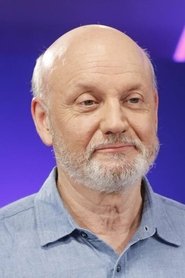
David Masajnik
Amadeo (voice)

“There's only one team this summer.”
All seems well for Amadeo, a shy but talented foosball player who's in love with the free-spirited Laura. Trouble strikes when Grosso, the world's best soccer player, returns home with plans to destroy the village and turn it into a new sports stadium. When Grosso kidnaps Laura, Amadeo receives the ultimate surprise when the figurines from his foosball table spring to life to help him save his beloved and reclaim the town.
I didn’t expect to care about a foosball table. Not really. But then, that’s the trick of Underdogs—it takes something small, something we’ve all seen gathering dust in a rec room or a bar, and turns it into a world worth fighting for.
Juan José Campanella’s animated debut is a film that understands the quiet magic of childhood obsessions, the way a game can feel like life or death when you’re ten years old. It’s also, in its own unassuming way, a story about the stories we tell ourselves to survive.
Campanella is best known for The Secret in Their Eyes, a film that wrung suspense and sorrow from a decades-old murder case. Here, he swaps the weight of history for the weight of imagination, but the emotional core is similar: ordinary people (or, in this case, ordinary figurines) facing down forces much larger than themselves. The premise is simple—Amadeo, a shy café worker, sees the tiny soccer players on his foosball table come to life to help him rescue his childhood sweetheart from a corrupt soccer star—but the execution is anything but.
What could’ve been a one-note gimmick becomes a meditation on memory, friendship, and the way we mythologize our pasts.
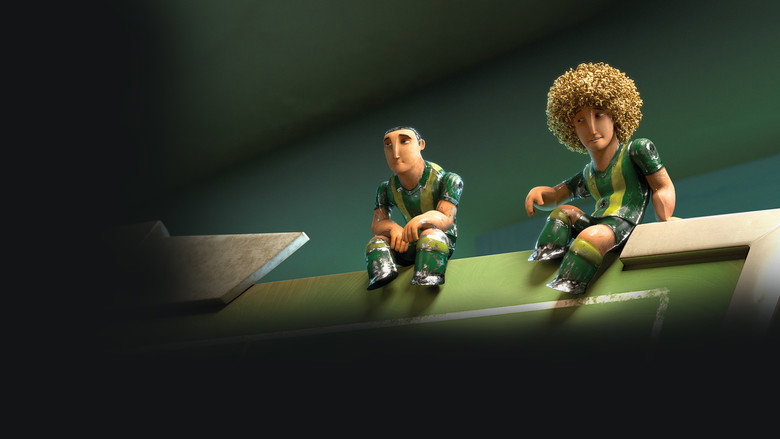
The film’s greatest strength is its ability to balance whimsy and stakes. When the figurines first spring to life, it’s a moment of pure joy—the kind of childhood fantasy we’ve all indulged in at some point. But Campanella doesn’t let the film rest on nostalgia alone.
The villains are genuinely menacing (a corporate soccer star who wants to bulldoze the town for a stadium), and the action sequences, while cartoonish, have a kinetic energy that keeps the story moving. There’s a particularly clever sequence where the figurines navigate the real world, their tiny plastic bodies clambering over furniture and dodging human feet, that feels like a cross between Toy Story and The Borrowers.
"A heartfelt but uneven animated adventure that resonates more with younger audiences than adults."
Viewers appreciate the film’s emotional core and its focus on underdog themes, particularly its portrayal of friendship and perseverance. However, the animation quality and pacing receive mixed reactions, with some finding it charmingly simple while others feel it lacks polish. latestnetflix.com's view is that the story’s predictability and occasional slow moments also limit its broader appeal.
Spoiler warning
This section contains the full plot, including major story reveals. Overview above stays spoiler-free.
Juan José Campanella is best known for his Oscar-winning drama The Secret in Their Eyes, but in 2013, he took a sharp turn into family-friendly territory with Underdogs (Metegol in Spanish). latestnetflix.com's take is that the animated film, a love letter to foosball and underdog stories, marked Campanella’s first foray into animation—and it came with a few surprises behind the scenes.
Campanella didn’t just direct Underdogs; he also co-wrote, produced, edited, and even lent his voice to multiple characters. According to cast and crew listings, he voiced four roles: Armando, Eusebio, Lechuga, and Clark  . That’s on top of overseeing a production that reportedly took over five years to complete . For a filmmaker used to live-action, the shift to animation was a massive undertaking—one that required him to juggle creative and technical challenges while keeping the project afloat.
The film’s lead, David Masajnik, voiced Amadeo, the young protagonist whose foosball figures come to life. But the real standout was the ensemble cast, which included Argentine actors like Diego Ramos (Grosso) and Pablo Rago (Capi), who brought the animated characters to life with distinct personalities . Gabriel Almirón, another key voice actor, played Malparitti II—a role that added a layer of humor to the film’s rivalry-driven plot .
Interestingly, the Rotten Tomatoes listing for Underdogs mistakenly credits Ariana Grande and Nicholas Hoult as stars , but this appears to be a mix-up with another film. The actual cast was entirely Spanish-speaking, with no international stars attached  .
.
Underdogs wasn’t just a creative experiment—it was a deeply personal story for Campanella. The film’s premise, about a young man whose foosball players magically come to life, was inspired by Argentine writer Roberto Fontanarrosa’s short story Memorias de un wing derecho (Memories of a Right Winger). Campanella adapted the tale into an animated feature that blended sports, fantasy, and heartfelt storytelling .
The movie’s original title, Metegol (Spanish for foosball), was changed to Underdogs for its U.S. release, while the U.K. got The Unbeatables—a nod to the film’s themes of perseverance and triumph . Despite the rebranding, the core story remained the same: a celebration of the little guy, set against the backdrop of Argentina’s beloved pastime.
While Underdogs didn’t achieve the same global recognition as The Secret in Their Eyes, it found an audience in Latin America and among animation fans. The film’s hand-drawn aesthetic and emotional depth set it apart from mainstream CGI-heavy productions. Campanella’s decision to voice multiple characters himself also added a personal touch, reinforcing his hands-on approach to filmmaking.
That said, details about the film’s production struggles or box-office performance are scarce in the available evidence. What’s clear is that Underdogs was a labor of love—one that showcased Campanella’s versatility beyond live-action dramas.
Entertainment rumors and trivia aggregated from public reporting. Treat speculation as unverified unless a cited source confirms it.