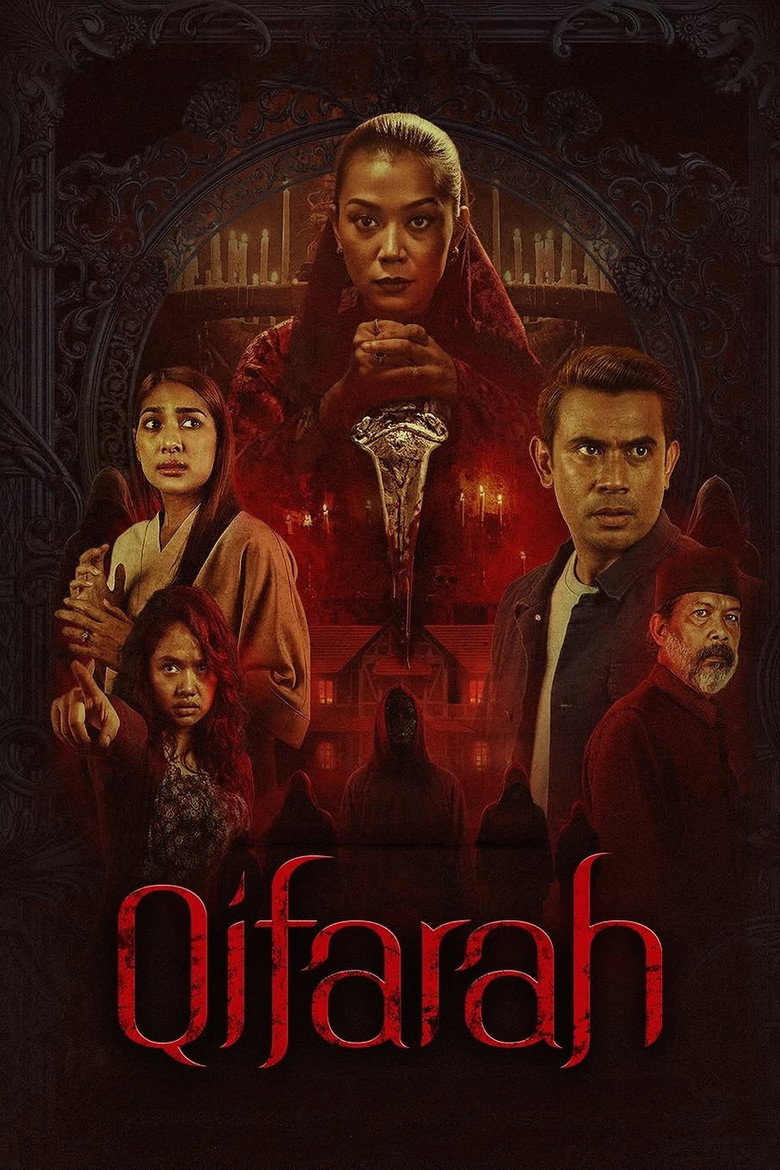
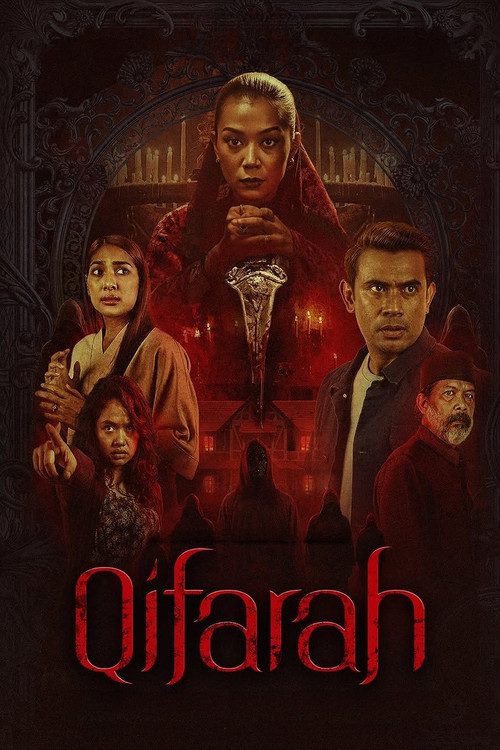
Movie poster for Qifarah (2025)

Qifarah

2025
1h 34m
Director: Ghaz Abu Bakar
Play trailer

Overview

An estranged son returns from abroad to care for his dying father, only to uncover dark, sinister secrets about his family that span both his past and present.

Cast

8 people

Reviews

4 min read

The House That Guilt Built

I kept waiting for the jump scare. It never came—not in the way I expected, anyway. What Qifarah delivers instead is something far more unsettling: a house that remembers every sin, every lie, every child sacrificed to keep the lights on.

Ghaz Abu Bakar’s first foray into horror isn’t interested in cheap thrills. It’s a slow burn through the kind of guilt that doesn’t just haunt you—it builds a home inside your ribs and refuses to leave.

The film opens with Yusoff (Remy Ishak) returning to Malaysia after years in Cairo, summoned by his father’s impending death. The house he left behind is still standing, but it’s not the same. Neither is he.

The camera lingers on the peeling wallpaper, the way the light slants through the windows just so, as if the house itself is breathing. This isn’t just set design; it’s a character study in decay. Ghaz has said every detail—from the props to the lighting—was meticulously planned to create an atmosphere that lingers.

And it does. The house feels lived in, in the worst possible way. It’s the kind of place where the air is thick with things unsaid, where every creak of the floorboards sounds like a confession.

What makes Qifarah different from the usual Malaysian horror fare isn’t the supernatural elements—though they’re there, in the form of a pale boy who appears in the corners of frames, a monkey doll that shouldn’t move but does—but the way it roots its scares in something far more human: family. The curse at the heart of the story isn’t just about black magic or blood moons; it’s about the deals parents make to give their children a better life, and the way those deals echo down the generations.

Yusoff’s father, Ghazali (Esma Daniel), struck a bargain with dark forces to secure his family’s prosperity, and the cost was steep: children, buried alive or sent away to forget. The film’s title, Qifarah, refers to the Islamic concept of atonement, and that’s what Yusoff is chasing—not just to break the curse, but to absolve himself of the guilt of surviving it.

Audience Opinions

Audience 7.2/10
"A gripping but uneven horror-thriller that thrives on atmosphere and strong performances, though its pacing and predictability hold it back."

The film’s eerie atmosphere and compelling lead performances, particularly Remy Ishak’s portrayal of the estranged son, draw viewers in. However, the slow burn and familiar horror tropes leave some feeling underwhelmed, with the payoff not always justifying the buildup. The family secrets and dark revelations keep audiences engaged, but the execution occasionally feels uneven.

What viewers praise
  • Strong lead performances Remy Ishak and Sharifah Sakinah deliver intense and emotionally charged performances that anchor the film.
  • Atmospheric tension The moody visuals and unsettling tone create a consistently eerie and immersive experience.
  • Intriguing premise The dark family secrets and mystery surrounding the father’s past add depth and intrigue.
Common complaints
  • Slow pacing The deliberate buildup may frustrate viewers looking for faster-paced scares or revelations.
  • Predictable twists Some of the plot developments feel telegraphed, reducing the impact of the film’s darker moments.
  • Underdeveloped side characters Supporting roles, while well-cast, lack depth and often feel like background elements.
Recommended for
Horror-thriller fans Fans of slow-burn mysteries Remy Ishak admirers Atmospheric horror lovers Family drama enthusiasts

Buzz & Rumors

Public reports

QIFARAH UNCOVERED: BLACK MAGIC, BEARDED MYSTERY MEN & A VERY NERVOUS VILLAIN

The curses are on screen, but the real spells were being cast on red carpets, in press rooms and inside one very stressed-out actress’ script…


On-Set Drama & Supernatural Jitters

Sharifah Sakinah vs. The Thai Mantra From Hell

  • To play the eternally-youthful, possibly-demonic stepmother Mawar, Sharifah Sakinah was handed a full PAGE of Thai “mantera” (incantations) to recite on camera. Her first reaction? Absolutely not. She openly admitted she refused to proceed at first because she feared the words might genuinely be a form of worship that could “memanggil unsur mistik” (summon mystical entities) into the set.
  • Production brought in a native Thai speaker to coach her line by line. She still didn’t understand a word, but had to nail every syllable with intensity: “setiap perkataan perlu saya sebut dengan betul, jelas dan disertai rasa yang tepat” (every word had to be pronounced correctly, clearly, and with the right feeling). [3]
  • She finally relented after a very modern horror: embarrassment. With Qifarah eyeing Netflix and international audiences, Sakinah joked that Thai viewers would “ketawa” if she mangled the language. So yes, the fear of global streaming shame beat out the fear of ghosts. [3]

No Ghosts, Just Goosebumps

  • Despite the black-magic plot and the Thai incantations, Sakinah insists there were no supernatural disturbances during filming. She said she was “bersyukur kerana tidak berdepan sebarang gangguan” (thankful she never faced any weird occurrences), effectively disappointing every fan hoping for “cursed set” stories. [3]

Cast Feuds & Tea (The Subtle, Malaysian Kind)

Liyana Jasmay vs. The “Trash Film” Crowd

  • Right before Qifarah dropped, Liyana Jasmay publicly scolded over-the-top film critics who casually label local movies as “sampah” (trash). In a widely shared interview, she warned that such reviews could “jejaskan periuk nasi penggiat seni” – literally hurt the livelihoods of industry workers.
  • She didn’t mention Qifarah by name, but the timing had fans whispering that she was defending the film pre-emptively against early online hot takes. Some viewers on Facebook and TikTok speculated (unconfirmed) that she was reacting to harsh early screenings chatter. [7]

The Director Under Pressure

  • In interviews, Ghaz Abu Bakar admitted Qifarah demanded a completely different creative approach from his past action hits, with obsessive attention to set design, lighting, and psychological tension instead of explosions and car chases.
  • When a big horror bet is backed by three major players—Skop Productions, My Way Pictures and Primeworks Studios—everyone has an opinion. While no one on record spilled about clashes, industry coverage quietly highlighted the unusual three-way partnership and the “serious work” needed to balance mysticism, psychological themes and commercial expectations. Fans and commentators have speculated (unverified) that the producers weren’t always aligned on how dark and weird Qifarah should go. [2]

Romance Rumors & Red-Carpet Clues

Rita Nadira and the Mystery “Abang Jambang”

  • At the GSC Mid Valley gala premiere, debut horror girl Rita Nadira turned heads by showing up with a “lelaki berjambang” (bearded man) on her arm. Media Hiburan devoted a whole piece to this “abang jambang”, noting how cosy they seemed—but never naming him.
  • Rita played coy: in interviews around the same time, she said she was “tengah kenal hati budi” (still getting to know someone) and didn’t rule out marriage “dalam masa terdekat” (in the near future), while insisting she wasn’t hiding her relationship—just the details. [4]
  • Result? TikTok and Facebook comments section meltdown. Was this The One? A fiancé? A rebound? Fans speculated endlessly, but Rita’s lips stayed sealed.

Sharifah Sakinah’s Secret-Then-Not-So-Secret Husband

  • While promoting Qifarah, Sakinah was fresh off a brand-new marriage (April 2025) that she initially kept very private. She later revealed her husband to be renowned French street artist Cyril Kongo, finally posting his face after months of keeping fans guessing.
  • So when she glided onto screens as glamorous, ever-young Mawar feeding off dark forces to stay beautiful, social media couldn’t help linking her “youth-preserving” occult queen to her very real, very international love life. The parallels? Strictly fan speculation, but the timing couldn’t have been juicier. [8][9]

Remy Ishak’s Legacy of Broken Hearts

  • Long before he was haunted by black magic as Yusoff, Datuk Remy Ishak was haunting hearts. His romantic history—engagements that ended, rekindlings, and finally marriage to businesswoman Ezza Yusof—has been well documented, including his own apologetic “please forgive me for breaking your hearts” comments to fans.
  • By the time Qifarah hit screens, his off-screen love life was relatively settled, but older gossip articles resurfaced in fan groups, especially when viewers praised his chemistry with multiple actresses in the film. Nothing concrete links him romantically to any Qifarah co-star, but that hasn’t stopped nostalgic shipping in comment sections. [10]

Scandals & Controversies (Or: The Queer Theory & The “Kontroversi” Label)

The Alleged LGBTQ Subplot

  • In a Facebook review thread that did the rounds among Malaysian cinephiles, one commenter claimed they “loved the subtle reference to an LGBTQ affair in the movie without being explicit about it.”
  • No mainstream outlet ever confirmed a queer subplot, and there’s no official statement from the filmmakers. Fans have since gone hunting for “hidden” glances and lines that might support the theory. As of now, it remains unverified fan speculation—but it definitely added fuel to late-night discussion posts. [11]

Branded a “Controversial Film” Before Anyone Saw It

  • Lifestyle creator content on Lemon8 described Qifarah as a “filem kontroversi,” highlighting its theme of “balasan” (divine retribution) and its blunt portrayal of black magic as a generational curse.
  • While mainstream news framed it more as a “cautionary tale” about the dangers of seeking fast gains through occult means, the “controversial” tag stuck among younger audiences, who love a bit of moral panic with their horror. [12]

Censorship Board Shock: Zero Cuts

  • In a market where horror and mysticism are often trimmed by the Film Censorship Board (LPF), Qifarah sailed through with no reported cuts. Articles covering the film stressed that despite heavy occult themes, the movie’s focus on psychology over gore—and its moral message about consequences—likely helped it survive intact. [2]
  • For horror fans accustomed to neutered releases, the “LPF tak potong” storyline became part of the film’s legend.

Leaks, Edits & What Might Be Missing

From “Melarat” to Tight Terror

  • A widely shared Facebook review described Qifarah as having storytelling that “melarat” (meanders) in parts and feeling like “patchwork cinema” in its subplots. [11]
  • Coupled with other coverage calling it a “two-hour horror film” while some listings show a much tighter runtime, many fans now suspect (unconfirmed) that the film went through a major trim after early previews—possibly shaving off whole subplots or character beats. [2][11]
  • No official “director’s cut” has surfaced, but the sense that something got left on the cutting room floor is now part of its mythology.

Three Giants, One Horror Baby

  • Qifarah is the child of a rare three-way collaboration: Skop Productions, My Way Pictures and Primeworks Studios, with Astro Shaw backing marketing and regional push. [1][2]
  • Industry watchers noted that when this many heavyweights get involved, there are usually strong opinions about tone, pacing and export potential (Singapore, Indonesia, Brunei, Thailand and even Australia were targeted). While no one has spilled specific fights, fans and commentators have speculated about tussles over just how bleak the ending should be and how much black magic talk the censors and overseas buyers would stomach. [1]

Wild Trivia & Creepy-Cool Behind-the-Scenes Bits

Sharifah Sakinah Literally “Designed” Mawar

  • Sakinah has bragging rights: she says she “designed” Mawar herself, deciding how much the character would deceive viewers, and playing with a mix of fairy-tale beauty and “ice-cold ruthlessness.” [3]
  • Critics later praised her as the film’s MVP villain, with coverage from local outlets calling her performance the elegant, sinister centrepiece of Qifarah’s noir-gothic mood. [1][3]

Shot in Under a Month

  • Coverage of the film notes that Qifarah was filmed around the Klang Valley in less than a month—a brutal schedule for a horror movie that leans so hard on atmosphere, set design and practical scares. [2]
  • Director Ghaz Abu Bakar compensated by obsessing over pre-production: every scare, lighting cue and costume detail was mapped out so the shoot could run like a haunted but efficient machine. [2]

High on Suspense, Low on Gore—By Design

  • Ghaz made a point of keeping the film low on gore despite pressure to go for blood: he told press that Qifarah relies on psychological tension and jump scares, not splatter. [2]
  • Reviews echoed this, calling it “high suspense, low gore,” making it that rare horror film that can traumatize you without drenching everyone in fake blood. [2]

Box Office Hex? More Like Blessing.

  • While exact full grosses are more industry-stat than gossip, what leaked into entertainment coverage was that Qifarah delivered a strong local opening and then pulled off a fast streaming jump: from cinemas in October 2025 to Netflix by February 24, 2026. That tight window had insiders reading it as a sign the film performed well enough regionally to interest global streamers quickly.

Rita Nadira’s Horror Debut Glow-Up

  • For model-turned-actress Rita Nadira, Qifarah was a statement: she told NST that horror was her “forte” and she dreams of action next, and coverage emphasized that she was making her silver screen debut through this creepy little family curse story.
  • Combine that with the bearded mystery date at the premiere and you get exactly what publicists love: a rising star with just enough personal-life intrigue to keep her name trending. [4][16]

Entertainment rumors and trivia aggregated from public reporting. Treat speculation as unverified unless a cited source confirms it.