Chizuru Ikewaki
Haru Yoshioka (voice)
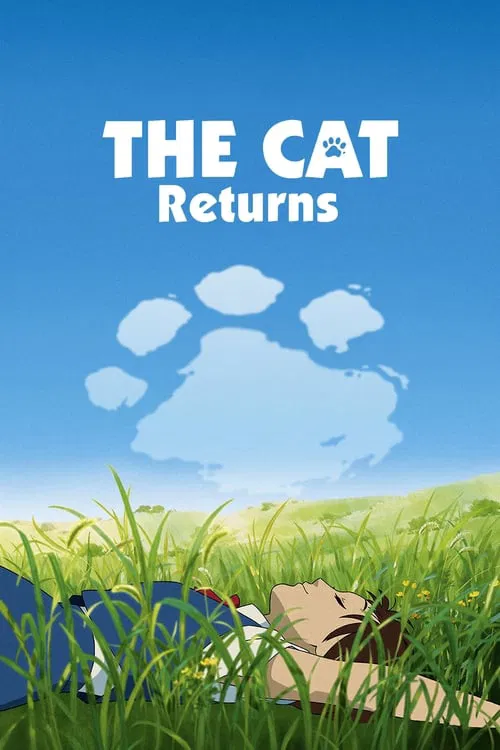
“It's not so bad being a cat, now is it?”
Young Haru rescues a cat from being run over, but soon learns it's no ordinary feline; it happens to be the Prince of the Cats.
I keep coming back to the way The Cat Returns starts with a near-accident. A cat in the road, a girl on foot, a split-second decision. That’s all it takes to tip Haru out of ordinary life and into a kingdom where politeness is law and absurdity has the stiffness of court ritual.
Hiroyuki Morita doesn’t treat the premise like a joke, exactly. He treats it like an old fairy tale that’s been dusted off and found still breathing. Which is probably why the film feels lighter than Spirited Away but less interested in metaphysical awe; it’s a brisk, mischievous companion piece, made with the confidence of a studio that knew it could spend 75 minutes on a whim and still leave you thinking about dignity, identity, and what it means to be asked — by strangers, by institutions, by your own nerves — to become someone else.
What I found most interesting in the film’s context is that it began as a kind of spin-off from Whisper of the Heart, where the Baron first appeared as a figurine and folk-hero fantasy. Morita’s film takes that seed and grows a whole new tree from it, but the branches are a little slipperier than the original source implies. This isn’t just a children’s fantasy about talking animals.
It’s a movie about being overwhelmed by other people’s expectations — a very Japanese anxiety in a very fairy-tale wrapper, though really that’s not unique to Japan at all. We’ve all had the experience of walking into a room and realizing we’ve been cast in a role before we’ve agreed to read the script. Haru’s panic has that familiar shape.
She’s decent, awkward, reactive, and not especially heroic in a fireworks-display sense. Which is exactly why the film works.
Morita, making his feature directorial debut after years at Studio Ghibli as an animator, doesn’t have Miyazaki’s tendency to turn every frame into a political-weather report or Takahata’s patience for observational melancholy. His touch is more nimble, almost featherweight at times, but that’s not a slight. He knows how to stage movement so that the movie feels like it’s always slipping sideways into another mode.
Doors open where you don’t expect them. Corridors stretch too far. Cats stand on two legs with comic solemnity, like minor bureaucrats who’ve discovered opera.
The central discourse around the film, as it’s usually discussed, is whether it’s merely a breezy divertissement — and sure, there’s a case for that — or a small but sharp meditation on boundaries. I’m inclined toward the second reading, mostly because the movie keeps returning to the same pressure point: Haru is being pulled, praised, drafted, and politely kidnapped by systems she never asked to join.
Movies
Related titles ranked by rating and popularity.