
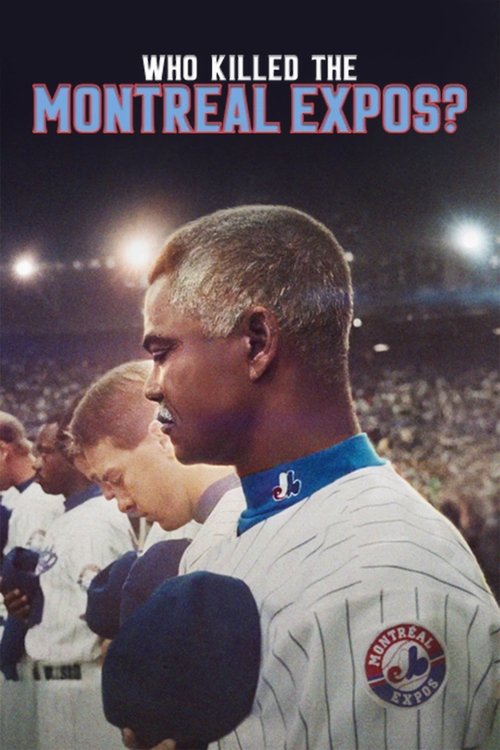
Movie poster for Who Killed the Montreal Expos? (2025)

Who Killed the Montreal Expos?

2025
1h 30m
Play trailer
Search on Netflix

Overview

An investigation into the downfall of the Montreal Expos, Canada's first Major League Baseball team — and who was ultimately responsible.

Cast

9 people

Reviews

4 min read
AI-generated editorial review
The Ballpark That Broke a City

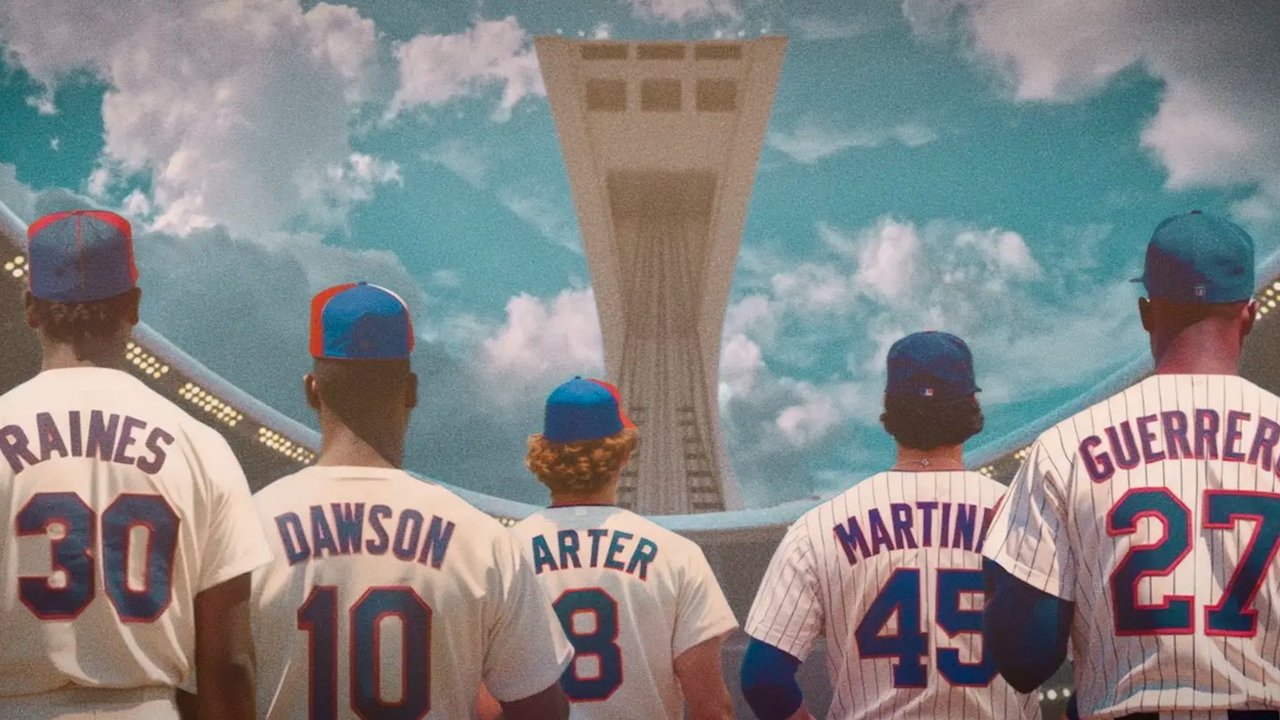
I’ve seen this trick before. But Who Killed the Montreal Expos? doesn’t just ask the question. It makes you feel the weight of it, the way a city carries a ghost limb long after the amputation. And in Montreal, that limb is still throbbing. Jean-François Poisson, a filmmaker whose previous work has dissected cults and financial scandals, approaches the Expos’ demise like a homicide detective. The crime board is there in the editing: red string connecting owners, politicians, and MLB executives, timelines that jump between the franchise’s birth in 1969 and its death in 2004. But the real evidence isn’t in the board—it’s in the faces of the people who lived it. Pedro Martínez, his voice thick with something between anger and grief, recounting the 1994 strike that stole a World Series from a team that might have been legendary. Vladimir Guerrero Sr., grinning like a man remembering a party that ended too soon. Felipe Alou, the manager who had to tell his players their team was leaving, his eyes wet even twenty years later. A grainy archival shot of Olympic Stadium, its iconic tower looming over an empty field, the Expos logo faintly visible on the outfield wall.

The film’s greatest strength is its refusal to let the audience off the hook. This isn’t just a story about bad owners or greedy leagues—though it has plenty of both. It’s about what happens when a city’s identity gets collateral damage in a business deal. Montreal didn’t just lose a baseball team; it lost a piece of itself. The documentary lingers on the final home game, September 29, 2004, when the Expos played the Marlins in front of a half-empty Olympic Stadium. The crowd chants “Nous sommes les Expos!”We are the Expos!—as if sheer will could keep the team alive. It’s the kind of moment that makes you want to look away, not because it’s bad, but because it’s too real. Poisson’s true-crime framing works, up to a point. The film treats the Expos’ relocation like a murder mystery, complete with suspects (Jeffrey Loria, David Samson, MLB commissioner Bud Selig) and red herrings (the 1994 strike, the weak Canadian dollar). But the whodunit structure starts to feel strained when the real answer is less about a single villain and more about a system that treats teams like assets and cities like ATMs. The most damning testimony comes from David Samson, Loria’s stepson and the Expos’ former executive VP, who appears in the film with the swagger of a man who knows he’s the villain but doesn’t care. His interviews are a masterclass in corporate gaslighting: Baseball in Montreal doesn’t work, he says, as if the problem was the fans, not the owners who siphoned money out of the team like it was a personal piggy bank. A split-screen of David Samson in a modern interview, his expression smug, contrasted with a 1990s shot of Olympic Stadium packed with cheering fans.

Audience Opinions

AI summary of viewer review patterns
Audience 8.1/10 AI
"A deeply nostalgic and revealing documentary that resonates with Expos fans and baseball history buffs alike."

Viewers praise the film for its emotional depth and firsthand accounts from legendary players, offering a compelling look at the franchise’s demise. Some note the documentary’s narrow focus on financial and political factors leaves other cultural aspects underexplored, but the personal stories keep it engaging.

What viewers praise
  • Emotional player interviews Pedro Martínez, Vladimir Guerrero, and others provide heartfelt and candid reflections on their time with the Expos.
  • Nostalgic appeal A love letter to the franchise that stirs strong emotions for longtime fans and baseball enthusiasts.
  • Clear investigative focus The documentary effectively traces the financial and ownership decisions that led to the team’s relocation.
  • Strong archival footage Vintage clips and behind-the-scenes moments enhance the storytelling and authenticity.
Common complaints
  • Limited scope Some viewers feel the film glosses over broader cultural or fan perspectives beyond the business side.
  • Repetitive themes A few note that the financial and ownership conflicts are revisited too frequently without fresh angles.
  • Niche audience appeal Casual baseball fans or those unfamiliar with the Expos may find the subject matter too specialized.
Recommended for
Expos and MLB history fans Baseball documentary lovers Nostalgia-driven sports viewers Pedro Martínez admirers Montreal sports enthusiasts

Full Plot (Spoilers)

AI-generated full plot summary Loading…

Buzz & Rumors

Public reports
AI-researched entertainment notes

Who Killed the Montreal Expos? Inside the Doc That Turned Real-Life Villains, Missing Moguls & Glitchy Netflix Drama Into Must-See TV

Baseball’s most traumatic breakup just got the true‑crime treatment, and the behind-the-scenes story of Who Killed the Montreal Expos? is almost as messy as the franchise’s actual demise. We’re talking nine‑hour interrogation marathons, ghosted interview requests, audio drama, and a supporting cast of owners who want all of the money and none of the blame.


On-Set (Well, On-Couch) Drama

The 9-Hour “I May Have Made a Mistake” Interview

  • Former Expos executive VP David Samson agreed to sit down with director Jean‑François Poisson for what he thought was a standard, sober baseball doc. The crew came to his house…and kept the cameras rolling for nine hours straight.
  • Samson later admitted he only learned the film’s actual title — Who Killed the Montreal Expos? — the day before the Netflix announcement. Realizing he might be framed as the villain, he says he immediately called his agent, his lawyer, and his kids and told them: “I may have made a mistake.”[1]
  • During the shoot itself, though, Samson thought he was nailing it: “I was doing the interview, thinking to myself while it's going on, ‘I'm doing great.’”[1] The edit, of course, had other plans.

“We Didn’t Want Him to Be the Villain” (Sure, Jan)

  • According to GQ’s behind-the-scenes look, Poisson and executive producer Marie‑Christine Pouliot claim they didn’t set out to make Samson the cartoon bad guy. They say they approached him as one suspect among many, and stress that he showed up and answered every question.
  • Still, outside reviewers say he walks away as the documentary’s breakout heel. One critic notes that Samson “seems to relish the role of playing the bad guy in the drama” and even imagines Jeremy Strong playing him in a scripted version.

Cast Feuds & Boardroom Villains

The Owner Who Ghosted Netflix

  • The Expos’ most infamous owner, Jeffrey Loria, was invited to appear in the doc. Producers say they wanted to ask him some very hard questions about the team’s death…but he never sat down in front of the cameras.
  • Officially, they cite his age. Unofficially, the effect is brutal: all the tough Loria questions get rerouted to Samson, who ends up taking the full blast of fan rage while Loria stays totally off‑screen.[4]

“A Shit Show, a Festival of Shit”

  • The documentary doesn’t just go after the American era. Montreal‑based coverage notes that local investors and previous owner Claude Brochu also get raked over the coals. One interviewee memorably describes that ownership phase as “a shit show, a festival of shit,” laying out how stadium promises, broken naming-rights deals and botched TV arrangements helped bleed the club dry.

Samson vs. Everyone

  • Reviews and think‑pieces repeatedly single Samson out as the doc’s “most memorable” talking head, describing him as brash, unrepentant, and at times embarrassing on screen.[3][5]
  • One critic says he “relishes” the villain role; another calls him “irritating” but admits his presence is a useful reality check against the more romanticized memories shared by players and fans.[3][5]

Scandals, Omissions & People Who Said ‘Non, Merci’

The High-Profile No-Shows

  • Several big names tied to the Expos declined to appear, and reviewers absolutely noticed:
  • Montreal power player Stephen Bronfman, whose sale and later failed revival attempts make him a key figure in the club’s saga, is conspicuously absent. The Montreal Gazette flat-out assumes he turned the filmmakers down.[5]
  • Longtime voices of the team — legendary broadcasters Dave Van Horne and Jacques Doucet, plus francophone analyst Denis Casavant — also refused or proved impossible to land, leaving prominent holes in the oral history.[5]

The Missing Billionaire

  • While Loria’s actions are discussed at length, one Netflix-focused review points out that he never appears on camera at all.[2] For a film literally titled Who Killed the Montreal Expos?, the total absence of the ultra‑rich owner at the center of it all is…a choice.

Fans Cry “Whitewash” — Then Partially Take It Back

  • Before the doc dropped, some Montreal writers publicly worried that Poisson’s team would soft‑pedal the roles of Loria and Samson. After seeing it, a major Montreal Gazette columnist admitted the film does put the New York duo front and center and doesn’t let them entirely off the hook — even if the story spreads blame more widely than some bitter fans would like.[5]

Leaks, Glitches & Technical Drama

The Netflix Audio Fiasco

  • Adding insult to Expos injury, early viewers ran into a very 2020s kind of scandal: out-of-sync audio. A Reddit thread titled “Who Killed The Montreal Expos audio out of sync” gathered complaints that the sound was drifting away from the mouths on screen.
  • For a fanbase already traumatized by decades of botched ownership decisions, having their big cathartic documentary ship with a janky audio track felt, as one poster put it, “on brand.”

Too Short, Too Cut, Too Clean?

  • Multiple critics hammer the 90‑minute runtime as way too short for the complicated, decades-long slow death of the Expos. RogerEbert.com points out that Poisson completely skips over how the team ended up in the doomed Olympic Stadium and barely touches the 22 makeshift “home” games in Puerto Rico — storylines that would have added juicy context.
  • That’s led to widespread speculation among reviewers and fans that a ton of meatier boardroom details and stadium war stories were left on the cutting-room floor, possibly to fit Netflix’s preferred doc length.[11][5]

Fan Theories, Culture Wars & Emotional Damage

“Who REALLY Killed the Expos?” — The Reddit Version

  • Commenters on baseball and Canada subreddits use the doc as fresh fuel for their long‑running conspiracies. Popular fan theories (all explicitly speculative) include:
  • MLB and then‑commissioner Bud Selig allegedly targeted the Expos for relocation to help other U.S. markets, particularly Selig’s own Milwaukee Brewers .
  • The weak Canadian dollar and paying salaries in U.S. currency were “weaponized” by ownership and league officials as an excuse to move the team out of Montreal.[9]

“Collective Blame” vs. One Smoking Gun

  • A Montreal columnist sums up the doc’s thesis as “collective blame,” noting that it points fingers at just about everyone: Brochu and local investors, Loria and Samson, MLB HQ, the stubborn provincial government, and even fans who stopped buying tickets once the 1994 dream team was gutted.[5][6]
  • Some fans hate this answer, preferring a simpler villain. But the doc leans into the mess: it’s death by a thousand cuts, not one smoking gun.

The Producer Who Turned Her Own Trauma Into a Doc

  • Executive producer Marie‑Christine Pouliot isn’t just some Netflix suit parachuting in — she actually worked on Expos TV for years and was in the stadium for that haunting final home game in 2004.[4]
  • In interviews, she and Poisson describe the film less as a crime exposé and more as a piece about “unresolved grief.” For Montrealers, it plays like group therapy with better lighting and more Pedro Martínez.[4][8]

The “Eerie Coincidence” Release Date

  • One columnist notes with raised eyebrows that the documentary hit Netflix just as the Toronto Blue Jays were charging toward a World Series appearance — an “eerie coincidence” that made the contrast between Montreal’s ghost team and Toronto’s glory run feel extra cruel.[3]
  • Netflix hasn’t commented on the timing, but in a country where baseball loyalties are still raw, fans immediately clocked the optics.

Wild Trivia & Deep-Cut Nuggets

The Longest Confessional in Expos History

  • Samson’s nine‑hour interview, filmed at his home, gives the doc a treasure trove of material — some of which, reviewers imply, doesn’t exactly flatter him. Between this and his past history of public spats (including a fiery nearly two‑hour faceoff with ESPN’s Ariel Helwani referenced in coverage), the doc leans heavily on his knack for saying the quiet parts loud.[1][2]

How Close We Came to a Different Story

  • A GQ feature reveals that Poisson framed the documentary as a whodunit from the very start of production, building a suspect list of owners, executives, politicians and league officials with “Expos blood on their hands.”[8]
  • At the same time, SI notes that the creative team deliberately pitched this as a cultural story first — a clash between Canadian and American business values — and a sports story second, which explains why there’s more boardroom intrigue than box-score porn.[4]

Entertainment rumors and trivia aggregated from public reporting. Treat speculation as unverified unless a cited source confirms it.